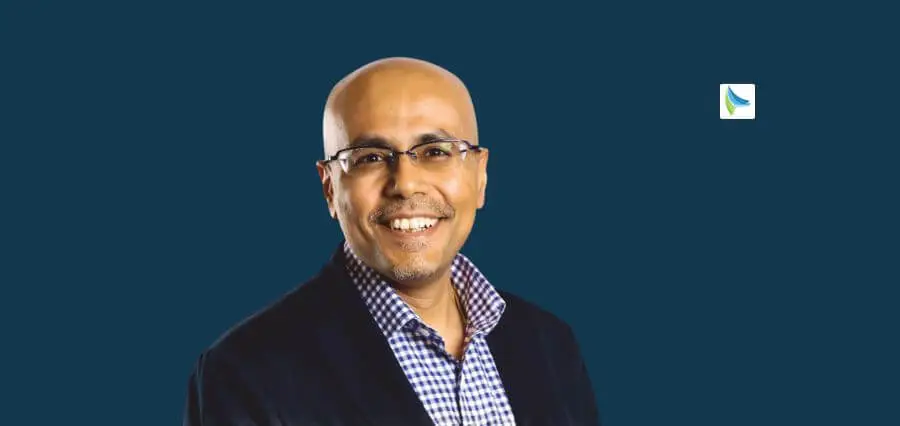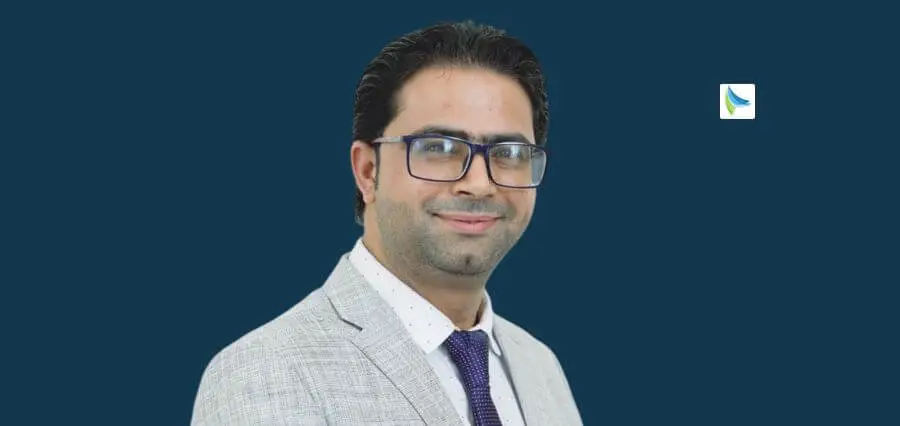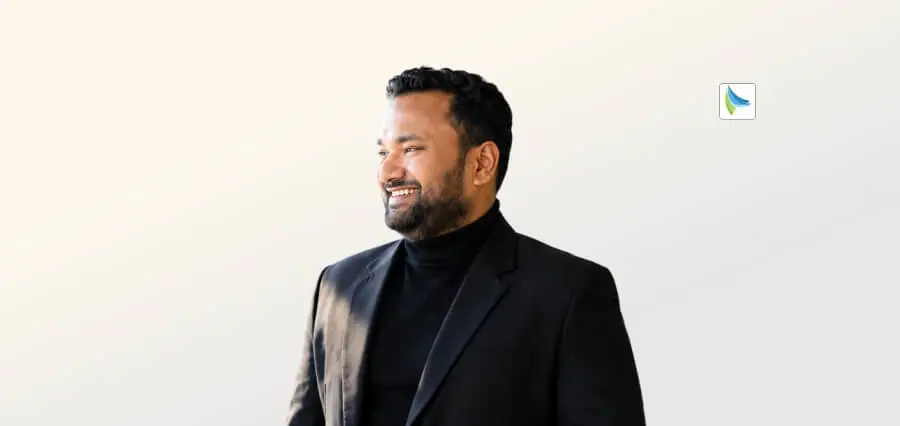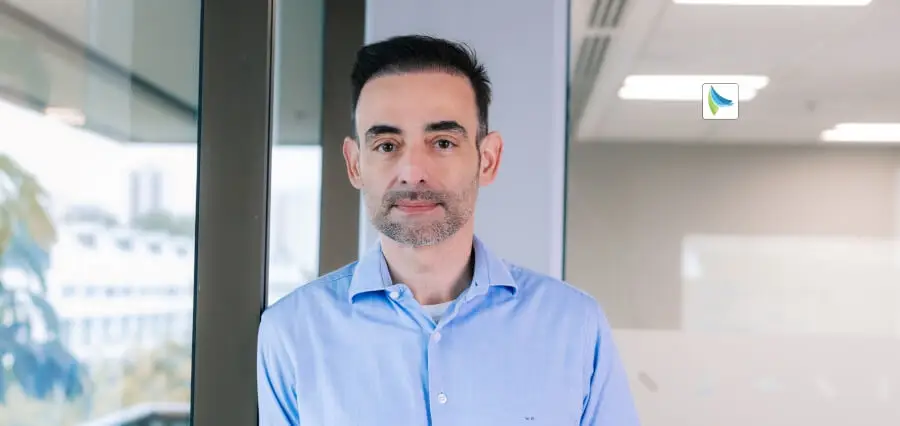




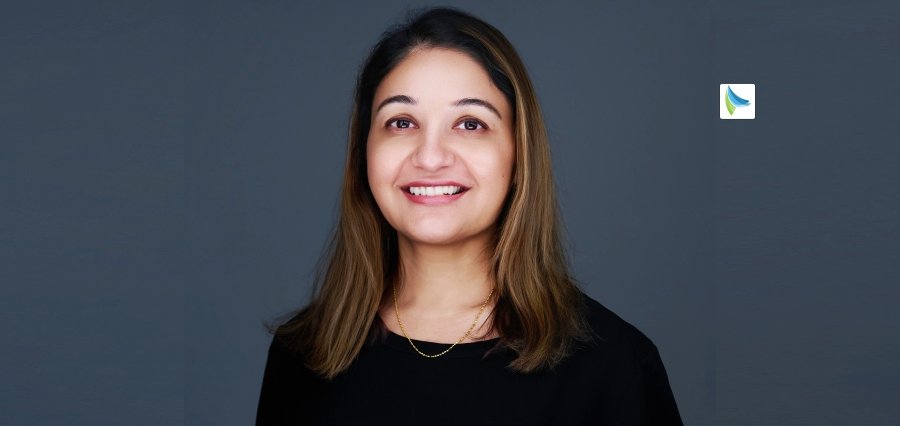
The power to change reality begins with mindset. When a region is viewed through the lens of unique challenges, unbridged divides, and wide gaps between what exists and what is possible, there are only two ways to respond. One approach is rooted in negativity, perceiving only problems and limitations. The other recognizes those same challenges as opportunities in disguise. Gayathri Kolandaisami, Director of Quantumzet Technologies, embodies an exceptionally positive and forward-thinking mindset. With respect to Africa—the world’s second-largest and second-most-populated continent—she strongly believes in a new and more accurate African narrative. In her view, “Africa is not a continent of risk; it is a continent of endless possibilities and an extraordinary testbed for innovation.”
This perspective fundamentally reshapes how challenges are approached. Gayathri Kolandaisami asserts that the most meaningful breakthroughs do not emerge from comfort, but from adversity. Africa’s municipal environments, in particular, have consistently demonstrated that necessity is the catalyst for the most impactful innovations. At Quantumzet Technologies, this belief translates into a deliberately different operating philosophy.
By actively challenging outdated perceptions of Africa as “high risk,” Quantumzet Technologies demonstrates the continent’s ability to develop and deploy world-class smart-water and smart-city systems—solutions that are purpose-built for Africa’s unique operational contexts rather than adapted from external models.
Grounded in more than fifteen years of direct, hands-on experience within South African municipalities, Gayathri Kolandaisami arrived at a clear and enduring insight: Africa does not require imported technological solutions; it requires systems designed with a deep understanding of its operational realities. This perspective, shaped by years of working alongside municipal officials, engineers, and service delivery teams, informed the creation of Citi-OS—a South African–patented platform (SA Patent No. 2013/02060), technically validated and approved for co-selling by Microsoft.
Citi-OS was conceived and developed from the inside out. Rather than adapting global software to local conditions, the platform was built in response to the systemic challenges that define many African municipal environments: aging and under-maintained infrastructure, predominantly manual workflows, fragmented and siloed data, prolonged response cycles, informal settlement layouts, intermittent power supply, and persistently low-bandwidth operating conditions. These are not edge cases within the African context; they are daily operational realities for which most global technologies were never designed.
By digitizing the entire municipal value chain—encompassing fault and incident reporting, IoT-enabled sensing, advanced analytics, field workforce dispatch, citizen communication, and executive-level oversight—Citi-OS directly addresses the structural bottlenecks that have historically constrained service delivery across African municipalities. Its deployment across multiple South African district municipalities has already demonstrated measurable improvements in service delivery coordination, non-revenue water management, operational efficiency, and service reliability, with positive outcomes observed in both urban centers and rural communities.
However, the significance of this work extends beyond process optimization or technological modernization. At a deeper level, it represents a deliberate reframing of Africa’s position within the global technology ecosystem—from passive consumer to active creator. When African-designed systems are patented, rigorously validated, and successfully deployed under some of the world’s most complex operational conditions, they challenge entrenched assumptions about where innovation originates and how it scales. Solutions that function effectively in African contexts are often not merely adequate elsewhere; they are frequently more resilient, adaptable, and globally transferable.
Gayathri Kolandaisami’s broader vision is to position African-born technologies on global platforms, enabling cities across the continent to leapfrog legacy systems and adopt next-generation models of digital governance. In doing so, her work advances not only more responsive and accountable municipal operations, but also a powerful counter-narrative—one that situates African innovation as grounded in lived experience, technical rigor, and global relevance, capable of shaping how cities are governed far beyond the continent itself.
Gayathri Kolandaisami spoke in an exclusive interview with Insights Success India, detailing how she is replacing the age-old perception of the African continent with a futuristic vision.
Pan-African Integration: The African Continental Free Trade Area (AfCFTA) is a game-changer. What critical structural or logistical hurdles must be overcome for your sector to truly benefit from the single continental market, and what specific investments is your company making in this area?
AfCFTA represents one of the most significant opportunities of our time. However, the reality is that the digital water and municipal services sector still faces deep structural barriers before it can benefit fully from a single continental market. Municipal procurement remains fragmented, legal and regulatory frameworks differ widely between countries, ICT maturity is uneven, and budget cycles can be slow and unpredictable. In practice, this means that a solution proven in one region cannot simply be “dropped” into another without adaptation.
At Quantumzet Technologies, our response has been to design Citi-OS to be modular, configurable, and adaptable across jurisdictions. Instead of assuming uniformity, we deliberately build flexibility into every layer—data structures, compliance modules, workflow logic, dashboards, and reporting formats. This allows the platform to align with different water legislation, asset management standards, languages, and operating models across the continent.
We have also invested in building a cross-border deployment framework that includes local technical partners, compliance specialists, and system integrators. This ensures that each implementation is grounded in the country’s legal expectations, infrastructure realities, and governance priorities. Our goal is to make adoption seamless, not burdensome.
One of the biggest barriers for municipalities across Africa is financing. Relying solely on traditional CAPEX-heavy models creates risk, especially where long procurement cycles or delayed payments are common. To address this, we are evolving toward subscription-based deployment models and exploring public–private partnership structures that distribute cost and risk more evenly. These approaches make digital infrastructure more accessible, especially for municipalities operating under tight fiscal conditions.
Because Citi-OS has already been implemented in municipalities with very different operational constraints, we have demonstrated that African-born platforms can scale beyond a single province or country. This adaptability is critical for the continental ambition behind AfCFTA. A political agreement becomes practical only when cities have technologies capable of integrating across borders.
Climate Resilience and Investment: How are you integrating climate change resilience and environmental sustainability into your core business model, ensuring that long-term profit is not at the expense of Africa’s unique biodiversity and resource stability?
Climate resilience is not a peripheral initiative for us—it is embedded in the core value proposition of Quantumzet Technologies. Water is one of the continent’s most climate-vulnerable resources, and global assessments such as UN Water warn that Africa is entering a period of intensified scarcity due to rising demand, shifting rainfall patterns, and infrastructure under severe strain. The systems that protect water must therefore be predictive, data-driven, and designed for the realities of African municipalities. This is precisely what we built into Citi-OS and our broader smart-water suite.
Through CitiIOT, we enable real-time monitoring of boreholes, reservoirs, and distribution networks, giving municipalities early visibility into leaks, abnormal consumption, pump failures, and patterns of over-extraction. This level of insight is critical because many rural and peri-urban communities rely on groundwater lifelines that can be depleted without warning. In one South African district municipality, for example, our monitoring helped prevent critical groundwater losses while improving supply reliability for remote communities—demonstrating how digital tools directly protect natural resources.
Climate resilience also means extending the lifespan of infrastructure. Citi-OS supports preventive maintenance, structured planning, and reduced operational downtime by enabling municipalities to make decisions based on real data rather than reactive fault reporting. Remote monitoring reduces unnecessary travel and emissions, while digital workflows minimise waste and inefficiency.
In that same South African district municipality, the operational efficiencies gained through Citi-OS—reduced overtime, faster fault resolution, and clearer accountability—translated into measurable cost savings. These savings strengthened the municipality’s ability to reinvest in long-term water infrastructure renewal projects, which are essential for climate resilience.
This approach reflects our commitment to the triple bottom line—People, Planet, and Profit.
- People, through improved service reliability, have protected groundwater lifelines for vulnerable communities.
- Planet, through reduced wastage, lower emissions, and protection of scarce water resources.
- Profit, through operational savings and reinvestment into sustainable infrastructure rather than emergency expenditure.
Across Africa, Non-Revenue Water (NRW) often exceeds 35–40%, representing one of the continent’s largest climate and financial risks. UN Water identifies water loss as a silent driver of scarcity, and in many municipalities, leaking infrastructure wastes more water than communities consume. Innovation, therefore, is not simply about fixing problems once they occur—it is about preventing failures before they happen. Citi-OS provides the data intelligence, early warning signals, and structured processes needed to shift municipalities from reactive crisis management to long-term protection of their resources.
Capital Access & Localization: Access to patient capital remains a challenge. What innovative financial structures or local partnership models are you employing to fund large-scale projects without relying solely on volatile foreign direct investment (FDI)?
Traditional funding models are constrained by municipal payment delays, slow procurement cycles, and banks’ reluctance to fund digital infrastructure. This makes purely CAPEX-driven, once-off technology deployments very difficult to sustain.
We are therefore evolving towards more flexible and localised models. We have implemented staggered deployment models that spread costs over time. This approach aligns better with municipal cash flow and reduces the entry barrier to modern digital systems. We are also exploring SaaS-style subscription offerings that spread investment over time, and public-private partnership (PPP) frameworks where risk and reward are shared. We also focus on co-creating solutions with municipalities, ensuring that deployments are aligned with their financial realities and strategic priorities.
On the localisation side, we deliberately use local staff and technicians, invest in skills development, and reduce dependence on imported technology wherever possible. Our long-term ambition is to build revenue models that do not burden municipalities upfront and rely less on volatile foreign investment, and more on African institutions, African partners, and demonstrable, project-level ROI.
Leapfrogging Technology: Africa often bypasses outdated infrastructure by “leapfrogging” straight to new technologies (e.g., mobile banking). What is the next major technological leap your industry is preparing for, and how will it be distinctly African in its application?
The next leap in our sector will combine AI-driven predictive analytics, IoT-enabled sensing, digital twins, and integrated citizen platforms to create truly intelligent water and smart city systems. We are moving from simple digitisation to anticipatory systems that can forecast leaks, failures, and demand, and trigger the right responses before crises occur.
What makes this leap distinctly African is that it is designed for our realities: intermittent power, low connectivity, aging infrastructure, and constrained budgets. Our solutions must work just as well in a dense urban township as in remote rural areas. They must be affordable, scalable, and capable of solving Africa-first problems like borehole depletion, informal settlements, and water trucking.
Through CitiIOT, CitiAnalytics, and our patented Citi-OS platform, we are demonstrating that global-standard innovation can be architected in Africa, by Africans, for African conditions.
Human Capital Development: With a booming youth population, the skills gap is critical. How is your company investing in practical vocational or technological training initiatives to cultivate the next generation of African technical and operational leaders?
Africa has extraordinary potential, but there remains a significant skills gap, especially in advanced fields like IoT, AI, and digital water management. For me, the goal is not simply to recognise this gap—it is to actively bridge it by bringing global knowledge back into the continent and translating it into practical, hands-on capability. At Quantumzet, we integrate skills development directly into our work. We train young technicians and engineers on live municipal systems, giving them exposure to IoT sensors, digital water operations, analytics, and smart-city technologies in real-world environments, not just theory.
Every implementation includes structured capacity building for municipal staff, on-the-job training for field operators and technicians, and direct participation in digital infrastructure rollouts. This ensures that the skills we introduce through international research, diaspora networks, and cross-continental collaborations are transferred sustainably to local teams.
We also deliberately hire and empower local staff wherever we deploy our solution. Our aim is for municipalities to operate Citi-OS confidently and independently—reducing long-term reliance on foreign consultants and nurturing local ownership. Over time, my ambition is to cultivate Africa’s first generation of smart-water technologists, equipped with global-standard expertise and capable of leading digital transformation across the continent.
Driving Inclusive Growth: Beyond corporate social responsibility (CSR), what measurable steps are you taking to ensure that your business growth translates into economic inclusion for underserved demographics, particularly women and rural communities?
Inclusive growth for me begins with water security for communities that are most at risk. Our borehole and rural water monitoring solutions help ensure a stable supply for remote areas, prevent borehole depletion that would affect indigent households, and reduce dependence on costly water trucking. When rural communities receive early warnings before failures, they gain predictability and dignity.
We also create tangible economic opportunities. Our projects require local operators, technicians, and contact centre staff, which means the creation of jobs within municipalities and communities. By reducing Non-Revenue Water and improving operational efficiency, municipalities can redirect savings into other essential community services.
For the youth, we open pathways into IoT, AI, and municipal tech careers through practical training. My vision of inclusion is simple: “True inclusion means building technology that works for everyone, not just major cities. Technology must uplift the most vulnerable communities.”
The Future Leader: What essential leadership trait—distinct from those required in other global markets—must the next generation of African CEOs possess to successfully lead the continent’s rapid development?
Africa’s next generation of CEOs must be able to innovate with constraints, not wait for perfect conditions. Leadership on this continent demands a rare combination of resilience, adaptive innovation, ethical courage, community-centred thinking, and visionary pragmatism. Future African leaders must understand AI, IoT, climate resilience, and sustainability—yet still hold deep empathy for the lived realities of rural communities, informal settlements, and underserved municipalities. Technology alone cannot drive development; leaders must translate it into dignity, access, and opportunity.
Unlike other global markets where systems are established and predictable, Africa’s rapid development will unfold in uneven environments, under climate pressure, and amid shifting political and economic landscapes. This requires CEOs who can think across borders, across sectors, and across generations. Leaders who make decisions not only for quarterly results but for the continent their children will inherit.
The African CEO of the future must be comfortable navigating the public–private interface, leading in ambiguity, and designing solutions flexible enough to work where resources are limited but potential is infinite. Above all, they must balance innovation with social justice and environmental responsibility—because progress that excludes people or degrades ecosystems is not progress at all.
My belief is simple: Africa’s most transformative leaders will be those who can hold vision and empathy in the same breath—those who can build systems strong enough to scale and humane enough to matter.
“In Africa, the leaders who will shape the future are the ones who can turn constraint into creativity, complexity into opportunity, and adversity into innovation.”
For further information, please call or email +2731572 6182 or email gayathri@quantumzet.com, or check out the web link.