




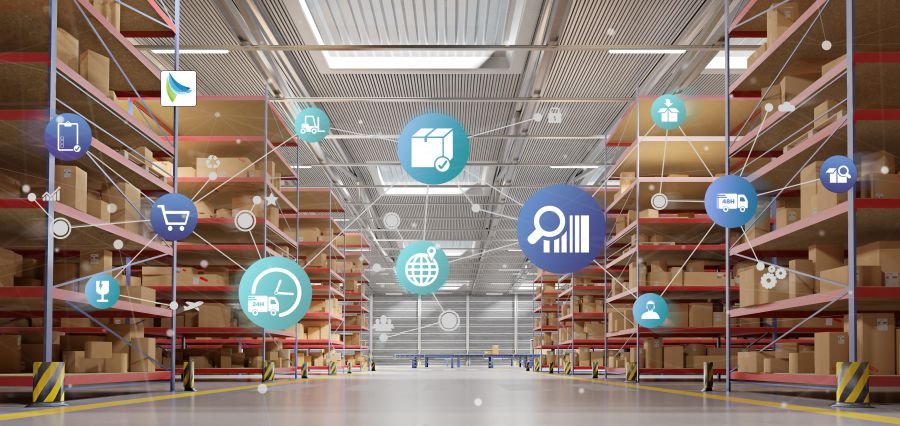
The Intelligent Supply Chain
Supply chains have gradually shifted from purely operational backbones to strategic differentiators. Supply chains that are based on traditional models of efficiency are not enough in a world that is characterized by volatility, global interdependence, and rising customer expectations. The companies that are moving forward the most are the ones that are changing their supply chains into smart, data-driven ecosystems which have insight, adaptability, and foresight as their lasting competitive advantages.
An intelligent supply chain does not depend on the size or scale but rather on how efficiently it turns data into action.
From Linear Chains to Intelligent Networks
Traditional supply chains were structured as linear processes, taking goods from supplier to manufacturer to distributor to customer. Although such a model works well under stable conditions, it fails when there are disruptions. An intelligent supply chain is a network of connected entities, where data is shared in many different ways and decision-making is constantly being refined.
Organizations can respond promptly to new situations instead of reacting to them because they have real-time visibility of their suppliers, logistics partners, inventory, and demand. The supply chain is transformed into a living system—one that learns, adapts, and grows as the environment changes.
Data as the Core Strategic Asset
Data is what fuels the most intelligent supply chain model. Every purchase, shipment, delay, and demand signal creates data. When all the data is combined and analyzed properly, it gives a company insight into the trends which are the driving force behind the smart decision-making process. Businesses thus obtain the capability to predict demand with much higher precision, identify the occurrence of potential disruptions in advance, and maintain warehouse stock at the exact level with great accuracy.
Data turns supply chains from money-losing departments into strategic assets. It empowers executives to go beyond their gut feeling and make decisions with clarity, confidence, and speed.
Predictive Intelligence Replacing Reactive Response
The foremost strength of intelligent supply chains is, without doubt, their predictive capability. Advanced analytics and AI models use the past scenarios, present situations, and external factors to determine the future ones. Hence, instead of waiting to respond after the disruption has happened, organizations get to intervene way before its escalation.
Predictive insights help in better planning, less waste, and quicker recovery. They provide the possibility of shifting from the management of unexpected events to the foresight of predicting upcoming challenges, thereby turning uncertainty into a factor that can be handled rather than a constant threat.
Real-Time Visibility Driving Agility
Visibility is a prerequisite for being agile. Real-time insight into stock levels, the progress of the shipment, the suppliers’ performance, and the change in demand can be easily achieved through the implementation of new supply chains. Such openness allows for quick decision-making and effective coordination between the different parts of the ecosystem.
When decision-makers have first-hand information about the problems that are about to occur, they are in a position to ensure the delivery of rerouted goods, make changes in production schedules, or quickly getting in touch with alternative suppliers. Agility will then be at the very core of the daily operations and no longer thought of as a crisis moment reserve.
Customer-Centric Supply Chain Design
Nowadays, supply chains are to a great extent influenced by customer expectations for speed, reliability, and personalization. In order to meet these needs, intelligent systems use demand data along with providing behavioral insights to help supply chain executives make the right decisions. This in turn guarantees the availability of products where and when buyers seek them, at the same time, avoiding unnecessary inventory and cost.
By matching operations with demand intelligence, companies get the opportunity to elevate service levels and at the same time retain their margins. Customer satisfaction becomes one of the direct products of supply chain intelligence.
Collaboration Enabled by Shared Data
Intelligent supply chains are dependent on collaboration. The sharing of data among suppliers, logistics providers, and partners brings alignment and mutual accountability. When all the players have access to the same information regarding demand, capacity, and risk, they are more coordinated, and the level of friction reduces.
Such a collaborative model lessens the number of surprises, deepens the relationships, and, at the same time, builds up resilience throughout the ecosystem. The source of competitive advantage changes from the efficiency of being alone to the collective intelligence of the group.