



Panama packs rainforest, reef, and two oceans into a country smaller than South Carolina. Most travelers plan three days at the Canal and call it done, but that barely scratches the surface of what’s here. From cloud forests thick with resplendent quetzals to islands where the Guna people still govern their own territory, Panama rewards anyone willing to go beyond Panama City. Here are ten places and experiences that justify the trip.
The Panama Canal Locks at Miraflores
Watching a container ship squeeze through the Miraflores Locks with only a couple of feet of clearance on each side puts the scale of this engineering project into perspective fast. The visitor center has four floors of exhibits explaining how the lock system works, but the real draw is the observation deck, where ships pass through on a rotating schedule throughout the day. Time a visit for late morning or early afternoon, when transits are most frequent. Bring binoculars if you want to read the flags and figure out where each ship is registered.
Casco Viejo’s Mix of Decay and Restoration
Panama City’s old quarter sits on a peninsula lined with colonial buildings in every stage of repair, from fully restored boutique hotels to shells with trees growing out of the upper floors. Wander the streets around Plaza Bolívar and Plaza de la Independencia to see this contrast up close. Rooftop bars here offer some of the best sunset views in the city, looking out over the bay toward the modern skyline of Panama City proper. Stop at a cevicheria for fresh corvina ceviche before heading out for the evening.
Boquete’s Coffee Farms and Cool Climate
Up in the highlands of Chiriquí province, Boquete sits at an elevation that keeps temperatures mild year-round, a welcome change from the coastal heat. The surrounding hills grow some of the world’s most sought-after geisha coffee, and several farms, including Finca Lérida and Hacienda La Esmeralda, offer tours that walk through the entire process from cherry to cup. Hiking trails wind through cloud forest where quetzals nest between March and June. The town itself has a small, walkable center with good restaurants that lean on local produce.
Bocas del Toro’s Caribbean Islands
This archipelago on the Caribbean side feels like a different country from the Pacific coast. Water taxis connect a string of islands with mangrove channels, surf breaks, and reef systems close enough to snorkel from shore. Isla Bastimentos has the most developed beach scene, while Isla Colón serves as the main hub with most of the lodging and restaurants. Rent a kayak and paddle through the mangrove channels near Dolphin Bay, where bottlenose dolphins are commonly spotted in the early morning.
The San Blas Islands and Guna Culture
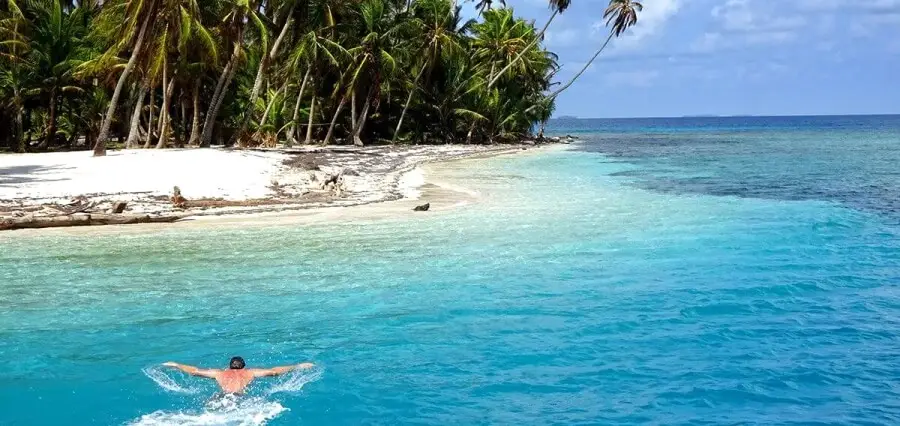
Technically part of the autonomous Guna Yala territory rather than mainland Panama, the San Blas Islands are what most people picture when they imagine a desert island: white sand, a few palm trees, water in three shades of blue. The Guna people manage tourism here themselves, and visiting means staying in simple cabins run by local families rather than international resorts. Molas, the hand-stitched textiles made by Guna women, are sold directly by the artisans who made them. Getting there requires a bumpy four-hour drive from Panama City followed by a boat transfer, which keeps the islands less crowded than they’d otherwise be.
Soberanía National Park for Birding
Just a 30-minute drive from Panama City, Soberanía protects a stretch of lowland rainforest with over 500 recorded bird species. Pipeline Road, a former oil pipeline route through the park, consistently ranks among the top birding sites in the world and has even set single-day species records during competitions. Early morning visits produce the best sightings, before the heat sets in and birds go quiet. Guides familiar with the park can spot toucans, trogons, and antbirds that would otherwise go unnoticed.
Coiba National Park’s Marine Life
Once a penal colony, Coiba Island is now a marine protected area with some of the best diving and snorkeling in the eastern Pacific. Whale sharks, hammerhead sharks, and humpback whales pass through seasonally, while year-round residents include white-tip reef sharks and massive schools of jack. Access requires a permit and a boat ride of an hour or more from Santa Catalina, which keeps visitor numbers low compared to more accessible dive sites elsewhere in Central America. Several operators in Santa Catalina run day trips that include two dive sites and lunch on the island.
The Embera Villages Along the Chagres River
A short boat ride up the Chagres River leads to communities of the Embera people, who maintain traditional dress, thatched-roof housing, and a subsistence lifestyle alongside limited tourism. Visits typically include a traditional lunch wrapped in banana leaves, demonstrations of basket weaving, and the chance to buy crafts directly from the artisans. It’s a close look at indigenous life without the distance that larger tour groups or packaged experiences can create. Many operators that run Panama luxury tours include a stop here specifically because it offers a level of cultural access that’s hard to arrange independently.
Pearl Islands for Beach Time Near the City
The Pearl Islands sit about 90 minutes by boat from Panama City, making them an easy add-on for anyone short on time. Contadora Island has the most infrastructure, with several beaches and basic services, while smaller islands nearby offer near-total privacy. This is also where the reality TV show Survivor has filmed multiple seasons, which gives the area a bit of unexpected name recognition. Humpback whales pass through these waters between July and October, visible from shore on a clear day.
Panama City’s Biomuseo
Designed by Frank Gehry, the Biomuseo sits at the entrance to the Panama Canal and tells the story of how the isthmus formed and changed the planet’s biodiversity when it connected North and South America roughly three million years ago. The building itself, with its jumble of brightly colored geometric panels, is worth seeing even without going inside. Exhibits cover everything from the fossil record to the current conservation challenges facing the region. It’s an easy half-day stop that adds useful context to everything else on this list, from the rainforest birding to the marine life around Coiba.
Panama’s size works in its favor here: a 30-minute flight or a few hours by car can take a traveler from Caribbean reef to cloud forest to Pacific dive site. Building an itinerary around three or four of these highlights, rather than trying to cram in all ten, leaves enough time to actually experience each place instead of just checking it off a list.