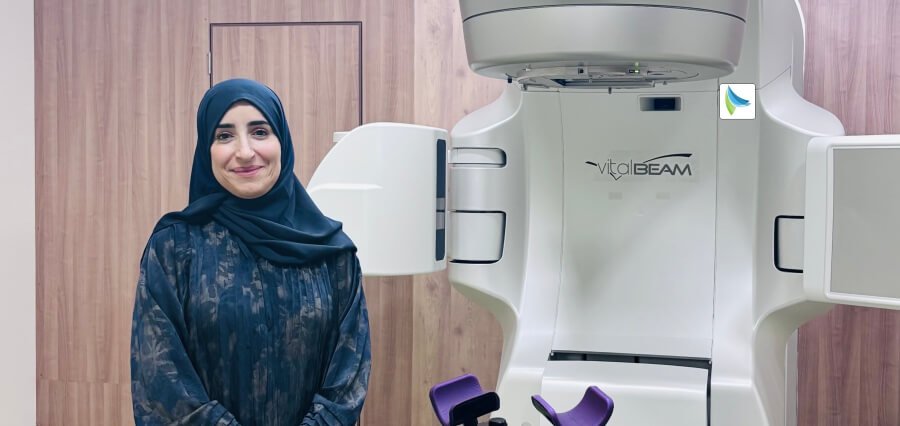





Z. Fahira Reshman, a clinical embryology professional, had no intention of leading in a traditional way. Her leadership has been subtle, founded on discipline, observation, and respect for the systems that safeguard life at its most vulnerable stage. She believes that excellence is not a moment of genius in a field like embryology—one that combines science and hope on a daily basis. Instead, it is consistent, repeated, and practiced with diligence.
Fahira has spent years in hands-on clinical and research work, arriving at a simple truth: things do not improve simply because someone is talented. They improve when the environment is reliable, protocols are respected, training is robust, and quality becomes a habit—not just a checklist.
How Leadership Took Shape
For Fahira, leadership developed naturally as her perspective broadened. After working through thousands of cycles—IVF, ICSI, cryopreservation, and embryo transfers—she stopped thinking only about performing tasks well. She began focusing on how the work itself could be made stronger, safer, and repeatable for every patient, every time.
That shift—from doing to strengthening—marked the beginning of her leadership journey in the Assisted Reproductive Technology (ART) / fertility sector. Growth opportunities, she believes, come from systems that protect quality long after individual effort ends.
Working at the Intersection of Emotion and Precision
Fertility care exists in two demanding worlds at once. It is deeply emotional for patients, yet intensely technical in the laboratory. Both demand perfection.
In the lab, challenges often appear as variability, constant pressure, and uncompromising compliance standards. Small deviations can affect outcomes, and time-sensitive processes leave little room for error. Fahira addresses these challenges by building stability into every layer of the work.
Her approach is simple but disciplined: standardization, thorough training, and strong documentation. Quality checks are not treated as a separate function—they become a mindset. Team alignment becomes essential. When processes are strong, confidence grows, and when confidence grows, outcomes become more consistent.
Motivation During Difficult Times
Difficult times do not slow down fertility care, and they do not reduce the hopes of patients. This reality keeps Fahira grounded.
When pressure rises, she does not look for dramatic inspiration. She looks for clarity. She asks one guiding question:
“What is the next right improvement we can make that strengthens outcomes and protects trust?”
Respecting Risk Without Avoiding Progress
In embryology, risk must be respected. But avoiding all risk does not create safety—it creates stagnation. Fahira approaches new initiatives the same way she approaches lab work: with structure.
She studies evidence carefully, validates assumptions, tracks outcomes, trains teams thoroughly, and scales only when stability is proven. Whether working with advanced techniques such as embryo biopsy or time-lapse embryo monitoring, she has learned that “new” is valuable only when it becomes safe, reliable, and repeatable.
For her, responsible innovation is never impulsive. It is prepared.
Innovation as Dignity
Innovation, in Fahira’s view, is not about being first. It is about being more precise, more thoughtful, and more reliable than yesterday.
Sometimes innovation is new technology. More often, it is a better workflow, a stronger training method, a disciplined culture, or a protocol change that reduces errors and builds confidence. True innovation reduces fear and uncertainty. It makes the journey easier for people already carrying emotional weight.
Beyond success, innovation is dignity—offered to patients through consistency and care.
Moments That Carry Meaning
Some moments stay with her long after the lab work is done: everything from retrieving a mature oocyte for a patient with very low reserve to developing a strong blastocyst for a couple with poor gamete quality, or witnessing a positive pregnancy outcome from a single embryo resulting from the cycle.
Having personally handled thousands of vitrification, thawing, and transfer cycles, Fahira understands how much trust is placed in embryologists—not only biologically, but emotionally.
Her conference work on post-thaw embryo outcomes reflects the same purpose: strengthening a stage of the journey many assume is already secure, but is often still fragile.
In that sense, her impact is not only clinical. It is deeply human.
Building for the Long Term
Short-term demands are constant: cycle pressure, troubleshooting, and workload intensity. Fahira balances these by separating what must be done immediately from what must be built steadily.
In the short term, she protects outcomes and reduces errors.
In the medium term, she strengthens training and standardization.
In the long term, she works toward raising laboratory standards and improving reproducibility in ART practices.
A Message to Future Leaders
Her advice to young leaders is clear: do not begin by trying to be remarkable. Begin by being reliable. Master your skill, protect your integrity, choose evidence over ego, and remember that leadership is responsibility—not visibility.
“Consistency is the real breakthrough, and when standards remain high, impact grows naturally,” she shares.