



Predictive Protection
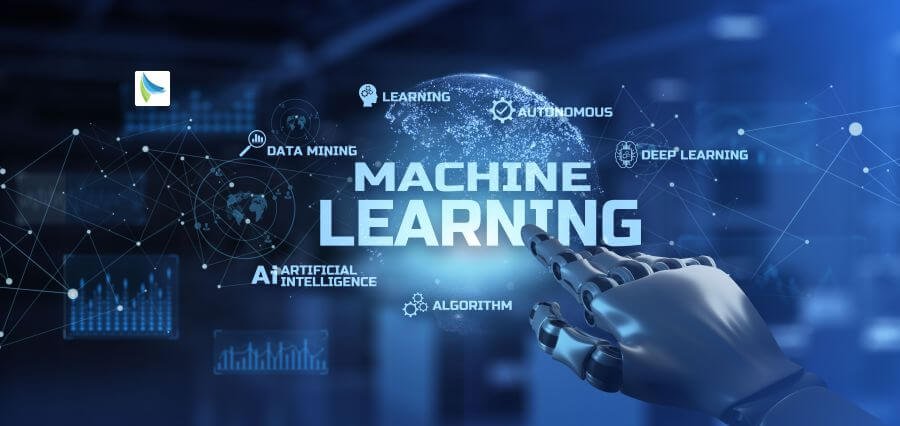
Cybersecurity has switched gears; a new era is marked by intelligent systems not only going beyond perimeter defense and reactive response, but also foreseeing threats that have not even occurred yet. Machine learning is the key element in this shift. By means of such technology, companies are no longer forced to wait for the attacks; they can predict the malicious actions, identify faint anomalies, and stop the security breaches long before any traditional tool would be able to detect a threat.
Predictive security is a very different concept from that of merely holding back the attacks from yesterday; it rather consists of thinking about the labor of the future ones.
From Detection to Anticipation
Until recently, cybersecurity was largely reliant on signatures, rules, and patterns of recognized malicious behavior. However, the trick of attackers is to be very fast, and this is why they do not get caught — they constantly modify their tactics, mask their behaviors, and take advantage of the areas where static rules cannot detect them. Through machine learning, this old model gets to be replaced as it now looks at large quantities of data to find hidden connections and changes. By doing so, it establishes a kind of “normal” for networks, users, devices, and applications, and, thus, it is capable of pointing out even the tiniest deviation.
With this change, the role of security goes far beyond past-time investigations to become a sort of future-oriented protection.
Learning From Every Interaction
The machine learning programs get better every time they are exposed to more data. They learn from past break-ins, login attempts that seemed to be failed, data transfers that are unusual, as well as global threat intelligence. Eventually, such a system becomes extremely efficient in spotting the potential of an attack in case of a newly created situation.
Predictive systems refrain from using signatures; instead, they employ behavioral intelligence. What is evaluated is the intention rather than the look. Malware can be easily disguised; however, malicious behavior is quite difficult to hide.
The process of learning will be the basis of more robust and alternative cybersecurity that is able to evolve further.
Real-Time Insight for Real-Time Response
Speed is what predictive protection is all about in just a few milliseconds; threats change, while machine learning solutions, in no time, conduct an analysis. AI models do not stop network supervision at any point, but rather they constantly seek out those activities that are most likely to remain hidden from humans, or even if humans detect them, it is after it is done. A system gets to immediately inform defenders in case it finds hostile activity, and in addition, it also performs. If the response is automated, then it contains the behavior.
Real-time intelligence equips organizations with the means to carry out their deeds by putting an end to attacks in their infancy stages, thus leaving no room for damage, exfiltration of data, or compromise of systems.
Preventing Zero-Day and Unknown Threats
When confronted with zero-day exploits or brand-new malware that has never been seen before, traditional tools are powerless. Machine learning is not conditioned to rely on the knowledge of the past. It can detect abnormal situations, suspicious sequences, and even unusual behaviors of the system. The most advanced security solutions can even detect an intrusion in case there is no signature, and immediately, they let the concerned parties take protective measures.
In effect, the ability to do this deactivates the interval that is usually exploited by attackers, which goes between the discovery and fixing of a new vulnerability.
Building a Stronger Security Ecosystem
Predictive security not only prevents attacks from being launched, but it also extends the entire cyber ecosystem. Furthermore, it does this by pointing to the areas that are hardening the organization before it becomes its liabilities. The precision learning technique can definitely be a great help to an organization to comprehend its weak spots, expose misconfigurations, unearth data that has been left open, and ultimately, improve its control over users’ access.
The knowledge gained through these is a great step towards becoming more intelligent with fewer blind spots in the digital environment. Resilience turns into being proactive and not reactive.
Security Equipped for a Never-Ending Threat
Cyber threats are in constant evolution. The attackers come up with new things on a daily basis. The only feasible way to be in step with them and even foresee their moves is through the use of machine learning. Predictive protection allows entities to function as if they are in control in a world that is characterized by uncertainty and where rapidity determines survivability.
The next wave of cybersecurity will be characterized by intelligent systems – learning, anticipating, and defending even before the assaults start.
Predictive protection is not just better; it is a complete overhaul of what security can be. In a world dominated by machine learning, the defense is carried out beforehand, it is flexible, and it is strong; thus, safe digital spaces are being created for businesses, governments, and communities globally.