



The world is now part of a global transformation that is changing how all businesses operate. Over the last 100 years, two major approaches have shaped and maximized business profits. The first principle, born with the rise of consumer society, is based on a depletion model: using resources until they are exhausted and producing products and services to sell in ever-increasing quantities. Success under this principle comes from driving consumption and acquiring more products and services. The second principle, emerging as a reaction to the first, is born from a simple reality check: we cannot produce infinitely from finite resources. This new approach focuses on service and usage rather than depletion and consumption. It encourages businesses to design products that can be used throughout their full lifecycle, supporting regeneration instead of resource exhaustion. In other words, businesses that succeed in the future will create true profit by contributing to the regeneration of life on Earth while generating sustainable returns for themselves.
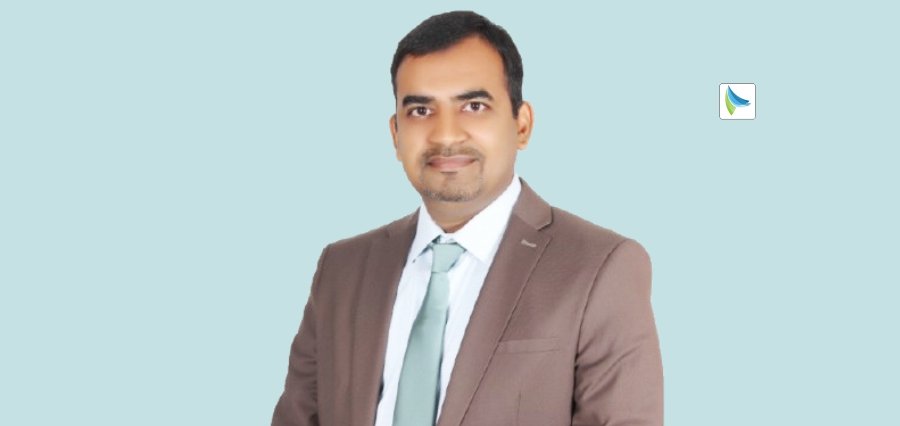
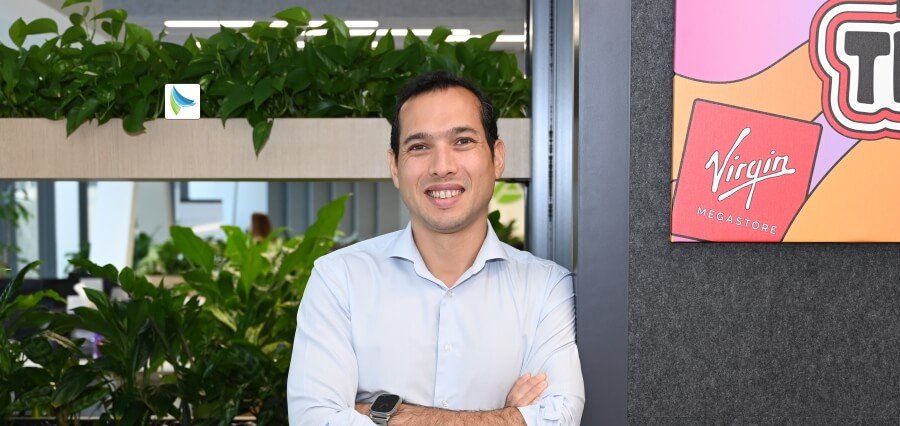
Most leaders see these paths as mutually exclusive. Thomas Prom sees them as one. As Regional Head of Digital & Sustainability at Virgin Megastore MENA, he operates at the intersection of commerce and conscience, technology and regeneration. His work challenges retail’s most fundamental assumption: that selling more invariably means earning more. Through circular economy models spanning repair, refurbishment, rental, resale, and recycling, he’s proving the opposite- that businesses can generate superior margins while dramatically reducing environmental footprint, and that customer satisfaction deepens when brands help people consume less rather than more.
This isn’t an incremental improvement. It’s a complete reimagining of retail’s purpose and possibilities. Where traditional commerce asks, “How do we sell the next product?”, Thomas’ model asks, “How do we provide the same experience, the same deep satisfaction, the same joy—while preserving resources and protecting margins?” That question represents a true revolution: transforming waste into inventory, repairs into relationships, and sustainability from a cost center into a competitive advantage.
A Philosophy Forged in Purpose, Not Performance
Thomas’ leadership rests on a deceptively radical foundation: treating business metrics as means rather than ends. While most executives anchor decisions in KPIs, Thomas Prom uses these indicators merely as signals confirming direction. The actual destination is purpose- a distinction that fundamentally alters every strategic choice that follows.
When quarterly earnings dominate decision-making, shortcuts become rational. When market share defines success, planned obsolescence makes sense. Thomas Prom inverts this logic entirely. He asks first what serves the mission, then measures whether performance indicators confirm progress toward it.
“I embrace transformation easily,” Thomas Prom explains, “because I take action believing it serves a meaningful mission.” These missions range from the existential, keeping the planet habitable, to the experiential, creating moments of joy for customers. He approaches both with equal seriousness, understanding that today’s small decisions cascade into tomorrow’s large consequences.
This philosophy proves especially vital across his dual mandates. Digital systems built for today become tomorrow’s technical debt. Sustainability shortcuts compound into environmental liabilities. Thomas’ purpose-driven approach prevents these traps, keeping focus trained on what genuinely matters.
From Consumer to Creator: The Journey Toward Professional Consciousness
Thomas’ transformational journey begins with familiar frustration. Like many conscientious individuals, he spent personal time scrutinizing choices- what he ate, what he purchased, the ripple effects of every decision. Impact felt limited. Too much seemed beyond individual control. Yet blame leads toward what climate activists call “the triangle of inaction“- paralysis disguised as principle.
Two insights shattered this stalemate.
First: You’re not stuck “in” traffic; you are the traffic itself. You constitute the system you criticize. This demolished the fiction that systems are external forces rather than collective patterns we create.
Second: Real influence resided at work. Most of his time, energy, and decision-making power existed in professional environments. That’s where leverage existed. That’s where choices multiplied into impact.
Thomas Prom transitioned from conscious consumer to conscious professional, wielding workplace influence for systemic change. “I should not be a better person at home than at work,” he insists. “We are one individual.” If positive contribution matters, impact must begin where influence is greatest.
Strategic Wisdom: Building Momentum Through Intelligent Design
Balancing long-term vision with immediate execution challenges every transformation leader. Thomas Prom starts with initiatives carrying no downside. Selling refurbished phones with higher margins exemplifies this. It benefits planetary health while boosting profitability, subtly challenging the assumption that “selling new” is the only path to success.
Many digital projects fail because they compete directly with existing operations. His secret lies in starting with enhancements rather than replacements. The new model complements the old one, proves itself, then gradually becomes the new normal. He doesn’t begin with restrictions. Instead, he introduces attractive alternatives that naturally displace older, less sustainable ones through superiority.
Small, immediate steps guided by long-term vision create a ratchet effect. The transformation accumulates through wins rather than sacrifices, making change feel like an opportunity.
The Kodak Lesson: Why Purpose Trumps Technology
Thomas Prom understands that technology itself rarely drives true disruption. Real transformation happens when people realize a new approach unlocks entirely new possibilities, what he calls the “wow moment.” That moment centers on purpose, not hardware.
He frequently invokes Kodak as a cautionary tale. Kodak believed their purpose was to sell film. They never asked: Why do people buy film? To save memories and create art. Had they understood their purpose as helping people capture meaningful moments, they would have recognized digital photography as an extraordinary opportunity. Instead, they collapsed; not from technological disruption but from purpose confusion.
Throughout his career, Thomas Prom has pioneered the region’s first omnichannel retail models at Virgin Megastore and Carrefour, and helped reinvent service models like Carrefour Drive in France. Technology enabled these innovations, but was always the straightforward part compared to asking: “What will genuinely make the customer’s life better?”
Today, he’s digitizing Virgin Megastore locations, building systems enabling rental and subscription models, while designing operations for reverse logistics. But the real disruption is recognizing that customers increasingly value access and experiences over ownership.
This recognition transforms everything. It turns used products from liabilities into assets. It converts repairs from costs into services. It makes sustainability not a constraint on business but an expansion of it.
Cultural Alchemy: When Incentives Meet Intentions
Inspiring teams across diverse regions requires more than motivational speeches. Thomas Prom acknowledges a brutal truth: habits and convenience devour culture for breakfast. A passionate speech can’t compete with KPI structures that have shaped careers for a decade.
At Virgin Megastore, store staff now earn more from trading in a used phone or protecting a device with an extended warranty than from selling a new one. This aligns what benefits the planet with what benefits employees personally.
“You cannot rely on ‘best effort,‘” Thomas Prom emphasizes. “People are already doing their best. You must redefine what ‘best’ means, and commit to it with concrete KPIs.”
“Change the reward structure, and behaviour shifts automatically,” he shares.
The Existential Imperative: Sustainability as Survival Strategy
Many organizations treat sustainability as “nice to have.” Thomas Prom knows this framing is dangerously wrong. Sustainability isn’t optional. It’s existential.
In 2021, a drought in Taiwan disrupted the global semiconductor supply chain, rippling through every industry. This wasn’t hypothetical. It happened. And it will happen again. This illuminates sustainability’s business criticality- supply chain resilience, operational continuity, and long-term viability.
Thomas Prom’ first step in any sustainability integration is to educate the executive team with business cases grounded in risk management and competitive advantage. Once educated, leaders experience a perspective shift. Sustainability transforms from “value-driven initiative” to “non-negotiable strategy.”
His genius lies in demonstrating this isn’t spin; it’s operational reality. The circular economy models generating Virgin Megastore’s highest margins are also its most sustainable.
The Cultural Breakthrough: Redefining Retail’s Default Settings
Within two years, Thomas Prom has moved Virgin Megastore from asking “What is sustainability?” to making it a strategic pillar. The company now operates across the full circular economy spectrum- protecting, repairing, extending lifecycles, renting, reselling, refurbishing, trading-in, and recycling.
But his greatest pride isn’t the menu of offerings; it’s the cultural metamorphosis. When he hears store staff spontaneously say to customers, “Have you considered repairing it instead?” or “Why not choose a refurbished model?“, that’s when he knows transformation is real.
These aren’t scripted interactions. They’re organic conversations from staff who’ve internalized a different understanding of their role. They’re advisors helping customers make smarter, more sustainable decisions.
Thomas Prom’ ultimate ambition is cultural: redefining retail’s default settings. He wants to invert the hierarchy entirely. Repair and refurbishment should be the first options. Buying new should be the fallback choice.
If most transactions involve extending existing product lifecycles, the industry’s resource consumption drops dramatically while customer relationships deepen and margins improve.
Collaboration as Competitive Advantage
Transformation at scale requires collaboration. Coming from Europe, Thomas Prom draws energy from the UAE’s bias toward action. While many environments debate reasons not to do things, the culture here emphasizes reasons to proceed. This mindset proves extremely powerful when building the future rather than protecting the past.
At Virgin Megastore, Thomas Prom takes a long-term approach, building relationships where partners can win even if the immediate impact isn’t financial. When partners bring meaningful sustainability benefits, he goes above and beyond supporting them.
This approach builds ecosystems rather than transaction chains. Ecosystems are resilient. They adapt because participants share investment in collective success.
Empowering the Next Wave
To the next generation, Thomas Prom offers two powerful insights.
First, young people may lack purchasing power, but they possess cultural power. They define what’s cool and what’s outdated. If the next generation makes overconsumption uncool and circularity desirable, market forces will follow.
Second, countless circular economy business models are waiting to be invented. What society dismisses as “waste” often represents free raw material. Opportunity hides in the gap between perceived value and actual value.
Tomorrow’s leaders will be those who reinvent what society values through enterprises that make sustainable choices the attractive choices.
The Road Ahead: Reshaping Desire and Redefining Normal
Thomas’ ambition remains fundamentally cultural. Offering sustainable options isn’t enough. He wants to reshape desire itself.
Today’s retail environment overwhelmingly pushes consumption. Against this tide, promoting sustainable consumption feels like fighting an unfair fight. But meaningful work rarely comes with level playing fields.
Thomas’ role is shifting the narrative itself. Making sustainable models not just available but aspirational. Redefining what the industry considers “normal,” so circular economy approaches become the standard.
As Spinoza wrote: “We neither strive for, nor will, neither want, nor desire anything because we judge it to be good; on the contrary, we judge something to be good because we strive for it, will it, want it, and desire it.”
“This insight captures the challenge perfectly: we cannot simply tell people what is good; we must make them desire it,” says Thomas Prom.
He believes it’s possible not because people are suddenly becoming more enlightened, but because the sustainable choice is becoming the superior choice on its own merits- better value, better service, better experience. When that becomes obvious, the cultural shift follows naturally.
The retail industry stands at an inflection point. The old model is breaking down under its own weight. Resource constraints and changing consumer values are making it unsustainable economically before it becomes impossible ecologically.
Thomas Prom is showing the way forward. Through Virgin Megastore MENA, he’s proving that retail can thrive by helping customers consume less but better, businesses can grow by optimizing what exists rather than constantly creating what’s new, and profit and planetary health aren’t opposing forces but complementary strategies. His work provides a blueprint for an industry in transition, evidence that commerce and conservation can coexist, proof that purpose and profit can align. In a world still learning to balance growth with sustainability, Thomas Prom isn’t just adapting to the future; he’s actively building it, one repaired phone and one refurbished product at a time.