




Instant, Invisible & Intelligent
Payments are going through a quiet revolution. This revolution is altering the way money is moved in such a way that most people hardly take notice of it. The things that at the time necessitated signatures, swipes, and settlement windows are gradually being transformed to complete value flows, which are first of all, very fast, second, they are done behind the scenes, and third, they are equipped with some kind of intelligence. Payment innovation of the future will not only be faster, but also it will be free of any kind of friction, secure, and deeply integrated into the daily life of people.
We are about to arrive at the point where payments will be less concerned with the actual way of transacting and more with the ease and the intuitive character of the transactions. Payment innovations will be a source of radical changes in the fields of user experience, financial inclusion, and global commerce.
Instant: The End of Waiting
Speed can no longer be considered a luxury since it is rather an expectation. The advent of real-time payments has eliminated the delays typical of the banking sector, thus, bringing about true immediacy for transfers, payroll, invoicing, remittances, and e-commerce operations. Both consumers and businesses are increasingly convinced that money should be cleared within seconds rather than days.
Basically, when settlement is done instantly, the flow of cash can be managed in a better way, which in turn, facilitates the acceleration of supply chains and reduces financial stress. In the digital economy, waiting is on its way out. It is worth noting that the systems that facilitate instant payments are not simply user-friendly. On the contrary, they provide the economy with greater agility and also offer more freedom to individuals.
Invisible: Payments That Disappear Into Experience
The best payments are those that you don’t realize have happened. Invisible payments integrate perfectly with the user interaction, thus, they are characterized by the absence of any kind of form or friction, and most importantly, there is no interruption. The disappearance of payments into the user’s behavioral pattern can be observed in several scenarios such as one-click checkout, ride-share billing, in-app subscriptions, or transport card tap-outs.
The revolution of embedded finance goes beyond this as it allows the integration of payment feature straight into those applications which are non-banking. In this way, the process of buying, booking, subscribing, or ordering is made extremely simple because the transaction is done automatically without the user noticing.
Though payments are becoming less and less visible, experiences …continue to become smoother, quicker, and more human. Consumers in the new world are not stopping to pay—they are simply living.
Intelligent: Money That Thinks and Protects
Along with artificial intelligence and machine learning, payments are becoming not just a passive transaction but a proactive and adaptive system. Thus, the payment platforms with intelligence on board have the capability to detect fraud in a fraction of a second, change the credit risk dynamically, facilitate currency conversion, and make personalized financial suggestions.
Some of the smart features of AI are also to make near-flawless authorization, using past data for spending analysis, authentication by means of biometrics and security that is based on the context. Thus, payments do not only follow the commands given to them but also they read the behavior and help the users by being their guardians in real-time. With intelligent payments, financial systems become capable of recognizing transactions which are safer, cleaner, and more relevant.
Omnichannel Commerce Without Barriers
The era of payment innovation that is next will be characterized by the fading of the distinction between offline and online. Users today move from one channel to another in a seamless manner – they are scrolling through pages, buying the goods, picking them up, and returning the articles. At the same time, they expect the payment process to be the same regardless of the touchpoint.
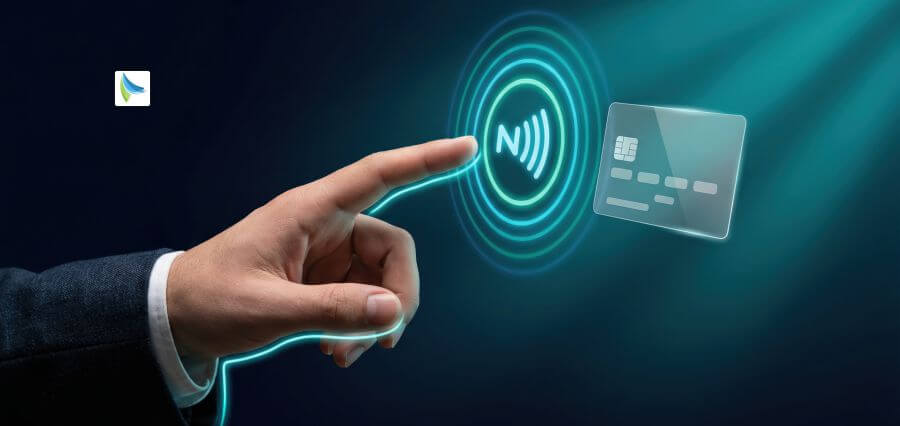
The technologies that facilitate payment are coming together to form one universal layer. On top of that, these technologies include contactless terminals, digital wallets, QR codes, and direct-to-bank transfers. Commerce is becoming more and more like a liquid thereby enabling brands to be where their customers are without intervening, delaying, or complicating the matter further.
Financial Inclusion Enhanced by Innovation
Payment innovations are unlocking opportunities for people who have been left out of the financial systems in the past. Technologies that are mobile-enabled facilitate payments through digital wallets as well as low-priced transaction platforms, which can bring the rural communities, small businesses, and underprivileged groups, into the big digital economy.
One of the biggest advantages of payment technology is that it does not rely on a physical bank branch or on the traditional credit framework and thus, it is giving more people the power to decide the way they want to earn, save, and spend.