



A handshake meant you were in the business in the pre-digital era. Today, modern business is a sequence of encrypted pulses, where the boundary between our physical and digital lives dissolves into a hyper-connected reality. Nowadays, our digital data has become the currency of ‘trust.’ It has become both our most valuable asset and our most fragile vulnerability.
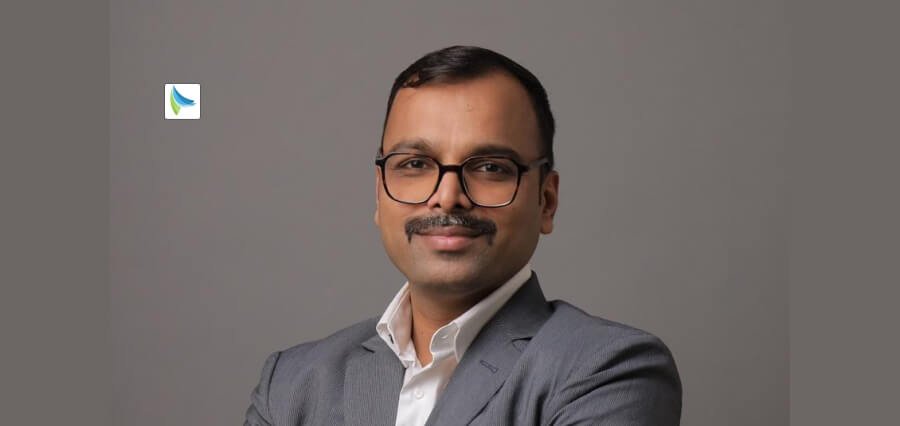
Prashant Nimbalkar, the Regional Sales Leader at SOCRadar® Extended Threat Intelligence, is well known as an influential top voice on LinkedIn and an expert in cybersecurity. He believes that the time has come when ‘good enough’ security is an open invitation for catastrophic failure.
The Evolution of the Threat Landscape
Prashant Nimbalkar emphasized that the threat landscape is increasingly dynamic and developing, due to technological improvements through the years and realized on account of the emergence of Artificial Intelligence (AI) and Machine Learning (ML) as defense. For both organisations and individuals, being able to keep ‘ahead of the curve’ will no longer just be a luxury; it must now become a mandate for survival.
Blueprint for Cyber-Leadership
In an industry defined by cold code and invisible threats, Prashant Nimbalkar has carved a reputation as a leader who prioritizes the ‘Human Firewall.’ To Prashant, the most sophisticated cybersecurity sales strategy is only as strong as the culture that powers it. He operates at the rare intersection of radical collaboration and Six Sigma precision, proving that in the new cyber era, the most valuable asset isn’t the software. It’s the collective intelligence of the team.
The following is the strategic plan that Prashant Nimbalkar has laid out from 2026 to 2027 with regard to security:
- The Death of Implicit Faith: Zero Trust Architecture
“We are no longer in a ‘buzzword’ phase. Zero Trust has transitioned from being just a well-known concept to the operational standard of doing business.” Prashant Nimbalkar notes that we must change from relying solely on a perimeter-style approach to securing our systems and networks to adopting a fundamentally new way of thinking: Trust nothing; verify everything. By verifying end-users, devices, and connections at EVERY step of the authenticity of those items, Zero Trust becomes a bedrock of our digital design and plan for success into the future.
- The Algorithmic Arms Race: AI and Machine Learning
In the battle against breaches, human speed is no longer sufficient. Prashant Nimbalkar elaborates that Artificial Intelligence and ML have become the enemy’s weaponized solutions; the creation and deployment of AI/ML technology now enables real-time interrogation of and reaction to extensive data sets to identify and neutralize threats with unprecedented accuracy and speed.
- Building Resilience: Beyond the Ransomware Economy
The ransomware economy has rapidly become a very sophisticated enterprise. Cyber criminals are skilled at their craft! As we migrate to hybrid and multi-cloud businesses, the ‘surface area’ of risk has expanded. The number of entry points created by IoT devices has increased exponentially, and many of those entry points are unsecured. Hence, now, the focus must be on ‘robust and reliable’ identity management and the standardization of security across these disparate IoT devices.
- The Complexity of the Cloud and IoT
Prashant Nimbalkar is also concerned about the increase in ‘high-profile’ supply chain attacks, where much of a software product is generated by third-party or external entities. At the same time that we’ve seen increases in high-profile supply chain attack incidents, we’ve also seen an increase in the number of global regulations (such as GDPR and CCPA) focusing on the compliance of the software lifecycle. According to Prashant, because of compliance, cybersecurity needs to be an integral component of how an organization manages its corporate governance and its Third-Party/Vendor Management processes.
- The Sovereign Mandate: Governance and Supply Chains
Sophisticated software will not protect an organization that does not have a strong ‘human firewall.’ As mentioned earlier, there is currently a worldwide shortage of Cybersecurity personnel. The best way to address this issue is through dual investment: aggressive upskilling of technical staff and continuous, culture-shifting training for all employees.
- Bridging the Human Divide: Skills and Culture
The lack of a strong ‘human firewall’ in an organization, even when using the most advanced software globally, won’t protect it from threats. In his article, Prashant Nimbalkar points out a current global shortage of Cybersecurity experts and that this shortage can only be solved with a dual investment to develop technical staff through up-skilling and by providing culture-changing training on an ongoing basis to the entire workforce.
The Inclusive Shield: Culture as a Strategic Asset
Prashant Nimbalkar believes that Teamwork can increase the performance of a team. Prashant Nimbalkar encourages his team members to brainstorm with him in an ‘open-architecture’ style of communication. The result is that Accountability and High Performance are established through Psychological Safety, which is defined as feeling valued by one’s teammates. In his words: “When we work together as a team, we align our diverse perspectives around one common goal.”
Prashant Nimbalkar wants to see…
The Cyber-Safe World of Tomorrow
Prashant’s vision goes beyond today’s events. He is a Long-Term Cyber-Sovereignty Leader. He builds powerful and Motivated High-Performance Teams with surgical precision, executing complex sales initiatives. This makes him a ‘major player’ for any company operating in the Volatile Cybersecurity Market.
As the ‘Digital Protector of the New Cyberverse,’ he will continue to support the creation of a safer world; a world that uses professional growth, data integrity, and human collaboration to create an unbreakable defense.