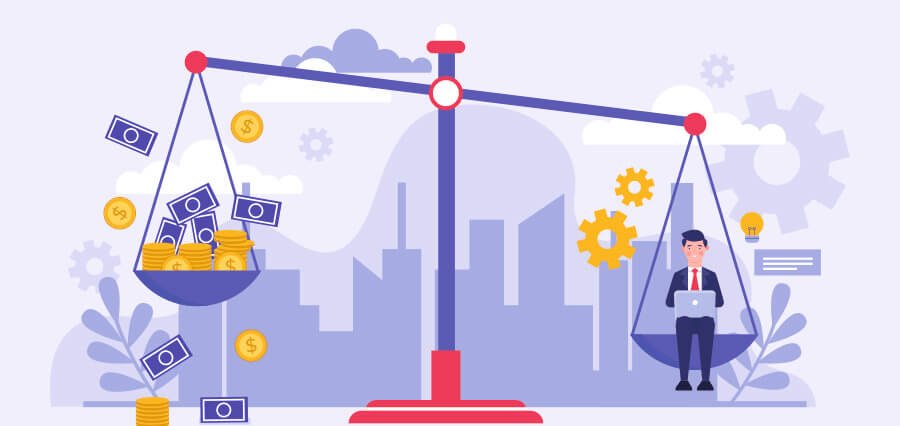





Few people could predict the impact of Software as a Service (SaaS) on modern innovation. But those who knew, knew. For the first time, small startups and niche companies had equal opportunities to compete in the major leagues. And if you made it, the world was yours for the taking.
The global SaaS market may be experiencing a blip, yet it still increased its value to $315.68 billion in 2025. This year is expected to see more expansion, with a projected $375.57 billion, Fortune Business Insights reports.
Now that the industry is transitioning to a more balanced growth phase, Box CEO Aaron Levie says that boards should be eying the best use of their capital. Where can you drive profitability without sacrificing healthy development?
The answer is simple. Look at the infrastructure powering today’s SaaS boom. Tool integration, hybrid cloud-based solutions, and centralized data-driven analytics. These are some of the tech fueling the biggest software companies.
We don’t have a magic formula to guarantee global success, but we can point you in the right direction with sound frameworks that have worked for others.
SaaS Growth Is Global by Default
The big picture is that SaaS growth was bound to go global. You knew that already. The sector is no longer limited by geography. Companies of all sizes are selling to customers across borders.
McKinsey’s market research shows the global SaaS market continues to expand as businesses demand flexibility. They want cloud-based tools that can scale quickly and update easily. This change is pushing SaaS founders to think globally much earlier than initially planned.
At the same time, SaaS trends indicate rising competition across nearly every category. New tools launch daily. Features are copied fast. Pricing pressure is constant.
When Product Alone Isn’t Enough!
This question always arises when launching a product to market. Remember this: A great product can get attention. Infrastructure keeps customers.
Founders are learning that growth depends on much more than features. Companies that scale well invest in the systems that support delivery, global billing, uptime, and customer experience.
When infrastructure fails, customers don’t always complain; they cancel their subscriptions.
This is where many SaaS companies lose their way.
Payments: The Infrastructure Many Founders Overlook
Selling globally is easy in theory. Getting paid globally is not. Different regions bring different currencies, VAT handling, payment processing, and global tax compliance rules. If you’re managing this manually, it slows teams down and introduces risk.
PayPro Global explains that’s why many SaaS startups rely on payment platforms to manage global payments, subscriptions, taxes, and compliance in one system.
Instead of building complex billing infrastructure from scratch, they use established platforms that already understand international markets.
The result? Fewer failed payments. Happier customers. Less operational stress.
Cloud and Data Centers: The Silent Backbone
Every SaaS product lives on infrastructure most users never see. Cloud platforms and data centers handle storage, speed, security, and availability.
Right now, investment in data centers is exploding, driven by SaaS and AI. However, not all growth is sustainable. Analysts warn that rising costs, energy constraints, and overbuilding could create instability in the long term.
McKinsey calls it as well, noting that data centers and the energy sector must advance together to support the future of digital services responsibly.
AI Is Raising Expectations
AI was once treated as a shiny new toy. Not surprising that it’s quickly becoming a core part of SaaS products.
From smarter workflows to automated support, AI-driven features are changing what customers expect from software. Tech trend research shows AI is reshaping how software is built, delivered, and scaled.
Yet, AI is an energy monster. Data centers powering AI are expected to more than double their electricity usage by 2030. If your infrastructure can’t support it, performance suffers and so does trust.
Lean Teams, Global Reach
One of the most important shifts in SaaS is how small teams can now operate globally.
Modern infrastructure allows founders to outsource the less complex work. Hosting, analytics, billing, compliance, and payments no longer need to be built in-house.
SaaS companies with lean teams and a strong foundation grow faster and adapt better than larger, slower organizations.
This approach lets owners focus on product, customers, and strategy rather than paperwork.
The Real Engine Behind the SaaS Boom
The global SaaS boom isn’t powered by hype or headlines. It’s energized by systems that work in the background.
Cloud platforms keep products online. Data centers handle demand. AI raises performance standards. Enhanced payment platforms ensure money moves smoothly across borders.
Founders who understand this don’t chase growth blindly. They build on solid foundations. Because in modern SaaS, the strongest companies aren’t well-designed, they’re also well-supported.