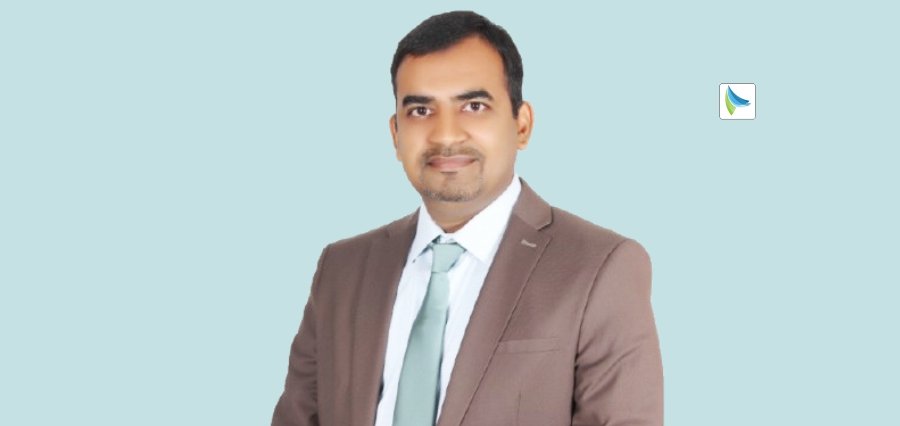




Picture being at that place, where every cobblestone is pressed down by centuries-old prayers, and ancient walls breathe with history. Now consider the audacity to touch such sanctity, not to alter it, but only to amplify it. Architecture turns into sacred custodianship in Saudi Arabia’s most overtly ambitious cultural renaissance, where sacred and modern collide. Arch. Taha Abdulaziz Alandejani has found his own calling in this rare area of reverence and revolution.
As Senior Director of the King Salman Project for Quba’a Mosque, and Design Director at the Madinah Region Development Authority, Taha Alandejani is the steward of one of the most consequential architectural projects in the Islamic world. He will eventually influence how future generations will perceive one of the most sacred sites to Islam, and has a canvas that covers 12 million square meters of hallowed ground.
Orchestrating the Sacred
The King Salman Project isn’t merely construction. It’s cultural choreography on an unprecedented scale. Taha Alandejani navigates a delicate trinity: expanding the historic Quba’a Mosque to welcome growing numbers of faithful, master planning an entire urban ecosystem around it, and restoring centuries-old structures without diminishing their spiritual essence.
He works at the convergence of multiple worlds. Saudi government institutions collaborate with international design luminaries. Technical experts debate with heritage conservators. Vision 2030 initiatives intersect with timeless Islamic traditions. Through this intricate web, Taha Alandejani weaves coherence, serving everyone from modest pilgrims to royalty while balancing requirements of operators, regulators, investors, and cultural guardians.
This is architecture as diplomacy, design as dialogue.
Shaping National Identity
His influence radiates beyond Quba’a. As a leading representative of the King Salman Charter for Architecture and Urbanism, Taha Alandejani champions principles reshaping Saudi architecture from its foundations. This charter declares that buildings must serve human needs first, honour cultural continuity, embrace sustainability, and pursue innovation without abandoning identity.
He translates these ideals through prestigious judging panels such as the King Salman Charter Awards, the Saudi Building and Infrastructure Awards 2025, and numerous design competitions. His evaluations set standards that ripple through practices nationwide. Young architects study his projects; established firms seek his counsel.
The Human Equation
“I believe in properly sourcing talent and empowering them through structured training and support,” Taha Alandejani explains. He doesn’t micromanage; he mentors. He doesn’t dictate; he develops. His teams receive autonomy alongside accountability.
This people-first approach extends to every design decision. “Architecture is a dialogue between people’s behaviours, cultural values, and environmental context,” he insists. His buildings emerge from understanding how humans move, pray, gather, and rest. “It’s not enough to create a beautiful building; it must operate efficiently, reflect cultural values, and serve the people who use it.”
Every space he envisions honours human dignity while enhancing experience.
Sustainability as Sacred Duty
For Taha Alandejani, sustainability transcends environmental buzzwords, it’s architectural responsibility reimagined. “True sustainability is not just about carbon footprints; it’s about enriching human life while preserving the natural and cultural environment,” he states. His projects demonstrate this through strategic building orientation, indigenous landscaping, and renewable technologies like solar integration.
He employs off-site modular construction to minimize waste and maximize efficiency. Every decision undergoes scrutiny through sustainability’s triple lens: environmental stewardship, economic viability, and social welfare. This philosophy aligns with Vision 2030’s Quality of Life Program, positioning his work at the heart of national transformation.
From Foundation to Influence
Taha’s journey began with residential villas and hospitality projects that taught him architecture’s practical realities. Each project became a classroom where design confronted budgets and vision negotiated with feasibility. He developed an understanding of “architectural ecosystems”- the intricate interplay between aesthetics, technology, economics, and human behaviour.
His innovation doesn’t chase trends; it reinterprets tradition. He merges traditional architectural forms with contemporary structural systems, creating designs that feel both timeless and current.
Cultivating the Next Generation
Beyond building structures, Taha Alandejani builds capacity. He bridges academia and practice, connecting universities with professional realities. “It’s not about hiring local, it’s about creating a richer local ecosystem,” he emphasizes. His teams blend seasoned expertise with fresh perspective.
He pushes young architects toward multidisciplinary mastery. “Architects must not only design but also understand finance, operations, and stakeholder values,” he asserts. Tomorrow’s architects must be equally comfortable with design software and spreadsheets, with aesthetic theory and business strategy.
Legacy in Living Form
Ask Taha Alandejani about legacy, and his answer arrives without hesitation: “Innovative designs with quality and a human approach.” While artificial intelligence reshapes professions and digital tools revolutionize practice, he remains convinced that architecture’s soul lies in its humanity.
Through mosque expansions that honour sacred tradition, heritage restorations that preserve cultural memory, and urban masterplans that enhance communal life, Taha Alandejani builds more than buildings. He creates experience, meaning, and connection. His true legacy emerges not in concrete and steel but in how people live, gather, and find meaning within the spaces he creates, and in the architects he inspires to carry this vision forward.