


Turning Tides―Transforming Times: Tale of a Titan
It needs some of the most prominent leaders to drive change to transform unsustainable times into sustainable ones. Resolute human will has always turned tides in humanity’s favor while battling turbulent waves of the passing moments and raging storms of personal, local, and global challenges. That’s how these visionary minds shaped the present events while directing the course of tomorrow for a better future.
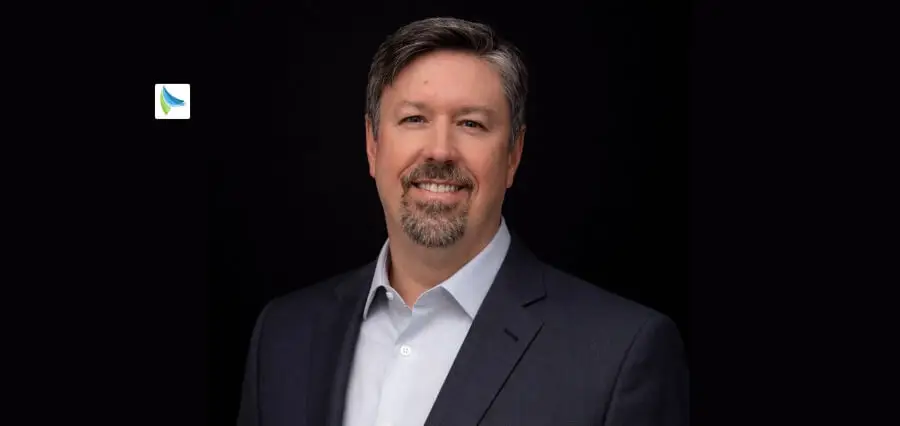
As the Director-Global Sustainability at the d&b group – a global leader in event technology comprised of d&b audiotechnik GmbH & Co. KG and d&b solutions Ltd. – Robert Trebus is redefining this era by showing how innovation, data, and collaboration transform live events into sustainable growth engines.
When you think about transformation, most people imagine it as a recent phenomenon. But for Robert Trebus, Director Global Sustainability at the d&b group – a global leader in event technology, comprised of d&b audiotechnik GmbH & Co. KG and d&b solutions Ltd. – transformation has been a professional constant for more than three decades. His career has spanned the introduction of innovations in the entertainment market, the creation of new business models, and the steady advancement of sustainability as a core business driver.
“Transformation in the economy is often perceived as something new,” Robert Trebus reflects, “but I’ve been actively shaping it for over 30 years. Today, sustainability and digitalization are the strongest forces driving this change. My mission is simple: to future-proof the event industry.”
From early on, he was fascinated by the dual role of technology and innovation – as both a source of challenges and a key to solutions. That conviction led him to focus his work where impact is greatest: at the intersection of industry, regulation, and society. Through his involvement in national and international standardization bodies, associations, and projects, Robert Trebus has helped make sustainability measurable, comparable, and practically applicable.
Today, at the d&b group, he is responsible for steering the global sustainability agenda – not just for the company, but as part of a larger effort to shape the future of the entire live event industry. His vision is bold yet pragmatic: events must continue to create powerful experiences, but without leaving deep scars on the environment.
Beyond Compliance: Embedding Sustainability in Strategy
Unlike many executives who treat sustainability as a compliance function, Robert Trebus sees his role as far more expansive. “My job is about shaping transformation holistically,” he explains.
This means managing regulatory frameworks such as ESG reporting, the EU Taxonomy, and the Green Deal, while simultaneously developing strategies for the circular economy, climate neutrality, and sustainable product design. His team creates systems that streamline internal processes and deliver transparency to customers, investors, and partners.
His guiding principle: sustainability must be embedded at the very heart of corporate strategy – not as an add-on, but as a driver of innovation, competitiveness, and long-term relevance.
Recognition Built on Consistency
Recognition has followed Robert Trebus in recent years, but he is quick to emphasize that awards and honors do not emerge from isolated actions. They are the product of years of consistent work: leading international projects, building networks, shaping standards, and bridging politics, industry, and science.
“For me personally, such recognition confirms that consistent efforts in standards, strategy, and innovation are not only seen, but valued,” he says. “For the d&b group – comprising d&b audiotechnik GmbH & Co. KG and d&b solutions Ltd. – it is also a strong signal: we are not only a manufacturer and service provider, but an active driver of sustainable transformation in the global event industry.”
Leading by Balance: Vision and Precision
Robert Trebus is clear about the essence of sustainability leadership: balancing vision with reality. His principle is succinct – think big, act with precision.
That balance requires a deep understanding of the value chain, from suppliers and partners to customers and policymakers. “Each stakeholder has unique needs and unique capabilities. Only a holistic approach creates a robust foundation for sustainable growth,” he notes.
Visions may inspire, but they only generate impact when translated into values, processes, metrics, and action. Robert Trebus emphasizes governance and systems that tie long-term goals to measurable short-term progress. He sees himself as both an inspirer and a bridge-builder – translating the language of politics and science into the operational reality of a global market leader.
“In this way,” he says, “transformation is not only promised – it is delivered.”
Culture Change: From Obligation to Pride
Sustainability has already reshaped d&b group’s culture. At the leadership level, market transformation commands top attention. Customers’ sustainability goals are understood in detail and supported with tailored solutions.
At the team level, sustainability has shifted from an obligation to a source of pride and motivation. But Robert Trebus underscores that cultural change doesn’t happen by chance – it requires structure.
Processes have been continually refined, sustainability targets embedded in strategy, and mandatory training programs established. The result: sustainability is no longer an abstract concept but a lived practice, anchored in decision-making at every level of the company.
Innovation in Practice: Sustain Symphony
Robert Trebus’s vision for innovation is clear: make sustainability not only possible, but accessible and scalable.
The company’s flagship initiative is SustainSymphony, an ESG platform offering tools for organizers, venues, and partners to measure, manage, and report their sustainability performance transparently. It reflects international standards but remains practical and user-friendly. Importantly, it is freely accessible with lower barriers and encourages widespread adoption.
The impact is already visible. Events that once viewed sustainability as a cost factor now recognize it as a value driver. Data and transparency have unlocked new opportunities – from operational improvements to access to green finance. “Sustainability is shifting from a reporting exercise to a true growth engine for the industry,” Trebus notes.
The Power of Data and International Standards
For Robert Trebus, credible sustainability starts with robust data. He acknowledges that this is often a major hurdle, but emphasizes that the effort quickly pays off. High-quality data creates long-term value, and genuine sustainability depends on verifiable improvements.
From the start, d&b ensured that even a small ESG platform like SustainSymphony would deliver data quality comparable to banking standards. “Credibility only emerges when aligned with frameworks like the SDGs, CSRD, ISO, and the EU Taxonomy,” he explains.
Sustainability, he argues, is now one of the most powerful drivers of economic transformation. But companies can only harness its potential if reporting is absolutely reliable – for shareholders, banks, partners, and customers alike.
Shaping the Next Decade of Events
The event industry is already undergoing a profound transformation – and has the potential to become a societal frontrunner. Robert Trebus identifies three priorities:
- Net-Zero Events – climate-neutral production and reporting.
- Circular economy – products designed for multiple use cycles, remanufacturing, and recycling.
- New Business Models – moving from ownership to services and sharing, enabled by digital transparency tools like the Digital Product Passport.
Increasingly, organizers adopt ISO 20121 to embed sustainability systematically – from weddings to the Olympic Games. Robert Trebus stresses that sustainable events are never accidents: “They are the result of good organization, clear processes, and continuous improvement.”
Events, he adds, are societal milestones: “They can serve as showcases for large-scale transformation – inspiring, visible, and impactful.”
Collaboration as a Catalyst
“No event transforms in isolation,” Robert Trebus insists. That is why he engages actively with international standards bodies, associations, universities, and policymakers.
Together, they develop shared processes, tools, and roadmaps. In parallel, pilot projects with organizers and production firms test innovations directly in practice. This multi-level strategy – politics, industry, practice – ensures that solutions move beyond laboratories into broad, economically viable applications.
The benefits of efficiency, he adds, quickly become visible in cost structures and competitiveness. Training and capacity-building are equally vital, enabling all stakeholders to actively shape the transition.
Guiding Principles: Integrity, Impact, Resilience, Teamwork
Robert Trebus grounds his leadership in four principles: integrity, impact, resilience, and teamwork. Integrity means honesty, even when uncomfortable. Impact means making initiatives measurable. Resilience recognizes that transformation brings setbacks. And teamwork underscores that true success always comes from collective effort.
A formative moment in his career was working within international standardization bodies, where he saw both the complexity and the immense power of creating shared processes. That experience deepened his conviction that transformation succeeds only through bridge-building – across industries, nations, interests, and people.
Challenges Ahead: Complexity and Speed
Robert Trebus is candid about the hurdles. Complexity is the greatest challenge – with global supply chains, diverse regulations, cost pressures, and cultural differences. Meeting this challenge requires clear governance, standardized processes, and digital tools, alongside empowering employees and fostering a culture of learning.
The second challenge is speed. Regulations, markets, and expectations are evolving faster than ever. Robert Trebus stresses that transformation cannot be treated as a one-time project. “It must be understood as a continuous process that demands flexibility, adaptability, and endurance.”
Advice for Emerging Leaders
Asked what advice he would give to the next generation of sustainability leaders, Robert Trebus offers three guiding principles:
- Strategy: Make sustainability core, not peripheral. Build roadmaps with binding targets.
- Resilience: Stay committed through resistance. Transformation is a marathon, not a sprint.
- Partnerships: Build alliances and networks. Nobody transforms alone.
Above all, he says, don’t let setbacks derail you. “Every major change begins with small steps, pursued consistently. Sustainability thrives on continuity – and on the belief that every contribution matters.”
Looking Forward: Twin Transformation and Green Finance
For Robert Trebus, the coming years are rich with opportunity. He highlights the Twin Transformation – the convergence of sustainability with digitalization, data, and AI – as the decisive driver of future business models.
“What looks like bureaucracy today will soon form the backbone of tomorrow’s value creation,” he predicts.
At the d&b group, this vision translates into building a future-proof ecosystem for the event industry – one that integrates sustainability into strategy, operations, and finance. Access to green finance is a central part of that future. Sustainable events will increasingly qualify for new funding models, bridging ecology and economy in ways that create both resilience and growth.
Cross-industry collaboration will also be essential. “Only by working with sectors like automotive and energy can we scale transformation globally,” Robert Trebus says.
The Greatest Innovation Opportunity of Our Time
For Robert Trebus, sustainability is not an obligation but an unparalleled innovation opportunity. As he concludes:
“My mission as a leader is to ensure that not only the d&b group, but the entire event industry, becomes a global pioneer of sustainable transformation.”