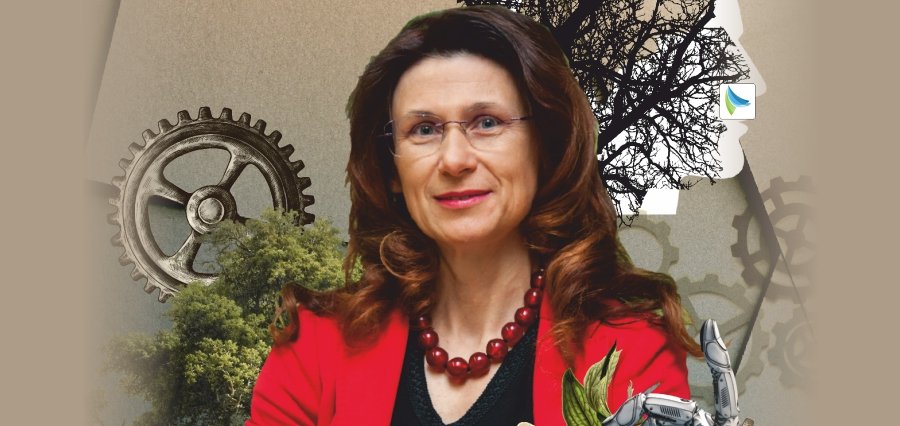





At South African universities, there is a new reality, and it is because of a single change agent; a leader who understands that the transformation of an institution is inherent in unlocking human potential, not about political domination. The journey towards research excellence should not be imposed; rather, it is a cultural shift that will foster excellence by developing genuine relationships, with a strategic alignment, and with an unshakeable belief that institutions which have historically had less opportunity can and will be on a global level of competition. The leader of this movement is Professor Nosisi Feza, the Deputy Vice Chancellor for Research and Internationalisation of Walter Sisulu University (WSU). Her arrival is a bold statement: WSU will NOT settle for mediocrity.
Her appointment represents more than a strategic hire. It signals a declaration of intent, it challenges the limiting narratives often imposed on rural universities, and it stands ready to claim its rightful place among globally competitive research institutions. Professor Nosisi Feza brings to this role a rare combination: the scholarly credentials of a distinguished researcher, the practical wisdom of someone who has led transformation across multiple institutions, and the moral authority of a leader who has walked the difficult paths she now asks others to follow.
The Genesis of Purpose-Driven Leadership
Leadership, Professor Nosisi Feza discovered early in her career, is not a title one pursues but a responsibility that emerges organically from one’s commitment to others. Her leadership talents surfaced early, resulting in rapid promotions that attracted the attention of head-hunters across South Africa’s higher education sector. Yet these external validations merely confirmed what colleagues already recognized: here was someone who genuinely believed in human potential, who could articulate compelling visions while creating practical pathways to achieve them.
Her professional foundation was built in humble settings. She began as a school teacher specializing in science and mathematics, working with students whose opportunities were constrained by geography and systemic inequalities. In 1991, a British Commonwealth Scholarship opened new horizons, leading Professor Nosisi Feza to join a non-governmental organization as a rural coordinator for mathematics teacher training in the Eastern Cape. When she joined the University of Port Elizabeth as a mathematics lecturer, she carried these insights into tertiary education, where they would shape her understanding of what universities could accomplish.
The pivotal moment arrived in 2006 when she secured a Fulbright Scholarship for doctoral studies at the State University of New York at Buffalo. Working alongside renowned scholars Professors Doug Clements and Julie Sarama, she pursued a PhD in Mathematics Education while absorbing research methodologies and global best practices. Professor Nosisi Feza received the inaugural Leroy and Margaret H. Callahan Scholarship and earned a Diversity Scholar Award from the National Center for Institutional Diversity in Michigan in 2009.
The Crucible of First Leadership: Transforming Resistance into Respect
Professor Nosisi’s first executive leadership role became a defining chapter that would crystallize her leadership philosophy. She inherited a high-performing, highly confident team that had operated exclusively under male leadership. The resistance was immediate, though carefully coded- negative attitudes masquerading as professional skepticism, subtle doubt expressed through indirect questions, and tests of her authority disguised as routine interactions.
Many leaders confronting such resistance resort to authoritarian control or defensive posturing. Professor Nosisi Feza chose a more difficult path. She initiated staff-building activities designed to help team members understand each other’s strengths and personalities. As they shared their capabilities and built trust, something remarkable unfolded. The skepticism that greeted her appointment began to dissolve. Respect grew not from demands or demonstrations of power, but from mutual understanding and genuine engagement.
Scholarly Foundations: Building Credibility Through Research Excellence
Professor Nosisi’s executive leadership carries weight because it rests on a foundation of scholarly achievement. As an NRF C-rated researcher, she brings the credibility of someone who has done the work she now asks others to do. Her research interests focus on early childhood mathematics stimulation, teacher development, and cultural influences in mathematics learning among students of African descent. These are the areas where her work challenges deficit narratives and highlights strengths often overlooked by mainstream scholarship.
Her scholarly productivity demonstrates a sustained commitment to advancing knowledge. She has published 24 articles in peer-reviewed journals, contributed six book chapters, authored three published reports, and produced nine conference proceedings papers. Professor Nosisi Feza edited a peer-reviewed book and developed an illustrated English-isiXhosa mathematics dictionary for grades R to 9- a practical tool addressing the language challenges many South African learners face.
Ascending Through Institutions: A Career of Strategic Impact
After completing her PhD, Professor Nosisi Feza embarked on a trajectory that would take her through several of South Africa’s leading institutions. She served as an early childhood research fellow at the University of Northern Iowa before returning to South Africa as a post-doctoral fellow at the Human Sciences Research Council in 2010. Her exceptional publication record led to promotion to senior research specialist in 2014, where she managed large-scale research projects, including the Trends in International Mathematics and Science Study.
In 2014, the University of South Africa invited her to lead the Institute of Science and Technology Education at the professor level. From 2017 to 2020, she served as Dean of Humanities at the Central University of Technology, honing her skills in strategic leadership and institutional management. She then returned to WSU as Campus Rector and Full Professor, leading the Buffalo City Campus before moving to the University of Venda in July 2021 as Deputy Vice-Chancellor for Research, Innovation and Post Graduate Studies.
Vision 2030: Architecting WSU’s Research Future
Professor Nosisi returns to WSU with ambitious plans aligned with Vision 2030. It’s a roadmap positioning WSU as a leading technology-driven African institution. However, she emphasizes that technological advancement must be rooted in African epistemologies, ethically integrated with artificial intelligence, and centered on humanity. “This vision demands that we align our strategies while staying true to the identity of this institution,” she explains. “Our research must uphold integrity and remain relevant to the communities we serve.”
Her vision for WSU’s research culture is both aspirational and pragmatic. She prioritizes quality, relevant research that society experiences and benefits from directly. Research, in her view, must serve people by informing teaching, learning, innovation, community engagement, and entrepreneurship. This philosophy positions research as a problem-solving tool, a driver of development, and a bridge between academic knowledge and community transformation.
She emphasizes aligning research with national and global priorities, particularly South Africa’s development agenda and Africa’s Agenda 2063. Central to her approach is placing students at the heart of internationalization and global development. She champions opportunities that enhance students’ and staff members’ global exposure, including programs such as Collaborative Online International Learning (COIL), which proved invaluable during COVID-19. She plays an active role in securing international research funding, collaborations, and strengthening WSU’s global visibility through strategic marketing initiatives and participation in international ranking systems.
Personal Sustainability: The Practice of Self-Care as Leadership Strategy
Professor Nosisi’s leadership effectiveness stems partly from her deliberate commitment to personal well-being and self-care. She begins each morning with prayer, exercises for 30 minutes to an hour, nourishes her body with healthy foods, and checks in with her family before starting work. During working hours, she remains intentional and productive. She gives quality time to her family and sets clear boundaries to protect that space.
A practice she has recently embraced is positive self-talk. She protects her inner self by separating her identity from her leadership role. Any attacks on her work are directed at the role, not at her as a person. She nurtures her mind each day by reading before bed and playing challenging online games that keep her sharp. She drinks only water, avoids fizzy drinks, and ensures she sleeps for seven to eight hours. She makes time for silence and solitude, creating moments of calm for herself.
“I love being human,” she affirms, “and I embrace my femininity with pride and tenderness.” This holistic approach to self-care enables sustained high performance while maintaining personal authenticity. It models for her teams that leadership effectiveness requires not self-sacrifice but self-awareness, not martyrdom but balance, and not exhaustion but renewal.
Wisdom for Emerging Leaders: The Primacy of Service
When asked what advice she would offer young leaders who want to make a real difference, Professor Nosisi’s response cuts to the heart of authentic leadership: “Leadership is not about power or popularity, it is about service.” She insists that leaders must know themselves, embrace humility, and commit to continuous personal and professional growth to lead effectively.
She reminds aspiring leaders that their role is to guide the team, not to outpace or overshadow it. “Remember, some of those you lead may be smarter or more skilled in certain areas than you are,” she cautions. “Do not silence their voices; instead, foster an environment of rigorous engagement where their talents can flourish and contribute to the growth of your institution.” Her advice emphasizes creating conditions that allow both leaders and their teams to thrive, respecting every team member and encouraging them to share their unique skills and knowledge.
Legacy in the Making: WSU’s Research Renaissance
As Professor Nosisi Feza settles into her role at WSU, she brings more than two decades of experience spanning multiple institutions, a distinguished research record, proven success in building high-performing teams, and a clear vision for institutional transformation. Her leadership journey demonstrates that authentic leadership emerges not from credentials alone but from the integration of expertise with empathy, strategy with service, and ambition with authenticity.
She envisions a WSU where research serves as the heartbeat of the institution, where quality and relevance drive scholarly work, where African epistemologies inform technological advancement, and where research integrity and community relevance remain non-negotiable. Her articulation of this vision carries the weight of lived experience: “WSU is named after a global human rights stalwart; we must take our rightful place on the world stage.” This statement refuses to accept mediocrity or limiting narratives about what rural, historically disadvantaged institutions can achieve.
The challenges ahead are significant. Higher education institutions face increasing sustainability pressures that demand agility, innovation, and responsiveness. Professor Nosisi Feza understands these challenges intimately, having navigated them at multiple institutions. She brings to WSU not untested theories but proven strategies, not abstract aspirations but concrete plans, and not individual brilliance but collaborative frameworks that leverage collective intelligence.
Professor Nosisi’s story continues to unfold at WSU, where she writes the next chapter not alone but alongside the colleagues she mentors, the networks she cultivates, and the communities she serves. Her legacy will ultimately be measured not by titles held or awards received, but by the researchers she develops, the institutional culture she shapes, and the meaningful contributions WSU makes to society under her leadership.