


In high-consequence industries, the difference between safe operations and catastrophic outcomes rarely lies solely in technology. More often, it is determined by the quality and timing of leadership decisions made under conditions of uncertainty.
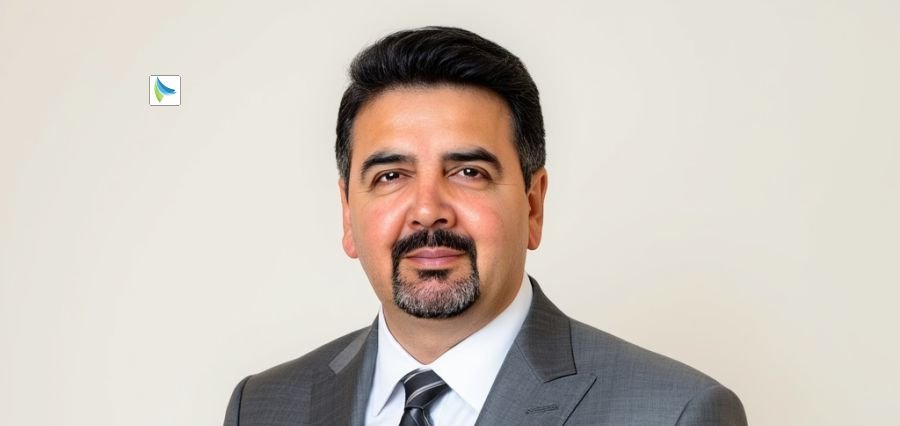
For more than thirty years in the global energy industry, Patricio V. Rivera, PhD, has explored how organizations turn information, experience, and leadership judgment into safer, more resilient systems.
He puts it plainly, “Leadership is often misunderstood as authority, but in reality, leadership begins with credibility.”
Rivera’s career spans operational leadership roles across the United States, South America, the Middle East, and North Africa. Across these regions, he worked with multidisciplinary teams responsible for managing complex industrial operations where safety, environmental stewardship, and operational continuity are deeply interconnected.
Through this experience, Rivera developed and promoted two ideas that increasingly shape discussions about modern safety leadership: the Green Day perspective and the Value of Information framework. Together, these concepts offer practical ways for organizations to strengthen decision quality in high-consequence environments.
The Engineer Who Asked Why
In the capital city of Quito, Ecuador, a young Patricio Rivera developed an early and insatiable curiosity about the way the natural world and human systems intersect. That curiosity carried him through the Pontifical Catholic University of Ecuador, where he earned his degree in Civil Engineering. But Rivera was not the kind of engineer who stopped at blueprints and load calculations.
Reflecting on those formative years, he recalls, “Early in my career, I realized that engineering involved more than structures and calculations. It required understanding systems and recognizing the engineer’s responsibility to society.”
That question became the engine of a remarkable academic journey. Rivera pursued a Master’s degree in Environmental Engineering, followed by an MBA in Oil and Gas Management from the United Kingdom, and ultimately a PhD in Occupational Health and Safety from the United States. He then completed the Executive Management Program at UCLA and the Advanced Management Program at Rice University, credentials that reflect not ambition for its own sake, but a genuine hunger to understand systems, people, and risk at their deepest levels.
These academic experiences complemented his operational work and reinforced a systems-oriented perspective toward industrial risk, leadership, and organizational learning.
Over the following decades, Rivera assumed operational leadership across four continents, each with distinct cultures and regulations, requiring constant adaptation, cultural fluency, and building trust where mistakes could cost lives.
A Philosophy Built from Experience
Rivera’s transition from field engineer to global HSE executive provided a deep understanding of industrial failures—and successes. He saw that technical expertise alone is not enough; the gap between engineering and outcomes lies in how leadership decisions and human behavior respond under pressure.
Rather than treating safety as a compliance exercise, Rivera approached it as a leadership discipline. He designed safety management systems, contractor safety frameworks, and leadership development programs that embedded safety thinking into the daily rhythm of operational decisions, building not a culture of fear around risk, but one of informed awareness and disciplined judgment. Through it all, Rivera returned to one conviction.
For Rivera, effective safety management depends not only on strong technical systems but also on leadership behaviors that encourage transparency, disciplined thinking, and continuous learning.
He says, “Safety is not ultimately about rules or compliance. It is about leadership and the quality of the decisions we make every day.”
The Green Day Philosophy: Learning from Success
One of Rivera’s most distinctive contributions to safety leadership is the Green Day philosophy. Green Day refers to a day when operations run safely, efficiently, and as intended, without incident. The core idea is that organizations should learn not only from failures but also from successful days where everything works as planned, understanding the reasons behind these successes.
Traditional safety frameworks in the energy industry place strong emphasis on incident investigation and failure analysis. Rivera fully acknowledges the importance of understanding what goes wrong. However, he argues that organizations often overlook an equally valuable source of knowledge: the conditions that allow operations to succeed consistently.
A Green Day is a day when complex industrial activities proceed without safety incidents or disruptions, demonstrating that all safety measures are functioning as intended. Instead of viewing these days as routine, Rivera proposes examining them with the same rigor as in accident investigations. What leadership behaviors contributed to this outcome? Which communication methods allowed teams to manage risk? Which operational circumstances ensured that safety barriers performed as designed?
As Rivera often notes, “Organizations learn from failure, but real progress accelerates when we also understand why success occurs.”
By systematically analyzing successful operations, organizations can identify and reinforce the conditions that sustain reliable performance rather than waiting for failure to reveal where those conditions are missing.
In practical terms, Rivera encourages leaders to ask a different set of operational questions:
- What conditions enabled success?
- What leadership behaviors supported safe outcomes?
- What communication patterns allowed teams to anticipate and manage risk?
This perspective represents a shift from a purely reactive safety culture toward a proactive learning system, grounded in operational data and focused on strengthening the factors that allow complex systems to perform safely day after day.
The Value of Information: When Data Becomes a Decision Tool
Modern energy operations generate enormous volumes of data: sensor readings, inspection reports, maintenance records, environmental monitoring streams, and workforce observations. Yet Rivera argues that data alone does not create value. Its value emerges only when it improves the quality and timing of decisions.
As he often explains, “In high-consequence systems, information is valuable only if it improves decisions before risk escalates.”
Rivera’s Value of Information (VoI) framework examines how timing, relevance, and leadership attention determine whether safety-critical information leads to action early enough to influence outcomes. In complex operations, the difference between useful information and noise is not the quantity of data available, but whether leaders recognize which signals require attention and respond before conditions deteriorate.
This perspective is increasingly relevant as artificial intelligence and advanced analytics expand the analytical capabilities of industrial organizations. Rivera emphasizes that technology does not replace human judgment. Instead, it enhances leaders’ ability to detect emerging patterns, interpret weak signals, and make informed decisions in time-sensitive environments.
In this context, technology becomes an enabler of better judgment, not a substitute for it. The leaders who succeed in increasingly data-rich environments are those who combine analytical tools with experience, disciplined thinking, and a clear understanding of risk.
For Rivera, the real promise of modern analytics lies not in generating more data, but in improving the quality and timeliness of decisions that protect people, assets, and the environment.
Tested by Adversity: Leadership During a Global Crisis
Rivera’s philosophy met its sharpest test during the COVID-19 pandemic. Assigned to operations in Colombia at the time, he faced a country navigating unprecedented public health pressure while trying to maintain continuity in critical energy infrastructure. Travel restrictions eliminated the physical presence of key personnel. Workforce limitations strained operational coverage. Uncertainty permeated every planning horizon.
Rivera and his teams leaned hard on technology. Remote collaboration platforms, digital monitoring systems, and real-time data analytics allowed leadership teams to maintain operational awareness even without physical presence. But the pandemic revealed something more fundamental: organizations with deeply embedded safety cultures adapted far more effectively than those that had treated safety as a surface-level compliance programme.
Recounting the lessons of that period, Rivera notes, “Resilience is not only the ability to withstand disruption. It is the capacity to adapt and learn from it.”
The crisis accelerated digital practices that continue to benefit organizations today, confirming a belief Rivera had carried for decades.
The Human Dimension of Leadership
Behind the credentials, the international assignments, and the conceptual frameworks is a man who speaks openly about the personal cost and reward of a demanding career. Rivera acknowledges that life across four continents brought extraordinary professional opportunities but also required the sustained support of a family willing to make that journey alongside him.
Balance, Rivera says, was never automatic. Early in his career, he believed that personal involvement in every problem was the most effective way to support his organization. Over time, he recognized this as both unsustainable and counterproductive.
Capturing that shift with characteristic honesty, he mentions, “Effective leadership is not about solving every problem personally. It is about building strong teams capable of solving them together.”
Outside of work, Rivera finds renewal outdoors, on the golf course, and in conversations with friends over soccer. He speaks with particular warmth about becoming a grandfather, a development that added an entirely new dimension to his thinking about legacy, not just the legacy of professional achievement, but the example we set for the generations that follow.
A Career of Distinction
Rivera’s career has drawn formal recognition across multiple decades. In 2024, he received the Individual Excellence Award for the Peru offshore 3D seismic acquisition programme. Between 2012 and 2018, he earned multiple awards during the Shah Gas Field development programme in the Middle East. In 2011, he was named OOGC HSE Champion.
Earlier honours include the 2000 Team Award for the Eden-Yuturi 3D seismic programme, the 1996 Team Awards for the Indillana Complex Production start-up and the Block 15 Exploration Environmental Plan, and the 1999 President’s Award, earned for achieving ISO 14001 certification and two million man-hours without a recordable incident, a milestone that, in the language of high-risk industries, speaks for itself.
Yet Rivera emphasises, “The achievements that matter most are the teams I had the privilege to work with and the leaders who emerged from those teams.”
Mentoring the Next Generation
Today, Rivera channels three and a half decades of insight into advisory work, thought leadership, and most passionately, mentorship. He recently captured many of these reflections in a book that examines lessons learned across regions, cultures, and operational environments, serving as both a professional memoir and a practical guide for leaders navigating high-consequence industries.
His advice to aspiring leaders is consistent: start with technical credibility, but do not stop there. Learn to see systems, not just components. Grow comfortable making decisions under uncertainty because perfect information rarely exists, and waiting too long can itself become a source of risk. Cultivate humility. Build teams that solve problems together. And lead with integrity.
Reflecting on what he hopes to pass on to the next generation, Rivera adds, “The true measure of leadership is not the position we hold, but the systems we strengthen and the people we help grow.”
The Measure of a Leader
Patricio Rivera has spent more than three decades building stronger systems, wiser organizations, safer workplaces, and better-prepared people. From a civil engineering graduate in Quito to a globally recognized thought leader in HSE strategy and operational integrity, his journey traces one consistent arc: the relentless pursuit of leadership that serves people before it serves itself. He is not a theorist observing from a distance.
He is a practitioner who built his frameworks in the field, tested them against real risk, and refined them through decades of honest reflection. Summarising a career devoted to exactly that pursuit, he concludes, “In complex systems, success is rarely accidental. It is the result of disciplined leadership, informed decisions, and a culture that values learning every single day.”