


The Executive’s Roadmap
This industry is heading towards an era when technologies will not only complement the work of healthcare professionals but will completely transform them. In 2026, the global healthcare industry started implementing innovative technological approaches in response to emerging patients’ needs, the lack of specialists in the field, rising costs associated with healthcare services provision, and the necessity to personalize treatment.
The advent of innovative technologies has allowed the managers of the healthcare sector to understand that true innovation can be achieved through the establishment of a cooperative approach in which all the stakeholders of the field will concentrate on patients’ needs.
Healthcare Technology Transformation Through Artificial Intelligence
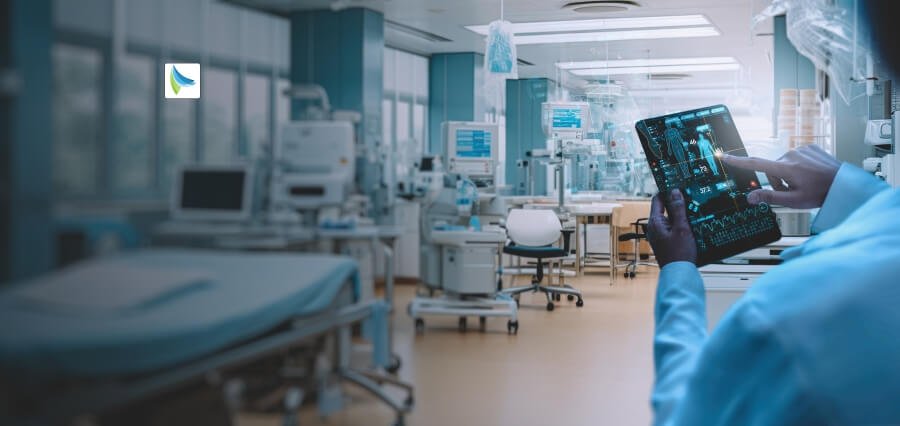
Artificial intelligence is set to be one of the major contributors towards the progress made in medicine in the year 2026. With artificial intelligence, doctors will have assistance when analyzing patient information, diagnosing diseases early on and making sound recommendations for treatments.
Whether it will be through predictive analysis or even through diagnoses, artificial intelligence will facilitate efficiency and accuracy in several health-related processes. Through artificial intelligence and its use of advanced algorithms, there can be patterns found in the patient’s medical data that are difficult to detect by humans.
In addition to assisting on the medical front, artificial intelligence is also enhancing hospital administration. Hospitals and health care institutions are expected to employ intelligent automation in their operations including patient appointment bookings.
Healthcare Technology Transformation and the Rise of Virtual Care
Telehealth has made huge strides from the early stage when it was only limited to basic video consultations. In the coming years, telehealth companies will become sophisticated enough to deliver full digital health care that connects healthcare users to professionals regardless of the geographic distance.
Currently, people are getting medical monitoring from their homes through various means including mobile applications, wearables, and video calls. This is particularly important for people with chronic illnesses, elderly patients, and underprivileged groups.
Furthermore, telemedicine is helping healthcare facilities to provide their services efficiently, minimizing hospital visits as well. The reason being that electronic health records and wearables help them monitor the patients on a regular basis.
Healthcare Technology Transformation Through Data-Driven Decision Making
The significance of data has significantly increased in the contemporary healthcare industry and become one of its core resources. Modern technologies provide an opportunity to process a large volume of health-related data and respond adequately to these results.
Analytical systems enable healthcare organizations to recognize trends among patients, forecast disease outbreaks, and allocate resources rationally. Real-time access to data regarding the state of patients provides clinicians with the opportunity to make more precise diagnostics.
By employing predictive analytics, healthcare organizations will have the opportunity to predict patients’ future needs before complications and reduce hospital readmissions, healthcare expenditures, and, consequently, increase their welfare.
If the interoperability standards concerning health-related data continue growing, healthcare organizations will easily access the health-related data of their patients regardless of their location and other factors.
Healthcare Technology Transformation Enhancing Patient Experience
There have been some remarkable changes when it comes to expectations of patients in recent years. In this connection, the expectation of convenience, customization, and connectivity is seen with regards to the experience within the healthcare system.
Healthcare organizations have responded to the changing dynamics by implementing technology through mobile health applications, appointment booking systems, web portals, and customized services. It becomes possible due to technology, making it possible for the patient to take control of their health.
Wearable technology is another important aspect of patient experience in the contemporary trend. With continuous monitoring of various health-related metrics, wearable technology provides data that can help in preventive healthcare measures.
Therefore, patient experience is one of the factors that lead to improved atmosphere in the healthcare industry in terms of communication and availability of health information.
Healthcare Technology Transformation: Strengthening Cybersecurity and Trust
Since the incorporation of technology within the health sector, patient privacy has emerged as one of the main challenges. Cybersecurity has emerged as one of the primary areas of focus when talking about technology within the health care sector in 2026.
Sophisticated security systems have been employed, and technology that will protect the information accessed within the medical facilities and any other technology used in the digitized process of health care has become a necessity within the health care sector. In addition, it is through artificial intelligence that cyber threats may be identified. Trust entails more than securing the data; it is essential that the information be safe.
The Future of Healthcare Technology Transformation
The future of health care is going to be defined by constant innovation, cooperation, and adaptability. Some of the technologies that are forecasted to have more influence in determining the future of healthcare include digital twin technology, robotics, personalized medicine, wearables, and others.
Modern health care executives are not working on developing any individual technologies anymore, but rather are seeking for ways to build an ecosystem that would unite all patients, health care professionals, payers, and research scientists in one.
The future of health care is going to depend on how well the organizations will manage to integrate technology while still maintaining the human element of care. Technology, of course, cannot solve all the problems; there is still a place for human touch in healthcare.