



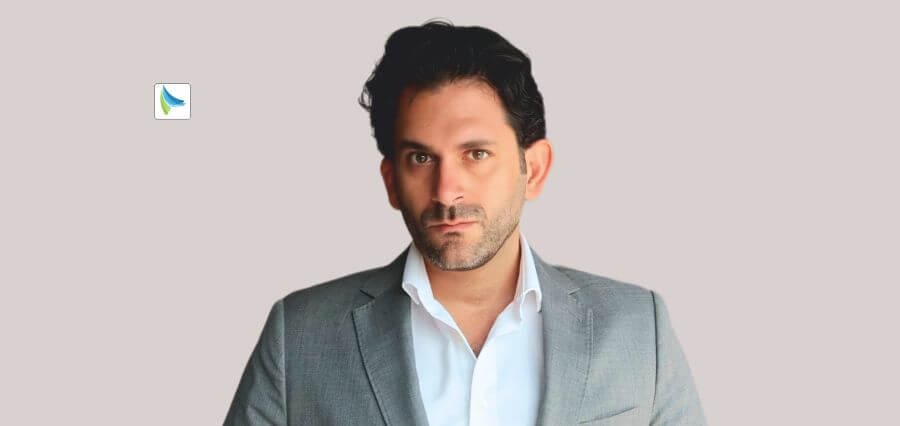
Healthcare is a career path for some people. Georges Dagher discovered his calling in this profession. For him, a product launch, a regulatory milestone, or a line item on a balance sheet are never enough to define success. According to him, a medication that is kept on a shelf has untapped potential. An approval letter is just an authorization to start. The actual finish line is much more intimate; it is the instant a patient gets that treatment, puts it to use, and lives a life that is visibly better as a result of its existence.
That conviction, unwavering, purposeful, and profoundly human, shapes the way Georges Dagher leads as Vice President and Global Medicine Commercialisation Leader at GSK. He does not see commercialisation as a business function alone. He sees it as a responsibility: to ensure that innovation travels the full distance from laboratory breakthrough to lived impact.
Georges Dagher has built his career across some of the most demanding corners of modern medicine: respiratory disease, HIV, oncology, and vaccines. Each field gave him something different. Respiratory taught him the complexity of chronic care. HIV showed him what stigma does to access. Oncology showed him what urgency feels like when every day counts. Vaccines reminded him that the greatest power in medicine is prevention- stopping a disease before it ever begins. Together, these experiences shaped not just his expertise but his character.
A Career Shaped by Real Stakes
Georges Dagher did not step into a senior global role and picked up a philosophy along the way. He arrived with one already formed- built over years of working on medicines that genuinely changed outcomes for patients.
Among those milestones were first-in-class biologics for severe asthma, medicines that gave patients with limited options a real path forward. He also contributed to long-acting HIV treatments that transformed daily life for people managing a condition that once demanded constant vigilance. These were not incremental upgrades. They were meaningful shifts and being part of them left a mark.
“A medicine has no impact until it reaches a patient,” he says. “Commercialisation is the bridge between scientific possibility and human reality.” What it really means is this: no matter how brilliant the science, none of it matters if the person who needs the medicine cannot get it. That gap between the laboratory and the patient is exactly where Georges works.
A Licence You Earn, Not Own
There is a question Georges Dagher returns to often, and his answer surprises some people. When asked about the right of pharmaceutical companies to exist, he skips the corporate language. He says something direct: “they do not have a right to exist. They have a licence to operate which is earned through trust, integrity, and honest value creation. The moment a company stops earning it, the licence begins to erode.”
Georges Dagher has overseen costly changes to packaging that made medicines safer to use. He has pushed for additional clinical trials that added real evidence. He has supported new medicine presentations that served patients better, even when the business case was not immediately obvious. None of these moves maximised short-term profit. All of them built something more valuable: trust and as a result, product preference and long-term sustainable business growth.
“The most sustainable commercial strategy in healthcare is simple,” he says. “Do great by doing good.” He adds that this is not naivety. Sustainable access depends on sustainable innovation, which, in turn, depends on a business that remains viable. He holds both truths at the same time, without letting one cancel the other. First you need to make great products. Second, ensure their value is recognized and embedded into a system. Then, continue to act responsibly to sustain the business overtime.
Global Thinking, Local Doing
According to Georges Dagher , commercializing medicine across more than fifty different countries is both practical and principled. His philosophy is captured in four words: globally guided, locally led.
What that looks like in practice is a global framework, built on strong scientific evidence, consistent quality standards, and a clear value story, that holds firm across all markets. That backbone matters. It protects scientific integrity and ensures that the medicine is positioned honestly and consistently everywhere it goes. But within that framework, local teams have real authority. They know their healthcare systems. They understand their patients. They know which conversations to have and with whom. Georges Dagher trusts them to use that knowledge.
He has witnessed the consequences of a lack of confidence. Headquarters attempts to oversee every aspect remotely or countries avoiding engagement with the global teams to run their own agenda without seeing the bigger picture. Launch slows down and teams lose confidence. His method makes up for that. Treating all markets equally does not lead to healthcare equity. Giving each market what it genuinely needs to thrive is how it is accomplished.
Leading Across Functions, Not Just Teams
Commercialising medicine is never one person’s job, or even one team’s. It pulls together scientific affairs, regulatory, market access, manufacturing, supply chain, and commercial execution, all at once, often under significant time pressure. The question is not whether these functions are all performing well individually. The question is whether they are moving together.
Georges Dagher is direct about what makes cross-functional leadership work: clear decision ownership. Not consensus for its own sake, not hierarchy for its own sake, but a clean answer to the question of who makes the final call on any given topic. And that person, he insists, should be the most competent for that specific decision, not simply the most senior in the room.
He backs this up with shared KPIs, regular alignment meetings, and defined pathways for escalating disagreements before they become delays. The goal is not to eliminate friction. The goal is to make sure friction does not quietly become paralysis. When teams are truly aligned, they do not just move faster. They move smarter.
Technology That Serves, Not Replaces
Georges Dagher watches the rise of artificial intelligence in healthcare with genuine enthusiasm and clear-eyed caution. He sees the potential clearly: real-time analytics that illuminate patient pathways, predictive tools that identify risk earlier, and data systems that help providers make faster decisions. Used well, they can accelerate the shift from treating disease to preventing it.
“The future will not be defined by AI replacing leaders,” he says. “It will be defined by leaders who know how to use it.” Technology, in his view, is a powerful enabler of human judgment, not a replacement for it. The ethical responsibilities of healthcare leadership- accountability, trust, and commitment to patient welfare, remain human. They cannot be automated. The leaders who will matter most in the coming years are those who combine digital fluency with genuine wisdom.
What a Crisis Teaches
The COVID-19 pandemic shook the global health industry in ways that are still being processed. For Georges Dagher, it was also one of the most clarifying professional experiences of his career- not because it confirmed what he already believed, but because it showed him things he had not fully seen before.
The first was the power of aligned urgency. When purpose is unmistakable and stakes are undeniable, organisations move at a pace that normal conditions do not produce. Regulatory timelines compressed. Supply chains rebuilt. Organisations with no shared history collaborated almost overnight. What the pandemic proved is that many constraints the industry treats as permanent are habits- familiar, structural, and breakable.
The second lesson was about partnership. Some of the most effective pandemic responses came from organisations that had never led in this space before. It reminded Georges that excellence does not live inside any one organisation. The leaders who delivered results were not the ones who tried to own the solution. They were the ones who built the ecosystem that could deliver it.
The third lesson was the hardest: speed and sustainability are not the same thing. Moving fast in a crisis is one skill. Building an organisation that can hold that pace over time is another. Several successful organizations during the pandemic are no longer existing today or had to significantly downsize or review their operations & presence. You need to make products and build a business model that remains relevant in various external circumstances.
He left the pandemic with a stronger belief that healthcare’s future depends more on how well systems prevent crises than on how well they handle them, and to constantly strive to think one step ahead, on how to sustain the business overtime. Seeking immediate growth without clear purpose is the pattern of cancer cells. It never ends well.
The Kind of Mentor He Chooses to Be
“Mentoring is not something I give,” Georges says. “It is something I invest in.” That distinction matters to him. He does not see mentorship as a favour extended to younger colleagues. He sees it as a relationship that sharpens both parties- one that forces him to stay honest, stay curious, and stay connected to how the next generation thinks.
The trait he works hardest to develop in others is authenticity. In healthcare, trust is not a soft value; it is a strategic one. People follow leaders whose actions match their words and whose commitment to patients shows up in real decisions, not just speeches. When that authenticity is genuine, it creates safety. And when people feel safe, they grow.
Georges is equally honest about the mistakes he sees most often in new leaders. Many confuse speed with strength, feeling pressure to prove themselves before they have fully understood where they are. “Listening before speaking, observing before deciding, and respecting what you still do not know; these are not signs of weakness. They are the habits of someone building something that lasts,” he expresses.
Additionally, he imparts advice to his mentees that they occasionally need to hear: take care of your home base. Being able to refuel outside of work is essential for productivity. Rest, friends, and family are not reasons to sacrifice professional greatness. It is made possible by them.
His goal with every person he mentors is not to keep them. It is to grow them until they are ready for something bigger; sometimes something bigger than his own team. Georges considers that success. “Leadership is not about accumulating talent,” he says. “It is about multiplying it.”
Working Towards a Bright Future
Georges sees an industry standing at a turning point. Commercialisation is changing; it is no longer simply a process that moves medicine from manufacturer to patient. It is becoming a strategic capability that connects science, data, policy, and human behaviour. The companies and leaders that understand this shift will define what the next era of healthcare looks like.
The direction he is most focused on is prevention, not as an idea, but as a practical priority. The greatest opportunity in modern medicine is identifying risk earlier and intervening before disease takes hold. Commercialisation leaders have a real role in enabling that shift, not just by launching treatments, but by shaping the systems that make early intervention possible.
Georges closes with a measure of success that cuts through everything else. The question is not how many medicines are commercialised. The question is what is the quality of the medicines brought to market, and how many lives improve because of our work. How many diseases are stopped before they ever begin or stabilized early to avoid progression. Industry will be rewarded and recognized for this, and it is a standard that demands more than commercial skill. It demands purpose. And in Georges, that purpose is not a job description. It is who he is.
Disclaimer: The views expressed in this interview are those of Georges Dagher alone and do not represent the official positions of GSK. Mr. Dagher appears in his individual capacity as a business leader, and references to his employer are provided solely for professional context and do not engage the company’s responsibility.