




The history of African ascension is being written no longer on old trading floors but within the fast-paced, dynamic world of technology and digital finance. On the continent itself, there are now new generations of leaders who are driving and building solutions that bypass infrastructural constraints and bring millions into the formal economy for the first time. They are the masters of change, leveraging the potential of technology in the pursuit of financial inclusion and sustainable development. It is particularly manifested in banking where unbreachable security has to be balanced with scorching speed. Here, the leaders are not merely technologists; they are strategic thinkers, cultural leaders, and relentless mentors. They are taking down old systems and building a world in which money to spare is not a virtue but a ubiquitous condition.
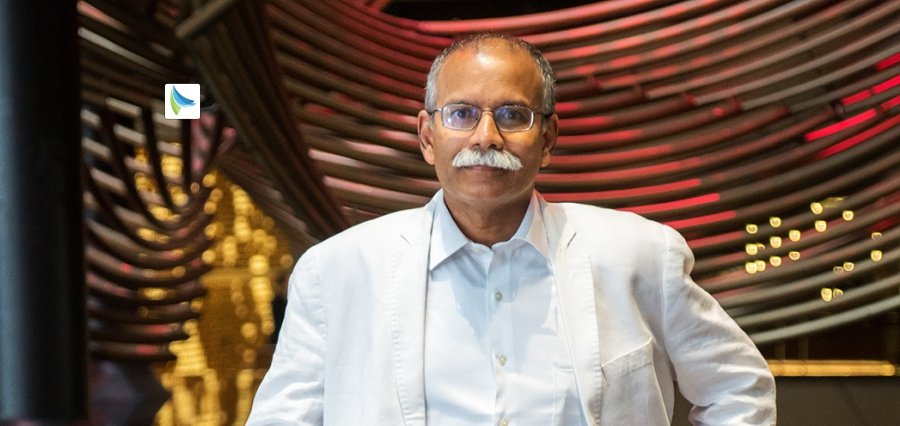
This pivotal moment demands a leadership style that is both technically astute and deeply empathetic. It’s a style that recognizes that technology challenges are often simply human challenges in disguise. It requires a commitment to building resilient digital ecosystems and nurturing the next generation of talent. The individuals at the helm of this monumental undertaking are not just meeting quarterly targets; they are contributing to sustainable transformation across entire economies and households. Their work is a testament to the belief that the future of Africa will be defined as much by the robust systems they build as by the people they prepare to manage and innovate upon them. They are at the vanguard of a movement that views financial inclusion not as a slogan, but as a measurable reality, practical at the last mile. Into this dynamic and critical landscape steps Emmanuel Morka, the Regional Chief Information Officer at Access Bank Plc. He is a leader whose influence is actively shaping the future of African banking.
The CIO as an Inclusive Architect: Emmanuel Morka’s Vision
Morka stands as a formidable figure in the continent’s financial technology sector, carrying the title of Regional Chief Information Officer at Access Bank Plc. His role is more than an executive position; it is a responsibility to ensure that technology within banking delivers a real impact across both economies and individual households. Being recognized as an influential leader building Africa’s future is a distinction Morka finds both humbling and sobering.
This recognition reinforces his commitment to prioritize two critical leadership imperatives: first, to build those resilient digital ecosystems allowing millions of Africans to transact securely and conveniently, irrespective of their geography or income level. Second, the vital task of mentoring the next generation of African technology leaders. Morka operates with the clear understanding that his work must extend beyond merely meeting short-term financial targets to genuinely contributing to sustainable transformation. He firmly believes that the continent’s future hinges on the strength of the systems they construct and the caliber of the people they prepare to manage and innovate upon them.
The Dual Operating System: Balancing Rigor and Speed
With an extensive background spanning over 18 years in Oracle database administration and project management, Morka possesses the deep technical acumen essential for the rigorous demands of banking technology. He recognizes that modern banking requires a rare and delicate blend of rigour and speed. Bank systems must be absolutely reliable, secure, and compliant, yet the market has no tolerance for delays in launching new features.
To navigate this challenge, his leadership approach establishes a “dual operating system” mindset within his teams. This involves a clear separation of focus:
- Technical Core Stability: For foundational elements, such as databases, core banking platforms, and network infrastructure, Morka insists on strict adherence to standards, comprehensive testing, and multi-layered reviews. This ensures the bedrock of the bank’s operations remains unshakeable.
- Agile Front-End Innovation: For customer-facing services, including mobile banking, SME solutions, and digital wallets, he actively promotes agile sprints, rapid prototyping, and co-creation with users.
Morka bridges these two essential yet distinct areas by investing heavily in DevSecOps practices. His teams are intentionally trained to view compliance and agility not as mutually exclusive forces, but as complementary strengths. He exemplifies this by ensuring that when a new feature like a loan origination system is rolled out, the back-end is stress-tested for high availability, while the customer-facing front-end moves through user acceptance cycles in a matter of weeks, not months. This approach successfully upholds technical integrity without stifling innovation.
Adaptive Leadership Across Diverse Contexts
Morka’s experience in leading technology strategy has spanned multiple banks across Africa and the Gulf, providing him with a unique global perspective. He understands that leadership cannot be simply exported wholesale; it must be intelligently adapted to local realities.
He points out a significant difference in operating environments: in the Gulf, he encountered precise regulatory frameworks where the primary challenge was to achieve the speed of compliance. Conversely, in various African markets, the reality is often that regulation is still evolving, and persistent infrastructure gaps in power and connectivity can significantly constrain deployment.
His strategy for adaptation is three-pronged:
- Contextual Awareness: Before making any major decisions, Morka meticulously maps the unique realities of the market. This includes assessing regulatory stringency, broadband penetration, fintech maturity, and the supply of local talent.
- Flexible Governance Models: In countries with robust ICT ecosystems, Morka favours a move toward decentralization of governance. In markets where local technical expertise is limited, he adopts a strategy of centralizing decision-making until the local capability has a chance to mature.
- Human-Centered Leadership: Especially in environments where tech skills are scarce, he places a strong emphasis on mentoring and talent acceleration. This is an intentional effort to ensure that Access Bank’s teams are not merely consumers of technology but are active contributors to Africa’s broader tech talent pipeline.
This adaptive style ensures Morka leads consistently while simultaneously respecting and honouring local realities.
Strategic Triage for Modernization
As a CIO, Morka constantly faces the critical challenge of prioritizing which legacy systems to modernize first when resources are limited and business pressures are competing. He describes the solution as the art of strategic triage, employing a clear, three-part framework:
- Business Criticality: Morka first asks if the system directly affects revenue streams, customer experience, or regulatory compliance.
- Cost-to-Maintain vs. Value-to-Gain: He targets systems that consume a disproportionate amount of resources in patching and manual support. Those exhibiting high maintenance costs and low scalability are immediately moved to the top of the queue for modernization.
- Integration Readiness: He prioritizes any legacy systems that are actively blocking the integration of essential newer technologies, such as modern APIs, partnerships with fintechs, or the adoption of cloud services. A practical example of this was the early modernization of their middleware in Ghana, even before the core banking transformation was complete. The middleware was acting as a bottleneck, preventing smooth integration with key mobile money and fintech partners.
The Last Mile of Financial Inclusion
Access Bank Ghana’s heavy investment in digital products and financial inclusion is a core part of its mission. Morka believes that financial inclusion only becomes meaningful if it is practical at the last mile. To ensure digital initiatives genuinely reach underserved or rural populations, his strategy focuses on three key enablers:
- USSD and Offline Capabilities: He recognizes that while mobile apps are powerful, many rural customers still rely on feature phones. By enabling USSD services that function without internet access, the bank effectively extends access into areas where smartphones are scarce.
- Partnerships with Mobile Money Operators and Agents: Morka’s strategy involves co-locating bank services within existing agent networks. This allows customers in remote areas to transact without the logistical need for a physical bank branch.
- Simplified User Journeys: Acknowledging that digital literacy can be a barrier in underserved communities, his teams have deliberately simplified the account opening processes and minimized data entry points. The ultimate goal is to transform inclusion from a mere slogan into a measurable, on-the-ground reality.
Building Trust through Privacy and Transparency 🛡️
Morka views customer trust as a CIO’s most valuable currency. His leadership decisions on new digital products are centered on two core pillars:
- Privacy by Design: Data protection is embedded into the product development process from the very start, rather than being “bolted on” later. This comprehensive approach includes robust encryption standards, access governance, and anonymization protocols.
- Reliability through Redundancy: Systems are meticulously engineered with comprehensive disaster recovery, failover mechanisms, and strong uptime guarantees. He stresses that customers, such as a farmer, cannot afford downtime when transacting.
Crucially, Morka champions transparency in communication. When inevitable issues arise, the bank informs customers quickly and clearly. He believes that acknowledging system downtime and providing clear timelines for resolution preserves trust far more effectively than silence or evasion.
Leveraging 360-Degree Vendor Dynamics
Morka’s previous cross-industry experience with major players like Oracle and HP, coupled with his consulting background provides him with a 360-degree view of vendor dynamics. From Oracle, he internalized the critical importance of scalable architecture. His time at HP gave him a profound understanding of the complexities of enterprise hardware integration. The consulting experience sharpened his sensitivity to the need for balancing vendor promises with tangible, actual delivery.
At Access Bank, this wealth of experience translates into a disciplined approach:
- Rigorous Vendor Evaluation: Assessment goes beyond mere pricing to include a deep dive into the vendor’s alignment with Access Bank’s long-term strategy, their capacity for local support, and their cybersecurity standards.
- Balanced Partnership Models: Instead of a reliance on a single vendor, Morka fosters hybrid ecosystems, strategically mixing established global partners with agile local FinTechs.
- Internal Upskilling: He mandates that all vendor contracts include explicit knowledge transfer clauses. This is an intentional mechanism to ensure that Access Bank’s staff continuously deepen their internal capabilities, avoiding the pitfall of indefinitely outsourcing core expertise.
Navigating the Horizon: 2025-2030 Trends
Looking ahead to the period of 2025-2030, Morka identifies several emerging technologies poised to redefine African banking:
- Artificial Intelligence (AI): He sees AI scaling efficiency, from advanced fraud detection to providing personalized financial advice. Access Bank is already piloting AI-driven chatbots for customer service.
- Open Banking & APIs: The future involves growth in partnerships with fintechs, where banks will increasingly function as secure platforms rather than closed fortresses. Access Bank is preparing by actively modernizing its middleware and standardizing its APIs.
- Blockchain: While still maturing, Morka recognizes the technology’s promise for bringing transparency to trade finance and cross-border remittances. Access Bank is currently cautiously exploring relevant use cases.
- Cloud Computing: Citing the necessity of both scalability and cost efficiency, Morka’s strategy involves a blend: using a private cloud for sensitive workloads and the public cloud for customer-facing scalability.
- Cybersecurity Resilience: Increased digitization brings a corresponding rise in vulnerability. Access Bank’s 2025 roadmap is focused on embedding advanced threat detection and a zero-trust architecture.
Morka stresses that preparation for these trends is not solely about adopting technology; it requires a deep mindset change, which involves training staff, rethinking processes, and fundamentally reimagining customer journeys.
The African CIO’s Mandate: Innovation Within Constraints
In his concluding thoughts, Morka clarifies the distinct mandate of the CIO in Africa. It is not about replicating Western technology strategies. The true work involves innovating within constraints, actively bridging digital divides, and building resilient systems that effectively serve millions of people. His commitment ensures that Access Bank is not just functioning as a financial institution but is acting as a powerful catalyst of inclusion and transformation across the entire continent. Morka’s leadership is a continuous, active force in constructing the digital foundation for Africa’s prosperous future.