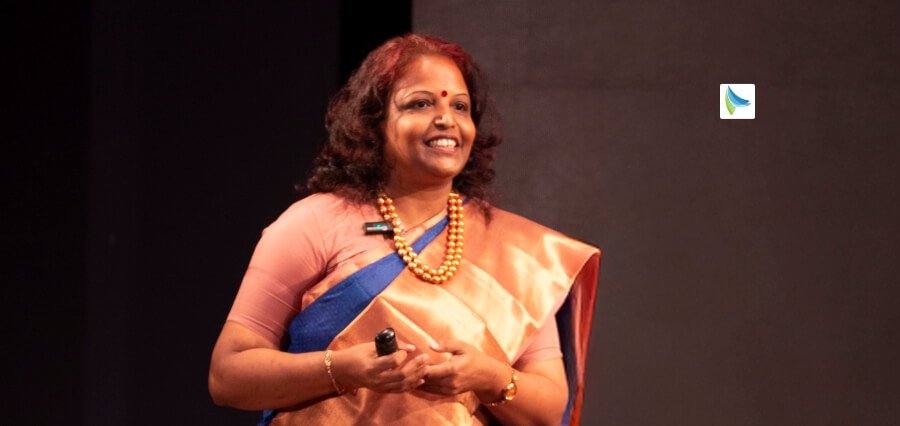





Few leaders embody the harmony of science, education, and purpose as well as Dr. Sara M. Abou AlSaud, Assistant Professor of Basic Cardiac Sciences in the College of Medicine at King Saud University. Her endeavor is motivated by a strong belief that science saves lives and education enhances that impact. Her path highlights a lifelong quest for advancement via knowledge and collaboration, from her groundbreaking research on the genetic processes underlying cardiac illnesses to her revolutionary leadership in human capital development.
She returned to Saudi Arabia a few years back from the UK, with a desire to establish ecosystems that promote curiosity, foster innovation, and elevate regional academia to the global arena, shaped by her time at Imperial College London. She continues to inspire a new generation of scientists and educators by upholding ideals such as diversity, mentorship, and technical innovation. Her approach redefines academic leadership, bringing discovery and purpose together and ensuring that every achievement contributes to long-term societal reform.
A Dual Commitment Born from Purpose
Dr. Abou AlSaud’s career trajectory stems from two fundamental realizations that continue to shape her work. “My journey has been shaped by two pivotal realizations: that science saves lives, and education multiplies that impact. Research gave me the tools to push boundaries, but leadership gave me the platform to share that knowledge, inspire others, and build lasting systems of growth. Together, they define my path advancing medicine while empowering people,” she reflects
This powerful insight informs every dimension of her professional identity, from her investigations into the genetic mechanisms underlying cardiac pathologies to her comprehensive initiatives empowering faculty and students across King Saud University. Research equips her with the tools to push scientific boundaries and advance medical understanding, while leadership provides the platform to share knowledge systematically, inspire colleagues, and construct institutional frameworks that enable sustained growth.
The Imperial College London Experience
Dr. Abou AlSaud’s time at Imperial College London fundamentally shaped her approach to academic leadership and institutional development. “Imperial College London taught me that innovation flourishes when bold ideas meet structured systems of support. Experiencing that culture of excellence and collaboration broadened my perspective on what academia can achieve,” she explains.
She returned to Saudi Arabia with a clear strategic intent, bringing that transformative mindset to her home institution. “Bringing that mindset back to Saudi Arabia, I have focused on creating ecosystems where curiosity is encouraged, research is nurtured, and leadership is seen as a responsibility to inspire others. The goal is not just to keep pace with global standards, but to set them,” she notes
This perspective fundamentally informs her approach to institutional development and shapes her ambitious vision for the region’s academic future on the global stage.
Transforming Organizations Through Inclusive Leadership
In her role as Executive Director of Human Capital Empowerment, Dr. Abou AlSaud aims to drive strategic initiatives specifically designed to optimize organizational effectiveness across the University. Her distinctive approach to change management emphasizes collaboration over command structures, and the tangible results consistently validate this progressive philosophy.
She recounts one particularly significant initiative where she deliberately transformed the organizational culture. “In one major initiative, I shifted the approach from top-down directives to a shared decision-making approach. By bringing my entire team into the process, listening to their insights, co-creating solutions, and valuing every voice, we built stronger ownership of the change. That inclusivity directly translated into smoother implementation and measurable gains in both academic and research outcomes,” she recalls.
The documented success of this model powerfully demonstrates her core operational belief: institutional transformation happens most effectively and sustainably when people feel genuinely invested in the process as active participants, not merely subject to changes imposed from above.
Integrating Research, Teaching, and Administration
Dr. Abou AlSaud fundamentally rejects the conventional notion that administrative leadership, research activities, and teaching responsibilities compete for limited attention and resources. “I don’t see administration, research, and education as competing demands, but as interconnected drivers of transformation. Administrative leadership provides me with the platform to shape structures, research sharpens my vision with evidence, and education ensures that knowledge translates into a lasting impact,” she asserts.
By aligning these roles strategically and intentionally, she creates an integrated academic ecosystem. “By aligning these roles, I strive to create an academic ecosystem that supports innovation, accelerates discoveries, and empowers future leaders,” she explains. This integration enables her to leverage each responsibility to strengthen the others organically, creating a powerful multiplier effect across all her spheres of influence.
Making Specialized Science Accessible and Applicable
Dr. Abou AlSaud’s research investigates the complex genetic mechanisms underlying cardiac pathologies, a highly specialized scientific work that might initially seem distant from everyday clinical practice and patient care. Yet she ensures this research remains firmly grounded in practical application through deliberate and systematic translation strategies.
“We approach genetics research not as an isolated pursuit but as part of a continuum that connects discovery to practice. Every study is framed with the question: how will this knowledge inform the way we teach medical students or manage patients? By embedding our findings into curricula, case-based learning, and clinical guidelines, we ensure that specialized science is translated into tools that shape doctors better and improve patient care,” she explains.
This unwavering commitment to translation ensures that her work simultaneously advances both scientific understanding at the molecular level and practical medical care delivery in clinical settings.
Developing Complete Professionals Through Mentorship
Mentoring young scientists constitutes a central pillar of Dr. Abou AlSaud’s academic mission, and her comprehensive approach that extends considerably beyond technical training alone. “My mentoring philosophy is holistic: technical expertise is the foundation, but I deliberately cultivate leadership, resilience, and innovation,” she states.
Her methodology involves multiple strategic elements. “I encourage mentees to take ownership of their projects, expose them to interdisciplinary collaborations, and normalize setbacks as part of the growth process,” she describes. “By creating a safe space for curiosity and reflection, I help them see themselves not just as scientists, but as future leaders in academia and beyond.”
Through this holistic developmental approach, Dr. Abou AlSaud invests deliberately in developing complete professionals who can successfully navigate both technical scientific challenges and complex organizational dynamics.
Advancing Equity Through Inclusive Education
Dr. Abou AlSaud’s active involvement with the Saudi Association for Special Education has profoundly shaped her comprehensive approach to workforce empowerment and institutional development. “My work with the Saudi Association for Special Education has deepened my belief that inclusivity is the cornerstone of empowerment,” she reflects.
This experience taught her valuable lessons about systemic design. “By advocating for tailored educational strategies and accessible opportunities, I’ve learned how to design systems where every individual—regardless of ability—can contribute meaningfully to the workforce,” she explains. “This perspective shapes my academic leadership, ensuring that transformation is not just about excellence, but about equity.”
She recognizes that authentic progress occurs when institutions actively open doors and remove barriers rather than inadvertently erecting new obstacles to participation and contribution.
Harnessing Technology for Educational Innovation
Dr. Abou AlSaud views advanced technologies, including artificial intelligence and data-driven analytics, as powerful catalysts for fundamentally reimagining scientific training. “AI and data-driven analytics are not just tools; they’re catalysts for reimagining scientific training. They enable us to personalize learning, simulate complex biomedical scenarios, and analyze vast datasets that once required years to process,” she emphasizes.
In cardiovascular research specifically, this technological revolution creates dual benefits. “In my field, this means accelerating discovery while also training scientists who can think critically, collaborate across disciplines, and adapt to emerging technologies. The future of knowledge dissemination will be faster, more interactive, and more inclusive,” she notes.
Building Regional Excellence with Global Impact
Looking strategically towards 2030, Dr. Abou AlSaud believes that regional universities must take decisive, concrete steps to position themselves as recognized global hubs for research excellence and educational innovation. “To become global hubs by 2030, universities in our region must invest heavily in research infrastructure, foster international collaborations, and embrace digital transformation” she states.
However, she emphasizes that infrastructure alone cannot drive transformation. Equally important is cultivating human capital, empowering faculty and students with the skills, resources, and freedom to innovate. “Excellence will come not from imitation, but from creating models of education and research that reflect our unique regional strengths while engaging the world,” she says.
Ensuring Cardiovascular Science Serves Communities
To maintain cardiovascular research and education at the forefront of global medicine, Dr. Abou AlSaud advocates forcefully for systemic change. “To keep cardiovascular research and education at the forefront, we need systemic integration of technology, interdisciplinary collaboration, and robust translational pathways,” she argues.
She emphasizes that academic work must maintain clear connections to real-world impact. According to her, beyond innovation, curricula and research agendas should be linked to real-world health challenges to ensure that discoveries directly benefit communities and inform policy. She believes that cutting-edge science and social impact should go hand in hand.
A Guiding Philosophy for Difficult Decisions
Dr. Abou AlSaud’s professional philosophy centers fundamentally on the synergy among genetic discovery, translational innovation, and transformative leadership. “My philosophy, that genetic discovery, translational innovation, and leadership are interconnected, is what guides me to make decisions that balance risk with impact,” she reflects.
This integrated worldview provides clarity during challenging moments. In challenging situations, she prioritizes solutions that advance knowledge while remaining feasible and beneficial to students, faculty, and the broader community. This integrated approach helps her ensure that even tough choices align with long-term academic and societal goals.
A Legacy of Empowerment and Innovation
Beyond her impressive academic achievements and published research contributions, Dr. Abou AlSaud hopes her professional legacy will reflect enduring qualities. “I hope my legacy will be defined by curiosity, integrity, and the courage to challenge the status quo,” she shares. Beyond achievements, she wants to be remembered as someone who empowered others, fostered innovation, and built systems that enable both science and education to thrive sustainably.
Guidance for Emerging Leaders
To emerging educators and researchers who aspire to bridge scientific excellence with meaningful societal contribution, Dr. Abou AlSaud is offering clear, actionable guidance. “Never separate curiosity from purpose. Strive for scientific excellence but always ask how your work can improve lives and strengthen communities. True impact comes when discovery and societal contribution move hand in hand,” she urges.
Through her multifaceted role at King Saud University, Dr. Sara M. Abou AlSaud demonstrates convincingly that transformative leadership in modern academia requires neither choosing between competing priorities nor accepting false dichotomies between research and teaching, science and service, or excellence and equity. Instead, it demands strategically integrating research, education, and administration into a coherent unified vision that serves both scientific advancement and human flourishing, a vision she pursues with both intellectual rigor and genuine passion for positive change.