



The healthcare industry is going through a rapid revolution with modern technologies rewriting medical service delivery. The traditional healthcare model which was mainly dependent on face to face consultation and paperwork is now transforming into a highly integrated system which uses artificial intelligence, robotics and digital platforms. These innovations improve the accuracy of the diagnostic process which enables healthcare providers to pay more attention to patient outcomes. Technological integration in patient care is not merely a matter of convenience; it has a measurable impact on outcomes. Using real-time data, healthcare providers can make informed decisions in a short period of time, detect possible complications in the initial stages, and introduce specific interventions. With technology being a key component in healthcare provision, patients are enjoying more-diagnoses within a shorter time span, tailored care plans and better continuities of care.
Digital Diagnostics
The use of digital diagnostic tools is transforming the mode of detection and monitoring of diseases. AI-driven imaging devices have the ability to process medical imaging with an unusual accuracy, being able to detect subtle abnormalities that may go undetected during human examination. The ability is especially useful in fields like oncology, cardiology, and neurology, where the early diagnosis may considerably impact the survival rates. The AI-powered diagnostics also decrease the amount of work that radiologists and pathologists have to work on and leave them with difficult cases that cannot be left to AI.
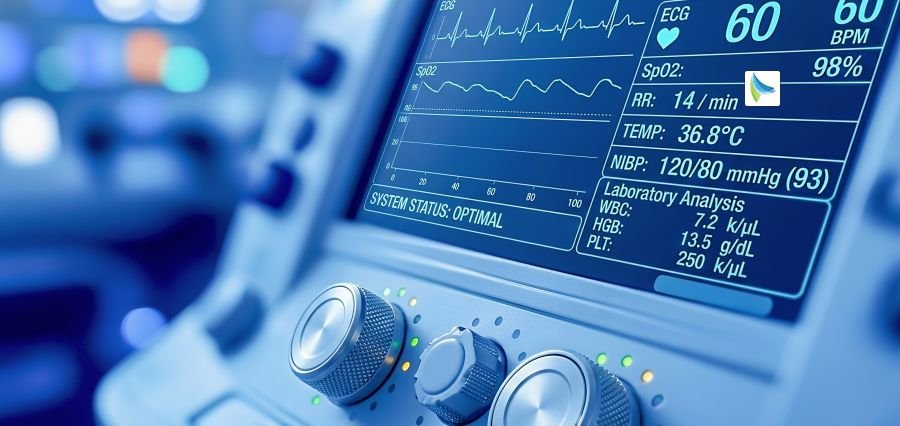
Another aspect of digital diagnostics is remote monitoring devices that supplement the care of patients in other than conventional clinical environments. Connected medical devices and wearable sensors provide an opportunity to detect vital parameters such as blood glucose concentration, heart rhythms and other health indicators around the clock. This flow of data offers healthcare professionals with actionable data, which can be used to implement timely interventions and make changes in the treatment programs. These technologies are especially useful to patients with chronic conditions, including diabetes or heart disease, as they should be proactively controlled and helped to visit a hospital less often.
AI and Predictive Analytics
The decision-making process in healthcare is being changed by artificial intelligence and predictive analytics. With AI algorithms, it is possible to predict possible health threats, preventive interventions, and help clinicians create personal treatment plans by analyzing enormous amounts of patient information. Predictive analytics are also useful in assisting the hospital management with resource allocation, patient wait time reduction, and general operational efficiency. Certain predictive scales help to improve the quality and cost-effectiveness of care.
Besides, AIs-based tools are becoming useful in precision medicine, a care model that personalizes treatments based on the unique genetic profiles. Knowing how particular patients will react to certain treatments, clinicians will be able to develop highly specific interventions which will produce minimum side effects and even better treatment results. It is especially important in the area of oncology and managing rare diseases where the standard treatment of one-size-fits-all approach might not be effective. The healthcare system experiences a complete transformation because predictive analytics and personalized treatment methods now replace traditional disease-based treatment methods.
Robotics and Automation
Robotics is a growing trend that hospitals use to increase their surgical accuracy and enhance their medical outcomes. Advanced surgical robots provide greater dexterity, stability, and access to hard-to-reach areas of the body, enabling minimally invasive procedures with shorter recovery times. Remote surgery can also be performed using robotics as the specialized care can be extended to patients in areas where expert clinicians are unavailable. Robotic technology has the capability of transforming the standards of patient treatment by reducing the potential of human error and enhancing the efficiency of surgery.
The use of automation is not limited to the operating room, but to other healthcare operations, such as laboratory tests, dispensing, and administration of patients. Computer-controlled systems minimize the excessive manual work, as medical staff can spend more time on direct work with patients. Robotic automation in laboratories is used to process samples faster and more consistently while smart pharmacy systems enhance medication management and reduce potential medication errors. The high efficiency rates, as well as the enhanced safety levels through the use of automation technologies, make the healthcare environment reliable and patient-centered.
Conclusion
The introduction of new technologies into the medical sector is inherently leading towards the abandonment of the reactive approach to the treatment of the patient in favor of the proactive and individual approach to health management. Digital diagnostics, AI-powered analytics, and robotics are not only improving the accuracy and efficiency of the medical intervention but also helping the healthcare professional to provide patient-centred services. With the help of these innovations, the healthcare systems will be able to minimize errors, streamline the working process, and provide patients with timely and focused treatment, which will eventually enhance patient outcomes and quality of life. Clinicians need to work together with technology developers and policymakers to achieve safe and equitable implementation of their innovations. The value of these tools will be maximized through three factors which include training medical professionals, protecting patient data and examining the ethical consequences of technological implementation.