




The business environment in Africa is currently experiencing a tremendous shift in terms of competitiveness, better governance, and closer interconnectedness with international value chains. Since the continent has traditionally been regarded as the origin of raw materials, at present it is the place where businesses are establishing new standards in terms of effectiveness, innovation, and sustainability. The change is an indication of decades of structural reforms, better macroeconomic management and focus on development of the private sector in most African economies. This is being fuelled by a mix of positive demographics, policy reforms, regional integration efforts, and increased investment in skills and infrastructure. In various industries, African firms are proving that geography does not limit business excellence, but they can be achieved through strategy, leadership, and flexibility. It is in the financial services and telecommunications, manufacturing and agribusiness as well as renewable energy, firms are developing scalable models that address local demands without failure to meet international standards.
Financial Services and Fintech
The financial services industry in Africa has become a global benchmark for innovation in financial inclusion. Bank, mobile network operators and fintech entities have built digital platforms that reach out to millions of previously unbanked people with payments, credit, insurance and savings products into the formal financial system. The examples of mobile money ecosystems in Kenya, Ghana, and Rwanda can explain that in cases when physical banking infrastructure is insufficient, technology can be used to bridge the gaps and ensure high security, reliability, and trust among the users.
Besides inclusion, the industry is becoming more characterized by an emphasis on governance, risk management and scale. Pan African banks have gone international, consolidated their compliance systems, and are investing heavily in the digital revolution to deliver services effectively. Fintech companies are no longer offering single product solutions but providing full service financial platforms such as integrated payments, lending, and wealth management. International investors, strategic alliances and regulatory participation have considered this transformation and enhanced the confidence in the growth of the sector.
Manufacturing and Agribusiness
The main focus of Africa in the attempt at diversifying its economies and creating more resilient growth models is manufacturing and agribusiness. Many nations over decades have depended on export of commodities and little value addition on local levels. To take advantage of the uncertainties of exposure to world commodity prices, governments and players in the private sector are investing in processing, packaging, and logistics to keep a higher value in domestic economies. The development of competitive manufacturing centers in industries such as food processing and textiles, pharmaceuticals and consumer goods are being supported by industrial parks, special economic zones, and specific incentives.
African companies are embracing the modern farming methods, mechanization and data driven supply chain management in agribusiness to enhance productivity and quality. The access to the high-end regional and international markets is facilitated by quality certification, traceability systems, and cold chain investments. Most of the major companies are also incorporating smallholder farmers into formal value chains, which can offer them access to inputs, loaning, and assured markets. These strategies make it more profitable and also promote food security and rural livelihood. Agribusiness and manufacturing are becoming strong examples of inclusive and sustainable business excellence in the continent by connecting commercial success with social impact.
Technology and Infrastructure
Africa has witnessed a rapid growth in the technology sector, which has been boosted by a digitally literate and young population as well as rising access to broadband, smartphones and cloud services. Startups and the established firms are coming up with solutions in e commerce, financial technology, health technology, education, and enterprise software to tackle local issues and have global applicability. Innovation hubs, accelerators, and venture capital ecosystems worldwide are maturing, enabling companies to move beyond experimentation, scale their operations, strengthen governance, and achieve sustainable long-term profitability.
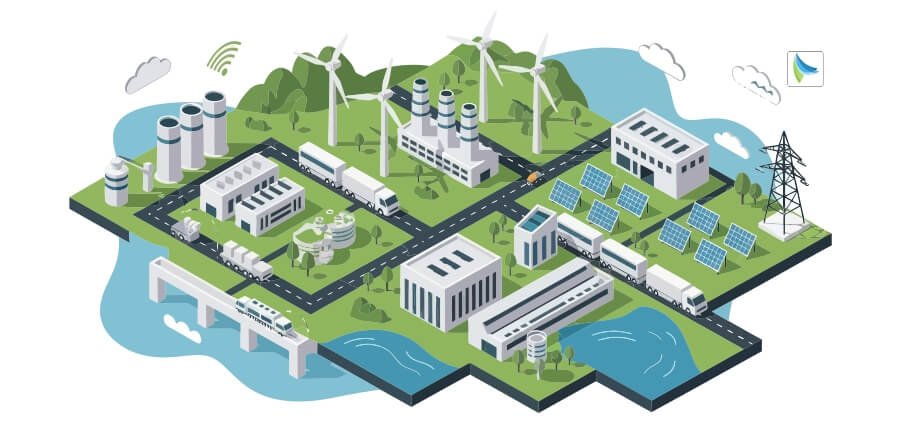
Africa equally has energy and infrastructure in the core of the business excellence story. Industrial growth and regional trade require reliable power, transport, and digital infrastructure, and these areas are being improved significantly. Solar, wind and hydro projects are drawing long term capital, enhancing energy security, and climate commitment. International project management and financing standards are being used by infrastructure developers to provide roads, ports, rail networks, and data centers to bridge the markets and reduce the cost of doing business. With a combination of commercial feasibility and the need to be environmentally and socially responsible, these sectors are establishing new standards of responsible and sustainable enterprise.
Conclusion
The changing business environment in Africa is a sign of a continent that is decisively shifting past the legacies towards a future that is characterized by competency, strength and internationality. In the fields of finance, manufacturing, agribusiness, technology, energy and infrastructure, African businesses are proving that it is possible to achieve long term excellence through effective leadership, good governance and investment. They are also becoming competitive as a result of the capacity to integrate local knowledge with global benchmarks and the production of inclusive economic value. With the further integration of the region and the increasingly important capital flows championing innovation and sustainability, Africa is in a good place to aggregate these benefits. The skills development, infrastructure growth, and continuity of policy orientation will be important in keeping the momentum.