



The retail landscape across Asia is undergoing a fundamental transformation. From bustling street markets in Bangkok to high-end boutiques in Seoul, merchants are rethinking how they manage transactions, inventory, and customer relationships. At the center of this shift is technology — specifically, the evolution of point-of-sale infrastructure that now extends far beyond the traditional cash register. As digital commerce accelerates and consumer expectations rise, businesses that fail to modernize their sales operations risk being left behind in an increasingly competitive environment.
The Convergence of Physical and Digital Retail
For years, brick-and-mortar retail and online commerce operated as separate worlds. Physical stores had their registers, their stockrooms, and their loyal foot traffic. Online platforms had their carts, their fulfillment centers, and their digital analytics. Today, that division is dissolving rapidly. Consumers expect to browse online, purchase in-store, return via any channel, and receive loyalty rewards regardless of where they shop. This omnichannel reality demands a unified backend — and that is precisely where next-generation point-of-sale solutions are proving their worth.
Retailers who once managed separate systems for their physical and online operations are now consolidating everything into a single platform. This integration reduces human error, eliminates data silos, and provides a real-time view of business performance that was previously impossible without significant IT investment. The result is a more agile, responsive retail operation capable of adapting to shifting market conditions without missing a beat.
Why Inventory Synchronization Matters More Than Ever
One of the most persistent pain points for multi-channel retailers has been inventory management. Selling the same product across a physical store, a website, and a marketplace simultaneously creates the constant risk of overselling or stockouts. When inventory data is fragmented across disconnected systems, these errors become almost inevitable. Modern POS platforms address this by maintaining a single source of truth for stock levels, automatically updating quantities across every sales channel the moment a transaction occurs. For growing retailers, this capability is not a luxury — it is a necessity.
India’s Digital Commerce Ecosystem Sets a Global Example
India has emerged as one of the most dynamic digital commerce markets in the world, driven by a young population, widespread smartphone adoption, and a rapidly expanding middle class. Industry bodies are now formalizing this momentum through structured collaboration. As reported in a recent feature, IAMAI’s launch of the E-Commerce Council of India signals a significant step toward creating a unified framework for the country’s digital retail sector. This kind of institutional support helps standardize practices, encourage innovation, and attract investment into the ecosystem — all of which benefit merchants at every level of the supply chain.
The Indian market’s trajectory offers valuable lessons for retailers across Southeast Asia and beyond. When government bodies, industry associations, and technology providers align around common goals, the resulting infrastructure improvements benefit everyone — from large enterprise retailers to small independent shop owners trying to compete in an increasingly digital marketplace.
Lessons from the World’s Largest E-Commerce Markets
Understanding where global e-commerce is heading requires looking at the platforms that have already achieved massive scale. A comprehensive overview of the top ten e-commerce sites in the world reveals a clear pattern: the most successful platforms are those that have invested heavily in seamless transaction infrastructure, robust seller tools, and frictionless customer experiences. For independent retailers and growing brands, the challenge is replicating elements of that experience without the resources of a global marketplace giant — and that is where the right technology stack becomes critical.
The Role of Integrated POS Technology in Business Growth
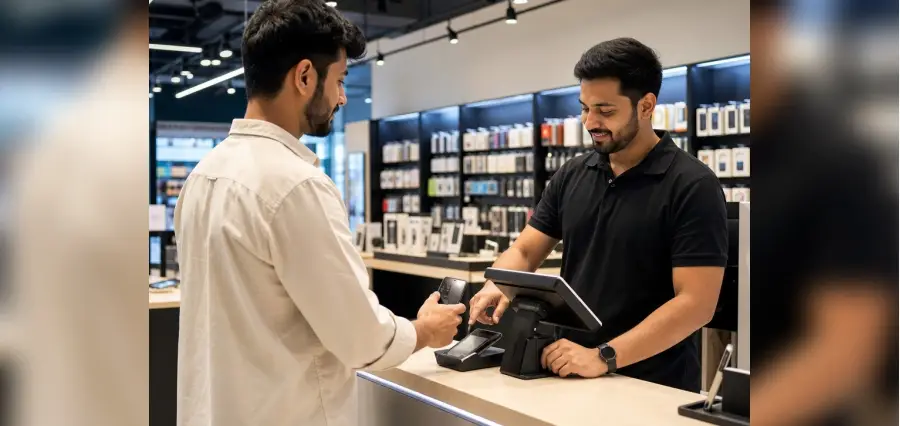
A well-implemented point-of-sale system does far more than process payments. It serves as the operational backbone of a retail business, connecting sales data with customer profiles, inventory records, staff performance metrics, and financial reporting. When these data streams flow into a single dashboard, business owners gain the clarity needed to make informed decisions quickly — whether that means reordering a fast-moving product, identifying a top-performing sales associate, or spotting a trend in customer purchasing behavior before competitors do.
For merchants operating in Asia’s fast-moving retail environment, a POS system that integrates seamlessly with e-commerce operations is no longer optional. The ability to manage in-store and online sales from a unified platform reduces operational complexity, improves customer service, and ultimately drives revenue growth. Retailers who have made this transition consistently report improvements in both efficiency and customer satisfaction — two metrics that are deeply interconnected in today’s experience-driven market.
Customer Data as a Competitive Advantage
Beyond operational efficiency, integrated POS platforms unlock something even more valuable: a comprehensive understanding of customer behavior. Every transaction generates data — what was purchased, when, at what price point, and by whom. When this data is captured consistently and analyzed intelligently, it enables retailers to personalize marketing campaigns, design more effective loyalty programs, and anticipate demand with greater accuracy. In a market where customer acquisition costs continue to rise, the ability to retain and grow existing customer relationships is a genuine competitive advantage.
SHOPLINE: Built for the Modern Merchant
SHOPLINE has established itself as a leading commerce platform for merchants across Asia and beyond, offering a comprehensive suite of tools designed to support businesses at every stage of growth. Its point-of-sale solution is built with the modern retailer in mind — one who operates across multiple channels, serves customers with high expectations, and needs technology that keeps pace with the demands of a dynamic market. The platform’s intuitive interface, robust inventory management capabilities, and deep integration with online storefronts make it a practical choice for retailers looking to unify their operations without the complexity of managing multiple disconnected systems.
What distinguishes SHOPLINE from many competitors is its commitment to building tools that are genuinely accessible to growing businesses. Rather than offering enterprise-grade complexity that requires dedicated IT teams to manage, SHOPLINE delivers powerful functionality through a user experience that store owners and their staff can adopt quickly and use confidently from day one.
Preparing for the Next Phase of Retail Evolution
The retail industry will continue to evolve at a pace that rewards adaptability. New payment methods, shifting consumer preferences, emerging sales channels, and regulatory changes will all require merchants to remain flexible and forward-thinking. Businesses that build their operations on integrated, scalable technology platforms will be far better positioned to navigate these changes than those relying on legacy systems that were never designed for a multi-channel world.
Investing in the right point-of-sale infrastructure today is not simply about solving current operational challenges — it is about building the foundation for sustainable growth in an environment where the rules of retail are being rewritten continuously. The merchants who thrive in the years ahead will be those who recognized early that technology is not a cost center, but a strategic asset.
Conclusion
Asia’s retail and e-commerce sectors are at an inflection point. Institutional initiatives, technological innovation, and shifting consumer behavior are converging to create both significant opportunities and meaningful challenges for merchants of all sizes. Those who embrace integrated commerce solutions — connecting their physical and digital operations through intelligent, data-driven platforms — will be best equipped to capture the growth that this moment presents. The question for retailers is no longer whether to modernize, but how quickly they can do so before the competitive window narrows.