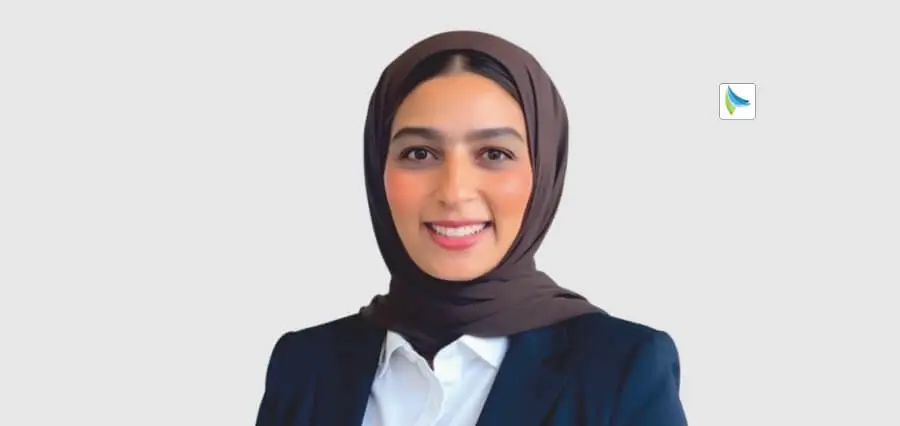





Most leaders don’t gauge their career paths through job titles or milestones. The real gauge can be found in the systems that transcend one tenure, the teams that strengthen as a result of consistent mentoring, and the expansion of organizations while remaining true to themselves. That’s the case for Samah Langner Moustafa, the Group Chief Financial Officer of DM Group. Based in Germany, the United States, and Egypt, Moustafa has spent her career showing how finance done with discipline and compassion transcends numbers. It becomes the core of an organization.
The journey of Moustafa in leadership is one that is based on just one belief, sustainable business comes from sound financial management, ethical leadership, and people-focused decision-making. Her experience over time in such areas as accounting, finance, operations, payroll, compliance, and strategic planning has been broad and very rare for a finance leader. This is what defined how she viewed her profession..
“Finance is much more than numbers. It is the foundation that enables organizations to grow with confidence,” she says.
That statement captures the throughline of her career. She has consistently sought out the harder assignment: transforming complexity into clarity, building systems designed to scale, and helping organizations succeed without drifting from their mission. As the businesses she has served expanded into new markets, she took on the work of constructing frameworks that could support growth without sacrificing quality, integrity, or accountability. For Moustafa, expansion was never simply about adding markets. It was about ensuring that everything the organization stood for travelled with it.
Finance as a Strategic Partner, not a Back Office
As Group CFO, the sphere of responsibilities of Moustafa transcends the scope of a standard finance function. The CFO is responsible for financial strategy, budgeting, forecasting, cash flow management, payroll, compliance, operation control, risk management, and strategic planning – a wide range of activities, placing the CFO at the heart of most major decisions taken in the company. The CFO collaborates with the respective teams of leaders to make sure that financial decisions support operations, rather than impede them.
One of the key elements of the CFO’s approach to finance is the rejection of the notion that its main purpose is to reflect what has happened in the past. Instead, it becomes a proactive component of planning for future development, supporting the process of creation of long-term value, achieving tangible results and increasing organizational resilience. Transparency and data-driven decisions, according to Moustafa, are the way how all departments work towards the same goal, rather than independently perform their functions.
From Having the Right Answers to Asking the Right Questions
Ask Moustafa how her leadership philosophy has changed over the years, and she offers an answer refreshingly free of corporate polish. Early in her career, she believed success meant arriving with the right answers. Experience taught her otherwise.
“Success comes from asking the right questions, developing strong teams, and creating an environment where accountability and innovation coexist,” she explains.
That shift from certainty to curiosity now defines how she leads. She has come to see growth and complexity as inseparable, and she believes the leaders best equipped to manage that complexity are the ones who stay calm, remain flexible, and keep their focus fixed on solutions rather than problems. Continuous learning, open communication, and shared ownership of results are not slogans she repeats for effect; they are the operating principles she has built her teams around.
Integrity as the non-negotiable
If there is one word that recurs throughout Moustafa’s reflections on leadership, it is integrity. She describes it as the cornerstone of every decision she makes, and she is direct about how she believes trust is earned: through transparency, consistency, and fairness, sustained over time rather than declared in a single moment.
What distinguishes her leadership style is the way she pairs analytical rigor with genuine empathy. She is quick to point out why the two cannot be separated in her field.
“Numbers always represent people, patients, employees, and families,” she says.
It is a reminder that behind every spreadsheet sits a human consequence, a payroll cycle that keeps a family afloat, a compliance decision that protects a patient, a budget choice that determines whether a team can do its job well. She strives to build an environment where high standards and mutual respect are not in tension but coexist naturally, guided by ethical leadership, responsibility, resilience, and continuous improvement at every strategic turn.
Staying Ahead of an Industry in Motion
Finance and healthcare, the two sectors most central to her work, are evolving quickly under the combined pressure of technology, regulation, and artificial intelligence. Moustafa treats staying current not as an occasional effort but as an ongoing discipline. She invests in continuous education, professional development, and industry networking, and she studies emerging financial technologies, regulatory shifts, and operational best practices as a matter of routine.
She is equally clear-eyed about what technology should actually deliver. In her view, its purpose is not innovation for its own sake but tangible improvement: simplifying processes, improving visibility, reducing risk, and freeing professionals to spend their time on higher-value strategic work rather than repetitive tasks.
Scaling Across Borders
Few challenges test a finance leader’s adaptability like scaling operations across multiple countries, each with its own regulatory landscape, operational quirks, and cultural expectations. Moustafa has approached this challenge from an unusual angle. Rather than treating jurisdictional differences as obstacles, she treats them as design constraints that push her toward building stronger systems.
Reconciling standardized financial controls with local requirements demands patience, flexibility, and close collaboration qualities she has had to draw on repeatedly while working across Germany, the United States, and Egypt. The experience, she notes, has sharpened her ability to manage change, solve complex problems, and lead multicultural teams, skills that have become as essential to her role as any technical expertise in accounting or compliance.
Measuring Success by What Lasts
When asked about her proudest achievements, Moustafa steers away from awards and recognition. What matters to her are results built to last: scalable financial systems, stronger governance, improved operational efficiency, and organizations able to expand rapidly without losing financial discipline along the way.
Her greatest professional satisfaction, she says, comes from watching the people around her grow teams that become more confident, processes that become more efficient, organizations that become stronger. It is a definition of success measured in capability built, not credentials collected.
Balance as a Discipline, not a Destination
Moustafa is candid about the demands of leading at this level, and she describes work-life balance not as something achieved once and maintained forever, but as an ongoing discipline requiring constant recalibration. She prioritizes deliberately, delegates responsibly, and protects time for family, health, and personal growth.
Underlying this practice is a belief that resilient leaders must first take care of themselves if they are to keep serving others with clarity and energy. She accepts that priorities will shift as an organization moves through different stages of growth; what stays constant, she insists, are her personal values.
Advice for the Next Generation of Women Leaders
Moustafa’s guidance for aspiring women leaders is grounded in the same principles that have shaped her own path: belief, investment, and resilience. She urges women to believe in their abilities before waiting for others to validate them, to invest continuously in their education, to stay curious, and to keep learning without pause.
She is equally direct about how to meet difficulty head-on, encouraging women not to fear challenges, since those very experiences often become the ones that define a leader. Building strong relationships, communicating with confidence, and leading with integrity round out her advice a reminder that authentic leadership, in her words, creates lasting influence.
A Legacy Measured in People, Not Just Performance
When thinking about the future, Moustafa aims at creating companies that are successful financially as well as socially. She plans on contributing to the future of healthcare, management change, and international cooperation by creating systems that will ensure sustainable development and ultimately change people’s lives.
Her last reflection sums up an entire career’s worth of convictions into one simple idea: being a leader doesn’t mean having power but being responsible. Every single challenge Moustafa has ever been through has proved that it is only resilience, constant learning and decision-making that can help organizations become successful. She will continue helping businesses develop responsibly and mentoring the teams around her to be excellent together – a legacy that will not be built only through the company’s financial results, but also through the leaders that she mentors.