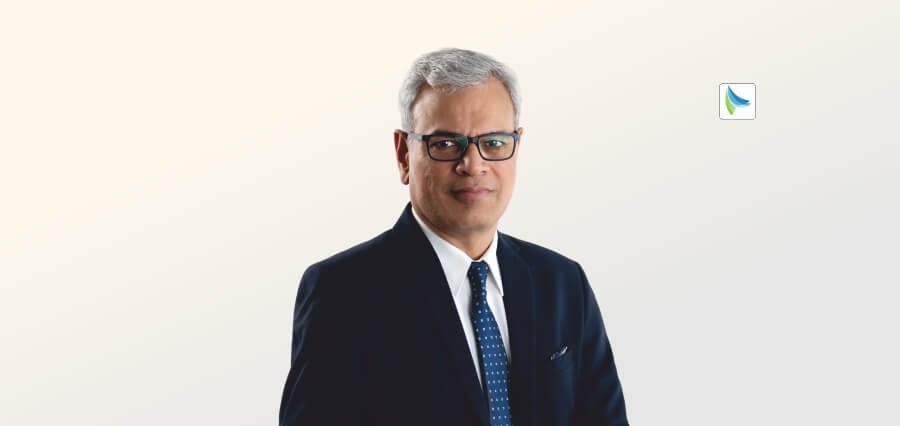





Irfan Khan’s leadership philosophy is grounded in three principles: act with integrity, stay close to the people delivering the work, and build institutions that can endure beyond any individual. As Group Chief Executive Officer of Evercare Group, he sees leadership as an act of stewardship. Performance and scale matter, and lasting impact depends on the people, systems and culture that carry an organisation forward.
Earlier in his career, Irfan was naturally more focused on strategy, structure and execution. Experience in healthcare added greater emphasis on empathy, humility and trust. Decisions affect patients at vulnerable moments, families making difficult choices and professionals carrying significant responsibility. This has made him more deliberate about listening before acting, being transparent about trade-offs and creating clarity when circumstances are uncertain. Over time, his approach has evolved from leading through answers to leading through purpose, disciplined questions and shared ownership.
Leading with Local Insight
A defining experience came during an early cross-country review at Evercare. The organisation was examining a similar operational challenge across several markets, and Irfan initially expected that a common solution could be applied across the network. As he listened to local teams, the underlying causes proved very different. In one market, the issue centred on workforce capacity; in another, it was shaped by regulation and access; elsewhere, it reflected local operating practices.
The experience reinforced a principle that continues to guide him: consistency should not mean uniformity. The common foundations are patient safety, ethical governance, reliable operations, workforce development and respect for local context. Their application must reflect the realities of each market.
Since then, Irfan has become less attached to standard answers and more focused on asking the right questions, listening closely to those nearest to the issue and creating coherence across diverse organisations. It also strengthened his belief in resilient healthcare systems: systems that can absorb pressure, learn from disruption and continue delivering safe, dignified care when conditions change.
Clarity Under Pressure
In difficult moments, Irfan returns to purpose, evidence and people. Purpose helps distinguish what is truly important from what is merely urgent. Evidence provides a disciplined basis for decisions, particularly when emotions and competing opinions are strong. People provide the practical insight that is often missing from a boardroom view.
He makes a conscious effort to hear from those closest to the issue, test assumptions and remain clear about what the organisation knows, what it does not know and what still needs to be decided.
He also creates enough space to think. Speed matters in healthcare, while rushed thinking can create longer-term problems. Confidence comes from following a sound process, acting with integrity and adjusting as new information emerges. For Irfan, resilience means remaining steady, learning quickly and helping others retain confidence and direction under pressure.
Empathy in Action
Empathy is central to Irfan’s leadership style. It means understanding how a decision will be experienced by patients, colleagues and communities, and ensuring that this understanding shapes how the decision is made and communicated.
Leaders may need to change structures, redirect investment or set higher expectations. Irfan believes these decisions should always be handled with dignity, transparency and respect. HumanCareX reflects this belief by giving teams a shared language for the everyday behaviours that build trust: listening carefully, communicating clearly, recognising uncertainty and remaining steady in emotionally demanding situations.
Empathy also improves decision quality. Leaders who understand frontline realities are better placed to design processes that work in practice. The strongest leadership combines compassion, clarity and accountability.
Growing Through Continuous Learning
For Irfan, continuous learning begins with creating an environment where people can admit they do not have every answer. He tries to model this personally by asking questions, seeking perspectives from different disciplines and revising his position when the evidence changes.
Across Evercare, the aim is to help learning travel across hospitals and countries. The Evercare Academy creates practical opportunities for clinicians, nurses, managers and support teams to build leadership capability, strengthen technical knowledge and learn from colleagues across the network. Cross-network training and development reinforce this approach.
The value of learning lies in the culture it creates. Teams should be able to discuss what worked, what did not and what should change. Change becomes easier to manage when people understand its purpose, contribute to its design and see learning recognised as a strength. Evercare’s ambition is to create a continuous cycle in which local insight is captured, tested and shared so that improvement in one part of the network can strengthen care elsewhere.
Empowered by Trust
Irfan believes empowerment requires leaders to create the conditions in which contribution is expected, respected and acted upon. In practice, this means setting clear objectives and boundaries, sharing relevant information, inviting challenge before decisions are final and explaining why particular choices are made.
It also means moving responsibility closer to the point of care. Frontline teams often see patterns, risks and opportunities before senior leaders do. Giving them meaningful ownership supports faster and better-informed decisions.
Through initiatives such as the E³ Hub, built around empathy, evidence and equity, Evercare is creating a consistent way for teams to identify recurring problems, test improvements and share what works across the network. Psychological safety is equally important. People need to be able to raise concerns and express different views openly.
Empowerment also carries accountability. When people are given ownership, they should understand the outcomes expected of them and reflect honestly on results. A strong culture balances voice, freedom and responsibility.
Creating Lasting Impact
Among the milestones in his career, the Evercare Health Conference in Lagos stands out as one of Irfan’s most personally fulfilling achievements. It showed what a multi-country healthcare network can become when learning and experience are shared openly.
Frontline clinicians and nurses played an active role in the Conference. Many hosted sessions, moderated discussions and presented their own work, sometimes for the first time. Irfan found it deeply meaningful to see individuals grow in confidence, exchange ideas across borders and recognise that their experience could help colleagues in another country.
The Conference also helped accelerate the Evercare Academy, the E³ Hub and a wider model of connected learning focused on safer care, stronger leadership and practical innovation. For Irfan, resilience is built through capable people, reliable processes, trusted relationships and the ability to learn collectively. Helping create that environment gives him greater satisfaction than any single commercial or organisational achievement.
Developing Future Leaders
Irfan looks for potential beyond formal titles. Curiosity, judgement, reliability, empathy and the willingness to take responsibility are often stronger indicators of future leadership than seniority alone.
His approach is to give people meaningful opportunities to lead real work, supported by coaching, feedback and reflection. Leadership grows when people are trusted to frame problems, bring colleagues together, make decisions and learn from outcomes. This thinking also sits behind the Evercare Academy and its focus on building leadership capability across clinicians, nurses, managers and support teams.
He wants to develop people who can think systemically, communicate clearly and remain grounded in complex situations. Mentoring also requires honesty: recognising strengths and addressing gaps directly and constructively. The objective is to help individuals develop their own leadership voice while understanding the standards, responsibilities and values expected across Evercare.
Success Beyond Results
Irfan defines success through the strength and usefulness of the institution left behind. Financial sustainability gives healthcare organisations the capacity to invest, retain talent and expand access. Success is also visible in clinical reliability, patient trust, workforce capability, ethical conduct and the ability of a system to continue improving under pressure.
Evercare operates across four countries, and in 2025 its principal reporting platforms delivered more than 841,000 patient visits and services through the work of over 2,800 employees. Those figures show the scale of the responsibility Evercare carries. The real measure is whether each interaction is supported by safe systems, capable people and trusted care.
Irfan’s aspiration is to help build healthcare platforms that are resilient, locally relevant and capable of delivering consistent, high-quality care across emerging markets. He would like his leadership legacy to be reflected in people who have grown in confidence and responsibility, teams that collaborate across professional and national boundaries, and systems that continue to learn after individual leaders have moved on.
For Irfan, leadership is stewardship. Its value is seen in an organisation becoming stronger, more capable and more purposeful through a leader’s contribution.
Inspiring the Next Generation
Irfan’s advice to the next generation of executives is clear: build trust before you seek scale. Purpose and performance both depend on trust. Trust grows when leaders are consistent in their values, honest about difficult realities and accountable for decisions and outcomes. It also requires listening to those who experience the consequences of strategy, especially frontline teams and people whose voices are less easily heard.
Future executives will lead through rapid technological, economic and social change. They will need to move quickly and adapt continuously. Irfan encourages them to understand the systems in which they operate, invest in people and establish clear principles for decision-making. These foundations allow leaders to act with confidence and purpose.
A leader does not need to know everything. A leader must create clarity, invite constructive challenge and remain responsible for the outcome. When purpose is translated into disciplined action and people feel respected throughout the process, performance becomes stronger, more durable and more meaningful.