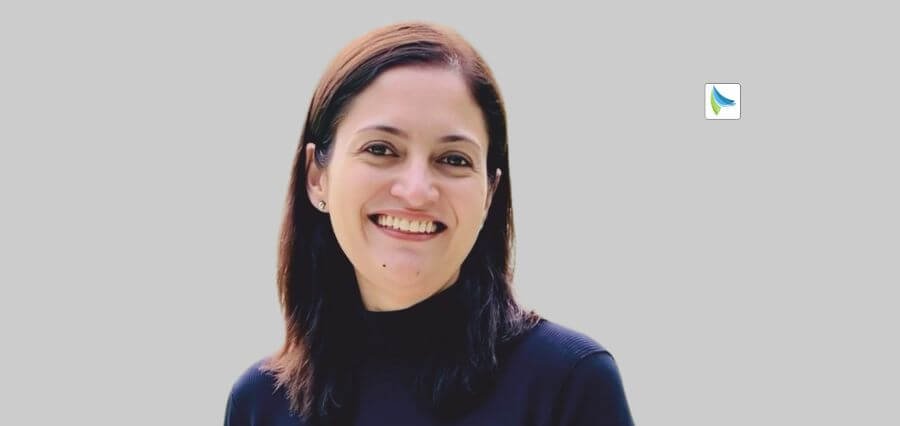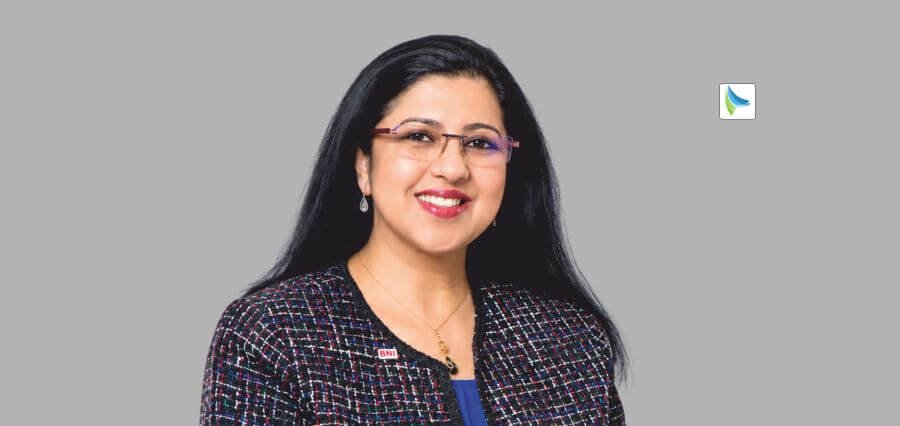





Makurdi, the capital of Benue State in north-central Nigeria, does not appear on the shortlists of global finance hubs. It is, however, where Mary Collins grew up, the third and youngest child of two civil servants who believed, from hard experience, that the most durable investment they could make in their children was not financial. It was foundational.
Her late father, an engineer by profession, was the defining influence of her early years. Disciplined, deliberate, and deeply invested in the academic and moral development of his children, he modelled values that would hold Mary steady through the most demanding moments of her career: integrity, perseverance, and the willingness to take full responsibility for your outcomes regardless of what surrounds them. When his health began to fail, a blood pressure diagnosis that progressed to partial paralysis and dependence on continuous medication, she watched a strong man face illness with quiet dignity. That, too, shaped her.
There was a season when it looked as though a partially sponsored opportunity to study in the United States might open a different door. Financial constraints closed it before she could walk through. It was a genuine disappointment, and she names it as such without sentiment. What it taught her was something she has carried into every subsequent chapter of her career: that alternative paths are not lesser paths. They simply demand that you build more of the infrastructure yourself.
She mentions, “This experience taught me valuable lessons about resilience and finding alternative paths to success.”
Building the Knowledge Before Building the Business
Mary’s professional formation was deliberate and cross-disciplinary in ways that were not common among her peers. Her Bachelor’s degree in Economics from the Federal University of Technology, Yola, where she graduated as the Best Female Student, gave her the analytical foundation. Her early career on a British government-supported African development project gave her operational fluency in high-value financial transactions. The commendation she received during that period for managing those transactions with integrity and professionalism was the first formal recognition of a professional standard she has since maintained across every role and every market.
From there, her path moved through multinational financial advisory, investment, and real estate firms across multiple international markets. Professional certifications in Real Estate Development and Investment and Financial Management, from the University of Cape Town and the Kellstadt Graduate School of Business in Chicago, widened her technical lens. A research co-authorship on labor force participation among married women in Adamawa State, published in the Journal of Emerging Trends in Economics and Management Sciences, reflected the social dimension of her thinking. And her Master’s degree in Real Estate Finance from Henley Business School, completed as she was simultaneously building Marie Consulting and Partners, provided the academic architecture for the investment thesis she had already begun developing from lived market experience.
She asserts, “My academic background and professional experience combined to give me a framework for understanding how to diversify risk across both asset classes and geographies.”
The Pandemic That Built the Business
The COVID-19 pandemic destroyed a great deal and built a few things that might not otherwise have been built. Marie Consulting and Partners are one of them.
In 2020, Mary was working within a financial advisory firm when global markets collapsed. Stock portfolios that had taken years to build were decimated within weeks. The distress of communicating these developments to investors who were simultaneously managing health anxieties was among the most professionally and personally demanding experiences of her career. At the same time, something was becoming visible that the noise of the crisis made it easy to miss: not all assets were falling. Residential real estate in several key markets was moving in precisely the opposite direction as remote work changed where people needed to live and how much space they needed to live in.
The observation that different assets behave differently under the same conditions is not a new insight. But experiencing it in real time, managing real client portfolios through real market chaos, gave that insight a visceral quality that no textbook conveys. Diversification, she concluded, was not a risk management principle. It was the foundational logic around which a genuinely resilient investment practice had to be built. Not just across asset classes but across geographies, so that no single market event, however severe, could devastate a well-constructed portfolio simultaneously across all its components.
She highlights, “The pandemic reinforced one of the most valuable lessons in investing: the power of diversification. It became the foundation for a larger vision.”
Marie Consulting and Partners were conceptually born in 2020 and formally built over the three years that followed. The firm provides exclusive investment opportunities in private equity, private credit and fixed interest loan notes, and real estate to global private wealth investors through a carefully curated network of reputable partners operating across Accra, Dubai, and the United Kingdom. The markets are not chosen arbitrarily. Each represents a combination of growth trajectory, regulatory maturity, and investment infrastructure that research and data consistently validate.
Private Markets and the Gap That Needed Filling
The investment advisory landscape has historically been organized around publicly traded assets: stocks, bonds, and the various instruments that derive their value from public market prices. Private markets, where some of the most significant wealth creation and preservation has always occurred, have been accessible primarily to institutional investors and ultra-high-net-worth individuals with the connections and minimum investment thresholds that have functionally excluded most private wealth investors.
Mary saw that gap clearly, and the experience of watching public markets collapse while private assets held or appreciated gave it new urgency. Marie Consulting and Partners were built explicitly to close it, offering carefully researched access to private equity, private credit, and real estate opportunities that would not otherwise be available to the investors the firm serves.
The firm also carries a social dimension that is not incidental to its identity. A commitment to supporting labour force participation among married women in remote areas of West Africa, grounded in the very research Mary co-authored, is embedded in the firm’s corporate social responsibility framework. In 2024, that commitment took practical form through a program that provided business grants to six women in remote communities in Adamawa State, executed in partnership with the state Minister of Women Affairs and designed with full transparency and accountability at its center.
She states, “Marie Consulting and Partners is committed to promoting financial wellness for investors, corporations, and communities. The business dimension and the social dimension reinforce each other.”
Strength, Perfectionism, and the Boundary That Had to Be Built
Mary names discipline, empathy, resilience, and sincerity as the strengths that have most consistently shaped her professional outcomes. The discipline came from her father. The empathy came from genuine care for the people she works with and serves. The resilience was built through every disappointment that turned out to be a redirection. The sincerity is, in her view, not simply an ethical preference but a strategic one: trust and reputation are assets that appreciate over time, and she has consistently chosen to invest in them over pursuing short-term advantage.
Her weaknesses are offered with equal candor. Perfectionism can produce excellent outcomes and can also produce unnecessary delays in delivering work that is already more than good enough. Empathy that, without clear limits, can become a drain rather than a resource. And a kindness that has occasionally been taken advantage of, a lesson that taught her, over time, that compassion without boundaries serves no one well in the long run.
She reflects, “Effective leadership requires balancing compassion with clear boundaries. That balance took time to develop, but it has made me a more effective leader and a more sustainable one.”
Awards, Recognition, and the Milestone She Values Most
The formal recognition of Mary’s career has arrived across several decades and several continents. The Leo Harvard Scholarship Merit Award in 2006. The Graduate Youth Entrepreneurship Award in 2019 from the Federal Ministry of Agriculture and Rural Development in collaboration with the World Bank. Best in Professionalism, Female Category, at Devtraco Plus Limited in Ghana in 2021. The 2025 Global Recognition Award for excellence in innovation, leadership, and community initiatives. And four nominations at the Women in Investment Awards by Investment Week, reflecting the breadth of her contribution to the investment space.
But ask Mary which achievement she values most and she will not reach for any of these. She will reach for thirteen years of marriage, three children who consistently lead their academic classes, and the knowledge that she has managed to build a professional life of genuine consequence without sacrificing the personal life that gives it meaning.
She affirms, “My greatest personal achievement is my family. Everything else is built on that foundation.”
The Advice She Would Give
To aspiring leaders, Mary’s counsel is as grounded as her career. Begin developing leadership capacity before you have the title that seems to justify it, because leadership is a practice before it is a position. Treat it as an act of service rather than an exercise of authority. Build emotional intelligence as deliberately as you build technical expertise, because leadership is ultimately about people and your ability to understand and work with them will determine your ceiling more than any other single factor.
Stay focused when the distractions arrive, and they will arrive in every form: criticism, setbacks, competing demands, and the voices that question whether the path you have chosen is worth the difficulty it requires. The leaders who succeed are rarely the most talented. They are the most disciplined in maintaining focus when focus is hardest to maintain.
She reminds, “Choose to see opportunities where others see obstacles and lessons where others see failures.”
Mary Collins did not build her career in the easiest markets or the most forgiving conditions. She built it through the specific difficulty of being a woman, a mother, and an entrepreneur navigating financial markets across multiple continents with a level of integrity and strategic clarity that the recognition has since confirmed. The gap she identified in private market access was real. The business she built to close it is growing. And the investors who trust her with their capital trust her because she has spent decades demonstrating that trust, in investment as in everything else, is the most durable asset of all.