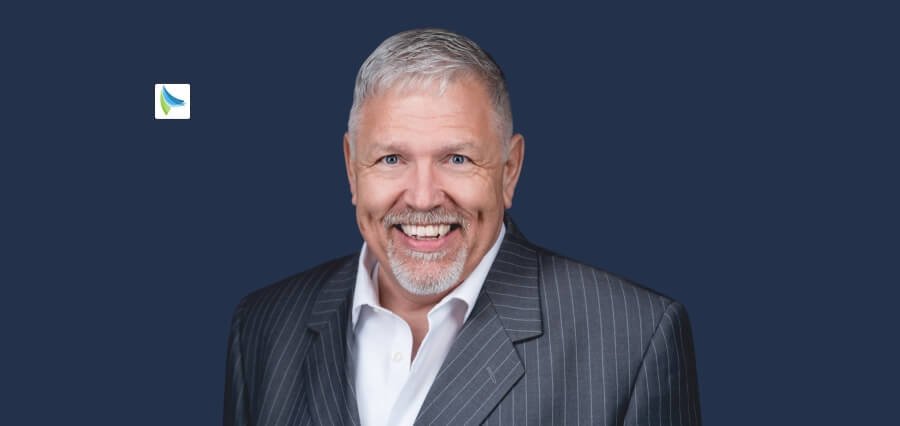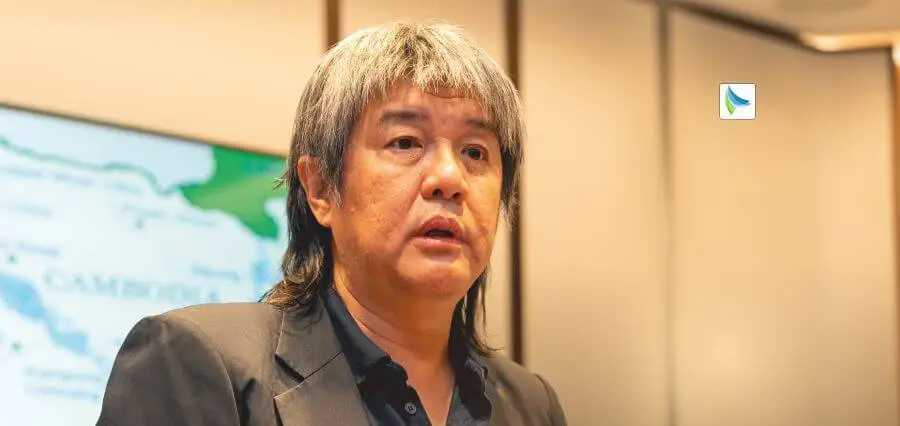





There is a particular kind of professional wisdom that cannot be taught in a classroom or absorbed from a business book. It develops slowly through years of sitting across leaders at every stage of growth, listening carefully, and learning to recognize the difference between the questions people ask and the questions they need to be asking. Mark Phelps has spent his career developing exactly that kind of wisdom. As a business coach whose work spans organizations across continents, he has built a reputation not for delivering answers but for something considerably more valuable: helping leaders ask better questions about their businesses, their people, and their current place in the world. That distinction, subtle as it sounds, is the foundation of everything he does.
Mark is not the kind of coach who arrives with a pre-packaged methodology and a slide deck built for every room. His philosophy, his methods, and the standard he holds his clients to are all shaped by a conviction that genuine transformation does not come from external expertise alone. It comes from within the leader, unlocked through the right questions asked at the right moment by someone willing to challenge what everyone else in the room has already accepted. That conviction is not a positioning statement. It is the operating principle behind every coaching engagement he takes on.
A Philosophy Built on Better Questions
When Mark reflects on what leadership coaching actually means at its best, he reaches not for frameworks or methodologies but for a single, clarifying principle. His role is not to provide answers. It is to help leaders develop the quality of thinking that produces better answers on their own.
He says, “My leadership philosophy has not been about answering questions but more importantly to help leaders ask better questions about their businesses, their people, and their current place in life.”
This is a more demanding philosophy than it sounds. Asking better questions requires a leader to slow down, challenge their own assumptions, and sit with uncertainty long enough to examine it honestly. In environments where speed and decisiveness are rewarded by default, that discipline does not come naturally. It has to be developed deliberately, and that development is where Mark’s coaching does its most important work.
In his current volunteer coaching role, he will work with leaders for 1 year. The timeline is fixed, but the ambition is not. His goal is not to produce short-term improvements that fade when the engagement ends. It is to create meaningful change that lasts; change that becomes embedded in how a leader thinks and decides long after the formal coaching relationship concludes.
Working On the Business, Not Just in It
One of the most persistent challenges Mark observes across the organizations he works with is also one of the oldest in business leadership: the inability to step back from daily operations long enough to think strategically about the organization’s direction.
The volunteer organization he works with has a saying that captures this tension precisely, and it is one that Mark returns to repeatedly with his clients: are you too busy working in the business to work on the business? It is a question that sounds simple but cuts to the center of one of the most common and costly patterns in leadership, the tendency to let operational urgency crowd out strategic thinking entirely.
He notes, “There is definitely a balance that is required. However, I do my best to get them to spend more time on the things that are going to make a significant difference.”
What distinguishes the leaders who manage this balance well from those who do not is rarely intelligence or commitment. It is the ability to make a deliberate choice, consistently and repeatedly, about where their attention goes. Mark works with leaders to build the discipline of protecting strategic thinking time as a non-negotiable priority rather than something that happens in whatever space operational demands happen to leave behind.
What Separates Leaders from Managers
In a business environment that generates more leadership content than any previous era in history, the distinction between genuine leadership and capable management remains one of the most practically important and least honestly examined questions in professional life. Mark’s answer to it is grounded and direct.
The best leaders, in his view, share three qualities that average managers tend to lack. They are willing to admit their shortcomings without defensiveness. They actively learn and experiment with new ways of doing things rather than defending established approaches. And they empower the right people in their organizations, supporting them with guidance rather than constraining them with micromanagement.
He observes, “The best leaders are willing to admit their shortcomings, learn and experiment with new ways of doing things. They are also willing to empower the right people in their organizations and support them with guidance, not micromanage.”
That last point carries particular weight in the current business environment, where the organizations best positioned for sustained growth are those that have built cultures of genuine empowerment rather than simply using the word to describe what is, in practice, a more sophisticated form of control. Mark sees this distinction clearly in the organizations he coaches, and it shapes much of the strategic work he does around culture and team development.
The Challenges That Define This Moment
Mark works with leaders across different industries and stages of growth, and the patterns he observes shift from year to year as the business environment evolves. This year, two challenges have emerged as consistent priorities across the organizations he works with.
The first is a go-to-market strategy. Many of the leaders he coaches struggle to define clearly and specifically how their organizations will reach customers, generate demand, and leverage their genuine strengths in the market. The absence of that clarity is not simply a strategic gap. It cascades into operational confusion, misaligned priorities, and teams that work hard in directions that do not compound into results.
The second is culture. Specifically, the challenge of building organizations that genuinely embrace empowerment, attract high-potential leaders, and practice the values they articulate in daily behavior rather than reserving them for onboarding decks and company websites. These two challenges are more connected than they might appear. A culture that does not genuinely empower people will consistently struggle to execute a go-to-market strategy that requires speed, creativity, and distributed decision-making.
Resilience Built on Clarity, Not Optimism
When leaders face uncertainty, setbacks, or high-pressure situations, the coaching instinct in many practitioners is to focus on mindset, confidence building, and motivational reframing. Mark’s approach is more structural and considerably more useful in practice.
He guides leaders through three steps that move from diagnosis to decision with a discipline that cuts through the emotional turbulence that difficult moments generate. First, clearly understand what caused the issue. Not the surface-level cause, but the actual root cause that, left unaddressed, will produce the same outcome again. Second, identify what the potential options are, without prematurely committing to any single path. Third, determine what actions need to be taken now, with the clarity that comes from having done the first two steps properly.
This approach treats resilience not as a personality trait that some leaders have, and others lack, but as a process that any leader can apply consistently when the conditions become difficult. It reflects Mark’s broader conviction that the most valuable thing coaching can give a leader is not inspiration but structure, a reliable way of thinking that holds up under pressure.
Emotional Intelligence as Operational Necessity
The conversation around soft skills in business leadership has shifted significantly over the past decade, and Mark’s perspective reflects that shift with precision. Emotional intelligence is not, in his view, a complementary quality that makes technically capable leaders more pleasant to work with. It is a core operational requirement for anyone serious about building an organization that performs sustainably.
He states clearly that soft skills are critical in every industry across every geography, specifically because they are what separates organizations that develop leaders from those that merely develop managers. The ability to read a room, build genuine trust, navigate interpersonal complexity, and respond to the human dimension of professional challenges is not a nice addition to technical capability. It is, increasingly, what technical capability depends on to deliver results.
A recent coaching session illustrated this point practically. In one company’s senior management team, the discussion turned to how leaders need to engage with their teams about what is actually going on in people’s lives, and to make a deliberate practice of catching team members doing the right things and praising them publicly. It is not a complicated idea. But the gap between knowing it and consistently doing it, under pressure, across an organization, is where culture is either built or quietly dismantled.
Continuous Learning as a Non-Negotiable Standard
Mark holds a standard around continuous learning that he applies to himself and to the leaders he chooses to work with. He does not frame it as an aspiration or a best practice. He frames it as a prerequisite.
He says, “I am fortunate enough to coach leaders that embrace continuous learning, and if they do not exhibit this philosophy, I will not work with them.”
That position is unusual enough to deserve attention. Most coaches will work with whoever engages in their services. Mark’s refusal to do so reflects a conviction that the coaching relationship only produces lasting value when the leader being coached is genuinely committed to growth, not merely open to it in theory when conditions are comfortable. Authentic leadership, in his framework, is not separate from continuous learning. It is expressed through it.
A Legacy Measured in Friendships and Futures
When Mark considers what he hopes to leave behind through his coaching work, he does not reach for professional metrics or institutional legacy. He reaches for something warmer and more personal.
He reflects, “My hope is to build a network of lifelong friendships and watch them succeed on a massive scale from the sidelines.”
It is a statement that says everything about the kind of coach he is. The work is not about his presence in the outcome. It is about the quality of the leader standing on the other side of it. The coaching relationship, at its best, makes itself unnecessary. And the legacy worth building is not a body of work that keeps people dependent on a coach. It is a generation of leaders equipped to ask better questions, build stronger organizations, and extend the same quality of thinking to the people around them.
For the next generation of entrepreneurs and executives navigating a business world of accelerating complexity, Mark offers a deceptively simple starting point: ask better questions and listen more than you talk. In a professional culture that rewards the appearance of certainty, that instruction is both radical and quietly indispensable.