



The retail sector does not naturally reward patience. It rewards speed, scale, and the ability to manage large, diverse workforces across multiple locations without losing operational coherence. In that environment, where quarterly targets dominate conversations and headcount is frequently the first line item reviewed when costs need to come down, the temptation to treat people as a cost variable rather than a strategic asset is ever-present and, in many organizations, ultimately decisive. Over more than two decades in Human Resources, Abdulaziz Saati Al-Otaibi has built his professional identity around demonstrating, with measurable and documented outcomes, that the opposite approach consistently and sustainably produces superior results.
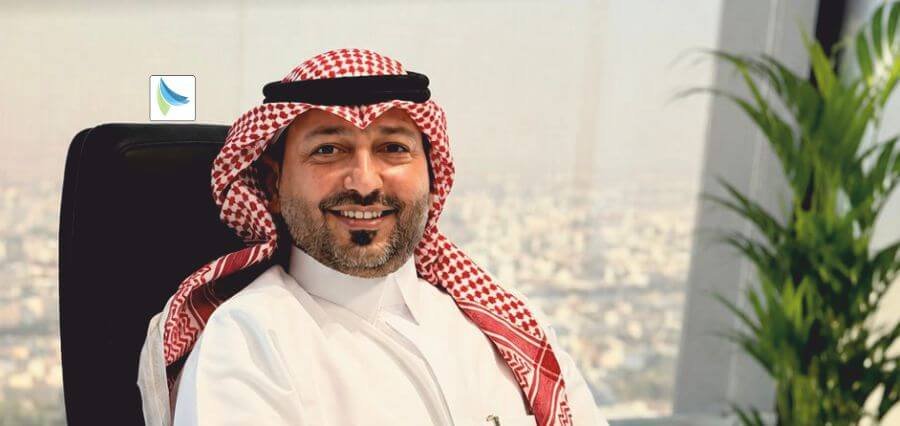
As Senior Leadership of Human Capital at Apparel Group, KSA, one of the Gulf’s most prominent multi-brand retail conglomerates operating across more than 85 brands and multiple international markets, he leads across some of the most complex workforce challenges in the region: large-scale Saudization initiatives, talent pipeline development, employee engagement strategy, and end-to-end organizational transformation. The scale demands both strategic clarity and operational discipline, and his approach to each challenge is grounded in a conviction he formed early in his career and has never once abandoned.
He mentions, “Organizations achieve extraordinary results when they invest in people. Human Resources had evolved beyond administrative functions and could become a strategic driver of business performance.”
From Fascination to Vocation
The path that led Abdulaziz Saati Al-Otaibi into Human Resources was shaped by a genuine and early fascination with a question that most organizations ask but very few answer well: why do some teams and cultures consistently outperform others with the same resources, the same markets, and the same strategic opportunities available to them?
The answer, as his career repeatedly and consistently confirmed, is rarely primarily about systems, technology, or process efficiency alone. It is almost always about people: how they are recruited, how they are developed over time, how they are led on a daily basis, and how deeply connected they feel to the purpose of the organization they are part of. That insight did not simply guide his professional choices at a philosophical level. It became the structural architecture of how he builds HR functions and the lens through which he evaluates every initiative, every investment, and every leadership decision.
Over two decades, he developed deep expertise across the full spectrum of human capital management: workforce planning, talent acquisition, employee engagement, organizational development, compliance, and operational excellence. Each discipline reinforced and informed the others in ways that a narrower career path would never have produced. Workforce planning without genuine engagement quickly becomes headcount arithmetic. Talent acquisition without structured development becomes a costly revolving door. Employee engagement without clear accountability produces warmth without performance. His approach integrates all of these dimensions into a coherent, mutually reinforcing system oriented toward a single consistent outcome: organizations where people perform at their genuine best because the conditions for that performance are deliberately designed and continuously maintained at every level.
He asserts, “The idea behind my professional approach has always been to bridge the gap between business objectives and human potential.”
The Saudization Initiative That Set a Standard
Among the most significant and practically complex challenges facing Saudi Arabia’s private sector is Saudization: the national mandate embedded in Vision 2030 to meaningfully increase the employment of Saudi nationals across all industries and economic sectors. For many retail organizations, the mandate has been experienced primarily as a compliance pressure, a percentage target to be met with varying degrees of genuine commitment and operational creativity.
Abdulaziz Saati Al-Otaibi approached it as a strategic opportunity and treated its successful execution as a genuine measure of organizational leadership capability. As the leader of a major Saudization project across multiple retail malls for Landmark Arabia, he designed and executed an initiative that went well beyond numerical compliance to create genuine, sustainable career pathways for Saudi nationals within the retail employment environment. The program generated results significant enough to earn him a formal recognition award directly from the Chief Executive Officer of Landmark Arabia, a validation that reflected not simply the scale of the numbers achieved but the quality of the design, the rigor of the execution, and the durability of the outcomes created.
What distinguished his approach was the understanding that sustainable localization is never achieved simply by placing Saudi nationals in available roles and hoping for successful integration. It requires structured onboarding that acknowledges both the professional expectations and the cultural context of the role, development programs that build genuine capability over time, active mentoring by experienced colleagues who are invested in the success of the new talent around them, and a workplace culture that genuinely values local talent rather than simply fulfilling a regulatory requirement. He built every one of those elements deliberately into the program design, and the results became a reference model cited and replicated within the broader retail industry.
He highlights, “Workforce localization, done well, is not a compliance exercise. It is an investment in the future of the organization and the nation it operates within.”
Agility When It Mattered Most
The COVID-19 pandemic arrived in 2020 as a stress test of extraordinary and unprecedented severity for every HR leader operating in the retail sector. Apparel and fashion retail, fundamentally dependent on physical footfall, social occasions, and consumer confidence, was among the most severely affected categories across the entire economy. The challenge for Human Capital leadership was not simply one of operational continuity. It was the task of holding together a large, geographically distributed, and culturally diverse workforce through sustained uncertainty while simultaneously redesigning processes and systems that had been built entirely for a world that had suddenly ceased to exist.
Abdulaziz’s response centered on three priorities that he has carried forward as permanent and non-negotiable leadership principles since the crisis passed. The first was communication: transparent, frequent, honest, and delivered consistently across all levels of the organization, even and especially when the messages were difficult, and the available certainty was limited. The second was employee wellbeing: a clear-eyed recognition that the professional challenge of navigating the pandemic was entirely inseparable from the personal and family challenges that every employee was simultaneously navigating in their private lives. The third was deliberate acceleration: a conscious decision to use the disruption not simply as a period to be survived but as an opportunity to strengthen digital processes, improve workforce planning infrastructure, and develop new and more resilient approaches to team coordination, performance management, and employee engagement.
He states, “Rather than viewing the pandemic solely as a challenge, I saw it as an opportunity to strengthen organizational resilience and accelerate transformation that would deliver lasting value long after the crisis had passed.”
The outcome was an organization that emerged from that extraordinary period with stronger digital foundations, meaningfully more agile workforce planning capabilities, and a team that had been genuinely and visibly supported rather than simply managed through the most difficult period the industry had faced in a generation.
Strategy, Strength, and the Discipline of Letting Go
Abdulaziz Saati Al-Otaibi identifies strategic thinking as the professional strength that has most consistently enabled his impact across organizations and across roles: the ability to analyze genuinely complex situations, identify the non-obvious opportunity embedded within them, and develop practical solutions that are aligned with long-term organizational objectives rather than simply designed to resolve the immediate presenting pressure.
Alongside this, his people-centered leadership style has been equally and perhaps more fundamentally foundational to everything he has built. He believes that high-performing organizations are built on trust, genuine collaboration, and authentic employee engagement, not on compliance, surveillance, or the assumption that people require constant external direction to perform effectively and to grow. By consistently empowering the teams around him, actively encouraging individual accountability, and creating working environments where people feel genuinely valued and genuinely supported in their professional development, he has built cultures across multiple organizations that retain talent, attract more of it, and sustain performance through conditions that defeat organizations with weaker foundations.
His most candid and instructive professional reflection concerns a weakness he recognized clearly and then systematically addressed over time: a tendency in the earlier stages of his career to remain too deeply and directly involved in operational detail at the expense of strategic focus and team development. The instinct originated in genuine care for the quality of outcomes, but its effect was to concentrate responsibility rather than distribute it and to inadvertently limit the growth of capable team members who needed genuine space and genuine challenge to develop into the leaders the organization needed them to become.
He reflects, “Effective leadership requires delegation and trust in capable team members. By empowering others and focusing on strategic priorities, I became a more effective leader and built stronger teams than I ever could have built through personal control.”
Balancing the Weight of Leadership
In a fast-paced retail environment where significant challenges emerge daily and the operational demands on Human Capital leadership are relentless, managing the boundary between professional intensity and personal wellbeing is itself a genuine leadership discipline. Abdulaziz Saati Al-Otaibi approaches it with the same intentionality and structural thinking he brings to workforce strategy.
Empowering his team and trusting capable individuals to take genuine ownership of their responsibilities creates the space for strategic thinking and personal renewal that sustained leadership at this level requires. Family plays a central and non-negotiable role in providing the perspective, the grounding, and the emotional renewal that professional environments alone cannot supply. Physical and mental wellbeing are treated with equal seriousness and equal deliberateness, because leaders who neglect healthy routines and create no time for genuine reflection eventually compromise the quality of the decision-making that everything else in the organization depends upon.
He affirms, “Balance is achieved through clarity of priorities, strong support systems, and disciplined execution. Professional effectiveness and personal fulfilment, managed well, reinforce rather than undermine each other.”
The Legacy Being Built
Among the achievements Abdulaziz Saati Al-Otaibi identifies as most personally meaningful, formal recognition awards sit alongside a category that no certificate can fully capture: the development of individuals who have grown, under his leadership and through the cultures he has built, into genuine leaders themselves. His recognition for Outstanding HR Leadership and Team Support at Apparel Group reflects not simply individual achievement but the quality of the collective environment he has created around him.
To aspiring leaders, his counsel is direct, grounded, and drawn from lived experience: invest in relationships before you need them, because trust is built in the quiet periods and tested in the difficult ones. Embrace challenges as the primary curriculum of real leadership development. Lead with integrity in every interaction, because reputation accumulates through years of consistent behavior in ordinary moments rather than being established by single visible achievements.
He reminds, “Leadership is ultimately about serving others. When you invest in people, empower teams, and create genuine opportunities for growth, organizational success naturally follows.”
Abdulaziz Saati Al-Otaibi has spent more than two decades building evidence that people-centered leadership produces organizational outcomes that no other approach reliably matches. At Apparel Group, in one of the Gulf regions’ most competitive and demanding retail markets, he is still building that evidence, one team, one initiative, and one developed leader at a time.