




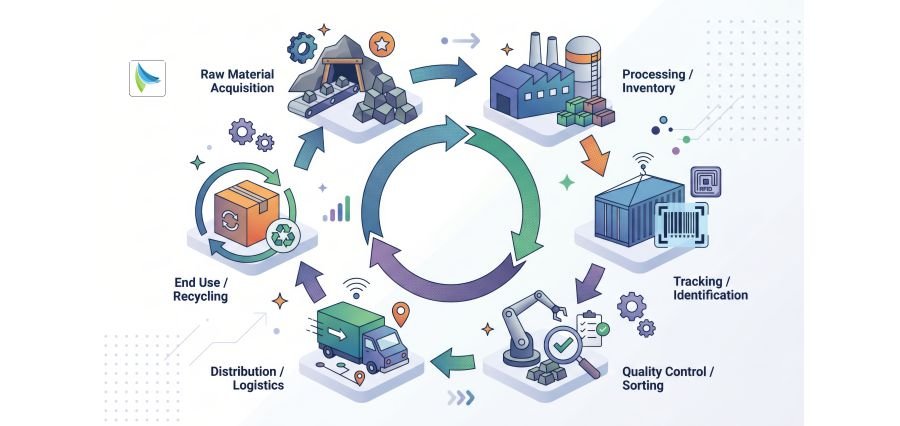
Connected Supply Chain Ecosystems
Today’s workplaces are characterized by frequent change, growing customer expectations, and growing global connections. The traditional supply chain structure, based on separated functions, is not able to offer the speed, visibility, and adaptability needed for sustainable success. This has led businesses focusing more and more on Connected Supply Chain Ecosystems, which bring together suppliers, manufacturers, logistics companies, distributors, and customers to share information and coordinate activities. Meanwhile, Global Supply Chain Management has emerged as a strategic field which enables enterprises to reconcile efficiency, resilience, and growth in various markets.
Building Visibility Through Technology
The modern-day supply chain transformation is technology driven. Organizations can obtain real time visibility of their operations through cloud computing, artificial intelligence, automation and digital platforms. These tools can be used to transform vast amounts of operational data into valuable business intelligence for Procurement Analytics and Insights. Leaders can monitor inventory movements, supplier performance and see up and coming risks before they impact business continuity. Increased transparency from this helps to make decisions quicker, rely less on uncertainty and improve operational control.
Those that adopt Connected Supply Chain Ecosystems enjoy better collaboration and enhanced information sharing. Having everyone using the same data source makes communicating easier and slower. Today, this multi-faceted approach enables companies to deal better with the market disruptions, without compromising service levels or customer satisfaction.
Strategic Procurement as a Competitive Advantage
Procurement is now more than just a transactional process and cost management. Today, companies appreciate the benefits of Strategic Sourcing Solutions that connect suppliers with long-term corporate goals. Companies do not only judge vendors by price; they look at innovativeness, reliability and sustainability, as well as risk exposure. Strategic Sourcing Solutions enable organizations to diversify supplier bases and minimize reliance on any single source, laying the groundwork for resiliency.
Global Supply Chain Management will be even more crucial for international trade, which is becoming more complex. Businesses have to deal with various regulations, economics, and customer expectations in different areas and manage their activities accordingly. Effective leadership means that resources, information, and processes are all in sync throughout the value chain.
Leveraging Data for Smarter Decisions
One of the greatest strengths in supply chain operations is data. By using Procurement Analytics and Insights, organizations can more easily spot patterns, anticipate demand, handle inventory levels, and evaluate supplier outcomes. In practice, these capabilities make it possible to catch issues early, rather than just responding when something has already gone wrong. Plus, Procurement Analytics and Insights support ongoing progress by pointing out chances to streamline procurement workflows, reduce excess, and increase throughput.
In Connected Supply Chain Ecosystems, advanced analytics they really can flourish. Companies get access to data coming from different sources, and then somehow combine it into one shared view for operational performance. That sort of visibility helps the leaders in practice, making decisions that are more informed, so they can sharpen responsiveness and strengthen their competitive position.
Creating Resilience Through Collaboration
In today’s dynamic business environment, resilience has become an essential target for companies. An investment in Strategic Sourcing Solutions can mean better preparedness to deal with disruptions, supply shortages and unexpected fluctuations in demand. Building a good, positive kind of relationship with suppliers helps a lot with trust, better innovation and day to day security. And with Strategic Sourcing Solutions, an organization can often locate alternative suppliers, so operations can keep going when there’s uncertainty, or when something else goes a little off.
There is a growing link between sustainability and resilience. Businesses need to contribute value and demonstrate social and environmental responsibility. The Connected Supply Chain Ecosystems help to increase the transparency of sourcing supplies, usage of resources, and supplier performance. Enhanced visibility facilitates organizations meet stakeholder expectations and boosts operational integrity.
Preparing for the Future
The Future of GSCM is Innovation, Collaboration and Digitalization. Those that have embraced new technologies and operating models will be in a better position to manage complexity and take advantage of new opportunities. The way around the increasing focus on becoming more agile, more resilient, more customer-centric in companies, the role of Global Supply Chain Management is going to change again.
As enterprises stay informed about their strategic plans and performance measures, Procurement Analytics and Insights will play an increasingly vital role in defining the future readiness of enterprises. These capabilities, coupled with Strategic Sourcing Solutions, create a framework for growth and long-term competitiveness. As these ecosystems are increasingly complex, they will help to facilitate quicker decisions, improved collaboration, and increased resilience.
The strategic alignment will be further enhanced by Procurement Analytics and Insights. Businesses that invest in these capabilities today will be better positioned to add value to their customers, partners, employees, and shareholders and to flourish in an interconnected world.
In sum, Connected Supply Chain Ecosystems and Global Supply Chain Management are the drivers of resilience, agility, transparency, innovation, efficiency, sustainability and growth across the globe.