


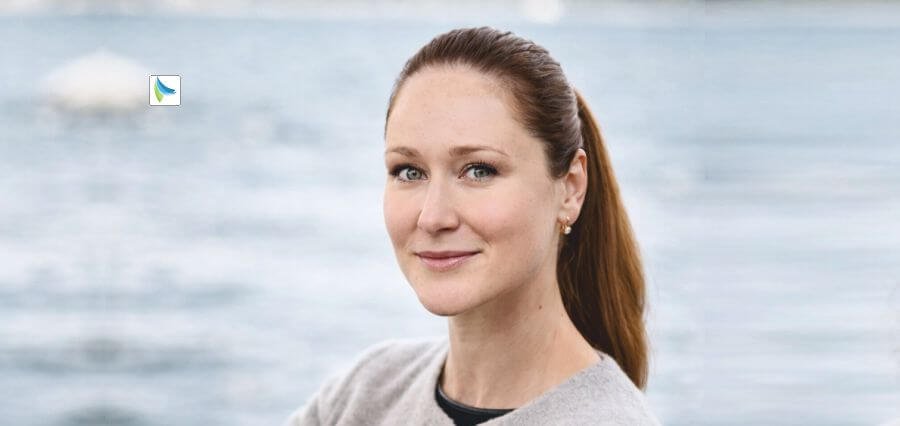
At some point in the life of any changemaker, the world around them starts catching up with what they have always knew. That seems to be the present moment to Karolina Lisslö Gylfe. She is a unique figure at the crossroads of ecological urgency and constructive optimism, biology and entrepreneurship, local conviction and global effects as the Secretary General of WePlanet, an international organization dedicated to environmental solutions that are based on science.
She did not arrive here overnight. Her path is through the city beehives and math tutoring systems on the internet, through the Birchwoods in northern Sweden and conference rooms in Europe. It is a process, characterized not by one dramatic turning point but a sequence of conscious, values-oriented decisions. One leads to the other, one advances the range of what science-led leadership may assume in practice. It is one such journey which cannot be easily classified and that is the point.
Rooted in Curiosity
Karolina Lisslö Gylfe grew up in Sweden with a restless curiosity about how systems work, whether ecological, human, or social. That curiosity drew her to Stockholm University, where she studied biology and developed a deep scientific understanding of the environmental challenges facing the planet. She learned to read ecosystems, to understand interdependence, and to appreciate how the smallest actors, a bee, a root system, a microbe, can determine the health of an entire environment. Even in those early years, something beyond the lab called to her.
“I realized that knowledge alone is not enough,” she reflects. “Impact happens when ideas are translated into practical action.” This conviction, that science must serve society rather than remain confined to scholarship, became the organizing principle of everything she would go on to build.
Her career never followed a straight line, yet each chapter served a singular purpose: turning environmental and scientific knowledge into real-world solutions. After graduation, she chose entrepreneurship over research, co-founding Bee Urban. The initiative introduced city beehives and pollinator habitats, making sustainability tangible and placing the pollinator crisis visibly on Stockholm rooftops rather than confined to journals.
“Sustainability works best when people can actively participate in it,” she says. The lessons from Bee Urban, including entrepreneurship, resilience, and community engagement, proved foundational. That insight would echo through every subsequent venture.
The Education Detour That Was Never a Detour
Few people would draw a straight line between urban beekeeping and mathematics education. Karolina Lisslö Gylfe did. Her involvement with Mattecentrum, a Swedish non-profit offering free mathematics tutoring to students across the country, deepened her understanding of societal impact in ways that entrepreneurship alone could not. She arrived at Mattecentrum not as a mathematician but as someone who understood systems, communication, and the mechanics of making complex things accessible. That, as it turned out, was exactly what the organization needed.
At Mattecentrum, she witnessed firsthand the power of access. The organization scaled its reach through digital platforms, won national recognition for communication and innovation, and earned a Guinness World Record through a large-scale public engagement campaign in mathematics education. The team also developed Foldicub, a patented learning tool designed to make mathematics more engaging and accessible for students who had previously found the subject impenetrable. The innovation gained international recognition and was honored with the prestigious Red Dot Award for design and innovation, awarded to Foldicub under Mattecentrum. The tool embodied the same philosophy that had guided her since Bee Urban: make the abstract concrete, bring the inaccessible within reach, and trust that people will engage once the barriers come down.
During her tenure, Mattecentrum received the prestigious Stora Kommunikationspriset for excellence in communication and gained recognition for improving learning outcomes among girls in mathematics, a demographic historically underserved by traditional educational models. The organization also took home the Best Digital Platform award, cementing its position as a pioneer in accessible education. These were not vanity metrics. They reflected a measurable shift in how young people in Sweden related to a subject that had long felt exclusionary.
“Access to knowledge can change life trajectories,” she says simply.
The Birch Tree and the Pandemic
If Bee Urban introduced Karolina Lisslö Gylfe to the possibilities of green entrepreneurship, Greenovate pushed her to confront its limits. Founded around sustainable product innovation using Nordic natural resources, Greenovate initially developed organic skincare formulations derived from birch sap harvested in northern Sweden. The product was deeply rooted in the Nordic landscape. The birch tree, long central to Scandinavian culture and ecology, became the raw material for a line of products that aimed to prove that nature-derived ingredients could compete in a crowded, commercially driven market.
Then COVID-19 struck, delivering a brutal blow to Greenovate’s initial market. Consumer spending dropped, supply chains fractured, and planned retail vanished. Rather than exit, she pivoted, shifting from skincare to birch sap beverages while retaining research and intellectual foundations. The company earned international recognition, reflecting brand-wide excellence.
A new patented production approach, born from years of continued research and development, now readies for launch in 2026. It stands as a quiet but significant testament to what perseverance looks like in practice. The story of Greenovate is not one of failure overcome but of an idea durable enough to survive the worst conditions a young company could face.
The pandemic also accelerated another chapter entirely. At Mattecentrum, school closures created an urgent need for remote academic support. Her team rapidly rebuilt the digital homework-help platform Pluggakuten to connect students with volunteer teachers online. It was a solution assembled at speed and deployed at scale, precisely when Sweden’s students needed it most. What could have been a period of paralysis became, under her leadership, a period of rapid, purposeful innovation.
“Crises often accelerate change,” she observes. “Organizations that remain flexible can transform setbacks into opportunities for innovation.” She says this not as a motivational slogan, but as a statement of lived fact.
The Science Advocate on a Global Stage
Today, as Secretary General of WePlanet, Karolina Lisslö Gylfe works at the highest level of international environmental advocacy. WePlanet promotes science-based solutions to climate change and biodiversity loss. She brings to that mission everything her career has taught her: the patience of an ecologist, the agility of an entrepreneur, and the communication instincts of someone who has spent years making complex ideas understandable to general audiences.
Her role demands that she navigate between scientists, policymakers, business leaders, and the public. Each group has its own language, incentives, and concerns. She approaches that challenge as a bridge-builder, someone who can hold the scientific rigor of a researcher and the strategic clarity of a communicator in the same breath. “When people feel empowered rather than overwhelmed, progress becomes possible,” she says. In a moment when climate narratives often lean toward fear and fatalism, she insists on possibility. This is not a denial of the data but a deliberate choice about how to use it.
This disposition of constructive optimism grounded in scientific evidence defines her public voice. She argues that fear, while sometimes galvanizing, rarely sustains the long-term cooperation that systemic change requires. What sustains it, she believes, is the conviction that solutions exist, that they are within reach, and that the people in the room have the capacity to build them. She does not dismiss the gravity of ecological challenges. She simply refuses to accept that gravity as the final word.
At WePlanet, she also brings her appetite for cross-sector collaboration. She actively works to close the distance between scientific communities and the policy and business worlds that determine whether research translates into action. At its core, this is the same work she has always done, just at a larger scale and with higher stakes.
Leading Without Burning Out
International travel, public engagement, complex negotiations, and strategic leadership define Karolina’s professional life. Yet she speaks about balance with unusual candor and without the polished deflections that often accompany such questions in executive circles.
Balance, she argues, is dynamic. It is not a fixed destination but a practice that shifts with life’s seasons. She names collaboration as one of her most reliable tools. She builds teams rather than hierarchies, delegates with genuine trust, and creates communication structures that distribute pressure rather than concentrate it. “Strong teams achieve more than individuals,” she says, and she means it structurally, not just philosophically. The organizations she has led have functioned beyond her individual contribution because she built them that way from the start.
Nature provides its own recalibration. Time outdoors reconnects her to the original motivation, the understanding that protecting ecosystems ultimately means protecting the conditions for human flourishing. It also resets perspective in a way that no meeting or strategy document can. Family and close relationships offer another kind of grounding. They remind her that success measured only in professional terms is incomplete.
She is also honest about the fact that balance is not always achievable in equal measure across all areas of life simultaneously. There are periods where professional responsibilities demand more and others where personal life takes priority. Accepting that fluidity, rather than fighting it, has helped her sustain energy and motivation across decades of demanding work.
One of her favorite reflections captures this leadership philosophy with rare economy: “Upon the question of if I am strong, I responded: By showing my weakness, I am.” In a world that often rewards the performance of invulnerability, she holds that acknowledging limitation is itself a form of leadership. The leaders who admit what they do not know create space for others to contribute what they do.
What She Tells the Next Generation
When aspiring leaders seek her counsel, Karolina Lisslö Gylfe begins with purpose. Not the polished mission-statement variety, but something more specific, a real problem that you genuinely want to solve. “Leadership becomes more meaningful and sustainable when it is connected to a problem you genuinely want to solve. A clear sense of purpose provides resilience when challenges arise,” she says.
She pushes back firmly on the cult of the solo visionary. The leaders who inspire her build environments where others can contribute and succeed. They do not try to control every outcome. She advocates for failure as a curriculum rather than a verdict. “Innovation involves experimentation, and not every initiative will succeed. The important part is learning quickly and adapting.” She also encourages the next generation to stay genuinely curious, to resist the narrowing that often comes with professional specialization, and to keep learning from disciplines and people outside their immediate field.
She closes, always, with optimism. Not as sentiment, but as strategy. “Leaders who communicate possibility inspire others to take action, and that collective momentum is what ultimately creates change.”
The Long Game
What makes Karolina Lisslö Gylfe a personality to watch in 2026 is not any single achievement, though the achievements are real and substantial. It is the pattern. It is the consistency with which she turns ideas into systems, setbacks into pivots, and complexity into clarity. She holds multiple identities at once, scientist, entrepreneur, educator, and advocate, and refuses to collapse them into a single brand. Each role informs the others, and the result is a kind of leadership that is unusually hard to replicate because it is deeply rooted in lived experience.
Her vision of success is notably non-individualistic. “Success, to me, means contributing to something that continues to create value long after you step away.” The ventures she has shaped, Bee Urban, Mattecentrum, Greenovate, and WePlanet, each embody that standard in their own way. They continue to operate, adapt, and matter. They outlast the moment of their founding because they were built from the beginning to do exactly that.
She closes every conversation with the same orientation toward the future: “The future is not predetermined. It is shaped by the decisions we make together today.” In 2026, as the world wrestles with the weight of ecological and social transformation, that framing feels less like inspiration and more like instruction.
Karolina Lisslö Gylfe has spent her career building exactly that kind of future, one decision, one collaboration, and one initiative at a time. If the trajectory of her work so far tells us anything, she is just getting started.