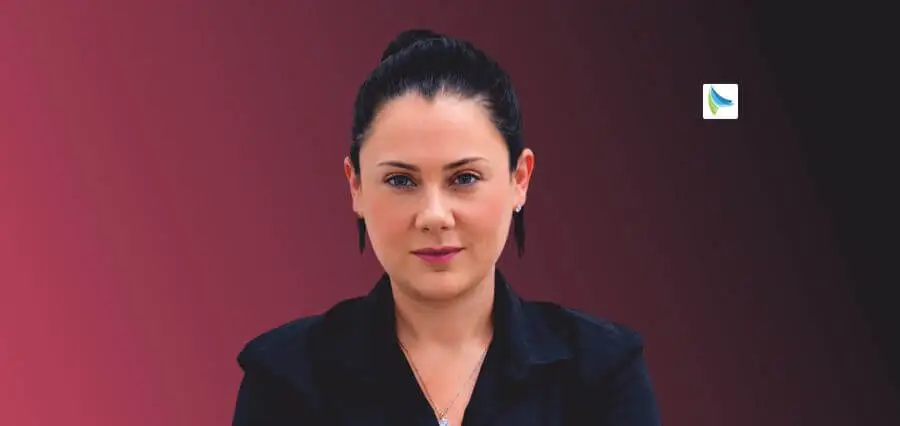





There are those who tally figures. Others count lives. Marisha Kashyap combines the two because she knows that transformation really occurs in the area between statistics and souls. She is a welcome paradox in a world that is becoming increasingly obsessed with metrics and algorithms: a researcher whose heart beats as fast as her analytical mind, a scientist who recognizes families in her data sets, and a professional who turns cold numbers into compassionate interventions.
Her story isn’t just about academic credentials or professional milestones; it’s about the patient, persistent work of building bridges between what we know and what we do, between evidence and empathy, and between research laboratories and living rooms where children grow and families either flourish or fragment. She refuses to accept the false choice between intellectual rigor and human connection, demonstrating daily that the most powerful solutions emerge when compassion meets competence and when curiosity intersects with care.
The Crucible of Character: Early Formation and Foundational Years
Every transformative leader carry within them the imprint of their earliest influences. For Marisha, this foundation was laid in a modest household where the trinity of curiosity, creativity, and discipline wasn’t just preached but practiced. Her parents understood something profound: that raising a child who asks better questions matters more than raising one who provides easy answers. This wasn’t a permissive household that confused curiosity with chaos, nor a rigid environment that mistook discipline for dogma. Instead, it struck that delicate balance where wonder and structure coexisted, where imagination was encouraged but grounded, and where questions were welcomed, but answers were expected to be earned through genuine inquiry.
Her early friendships reinforced these values, creating a social ecosystem that celebrated intellectual exploration. During her schooling years, a pattern emerged that would define her trajectory. Marisha gravitated toward subjects grappling with the messy complexities of human existence- history with its layers of cause and consequence, politics with its tensions between ideals and interests, economics with its attempt to quantify human choice, and social sciences with their brave efforts to map the unmappable terrain of human behavior. These weren’t disparate interests but different windows into one fundamental question: how do societies function, how do communities thrive or fail, and what mechanisms govern human wellbeing?
This intellectual hunger led Marisha to Delhi University Lady Shri Ram College for Women, where she pursued economics with intensity born from passion rather than mere ambition. She graduated in 2018 with First Class Division honors, but the real achievement was the framework she was building for understanding how resources, incentives, and human decisions shape outcomes. Yet even as she excelled in economics, she recognized its limitations. Numbers could describe patterns but couldn’t fully capture human experiences.
This realization drove her toward Columbia University Mailman School of Public Health, where she pursued a Master of Public Health in Population and Family Health. Marisha’s thesis earned the highest designation of High Pass in 2020, demonstrating her ability to combine theoretical sophistication with practical relevance. She was becoming something rare: a professional who could speak multiple languages- economics, public health, human development, and translate between them to create solutions that were both evidence-based and genuinely humane.
The Awakening: When Theory Meets Reality, When Purpose Finds Voice
There are moments that divide a life into before and after. For Marisha, this watershed arrived during her undergraduate years at an internship with Anubandh, a nonprofit organization in Noida, India. She came as an intern conducting a needs assessment, armed with survey instruments and sampling methodologies. What she encountered was a classroom without walls, where every observation carried the weight of real consequence. Walking through these communities, Marisha noticed patterns her training had prepared her to identify- young children with telltale signs of nutritional deficiency, mothers carrying burdens beyond physical labor, and widespread anemia that steals energy and quietly undermines human potential.
These weren’t abstract statistics in a journal. These were children whose futures were being constrained before they could begin, mothers whose capacity to nurture was being sapped by a preventable condition. This was a crisis hiding in plain sight, normalized by its ubiquity. The transformation came not in recognizing the problem but in refusing to accept documentation as sufficient response. Marisha looked to Brazil, where communities had developed the Community Kitchen Model. She proposed adapting this approach to these Indian communities, creating a targeted intervention to address the anemia affecting both children and mothers.
This wasn’t just problem-solving; it was the emergence of a philosophy that would guide her entire career. Research wasn’t an end in itself but a means to transformation. Data collection wasn’t about filling databases but illuminating pathways to change. Evidence wasn’t meant to sit in academic journals but to inform interventions that could improve lives. The experience of seeing how applied research could translate into tangible community benefit ignited something that has never dimmed- her passion for public health as a discipline that combines rigorous inquiry with compassionate action, that transforms understanding into intervention.
The Professional Crucible: Evolution Through Challenge and Innovation
The trajectory from that formative internship to her current standing as an emerging leader reads like a case study in resilience and adaptability. From her earliest roles, Marisha navigated the balance between achievement and setback, learning hard lessons about perseverance, the value of mentorship, and the sustaining power of collegial support. Then came 2020. Just as COVID-19 began reshaping the world, she was deeply engaged in a community-based health education program for unhoused children and families in Bronx, New York. This population, already among the most vulnerable, faced unprecedented challenges as the pandemic exposed and exacerbated existing inequalities.
The challenges were formidable. Research funding contracted. In-person field opportunities vanished. Collaboration became complicated as teams scattered to remote locations. A lesser commitment might have simply paused. Marisha saw something different: an opportunity to innovate, to rethink fundamental assumptions about how research could be conducted. She began exploring virtual data collection methods that could maintain rigor while respecting safety constraints. She developed remote community engagement strategies that preserved relationships central to effective research. Marisha investigated digital tools and creative approaches that could bridge physical distances without sacrificing human connection.
Limited funding, rather than paralyzing her efforts, sharpened her focus. She learned to prioritize interventions with clearest paths to measurable impact, to optimize existing resources rather than waiting for ideal conditions. This period strengthened capabilities that would serve her throughout her career- enhanced problem-solving skills, deeper appreciation for collaborative thinking, and renewed commitment to flexibility as core competence. The pandemic taught her that adaptability isn’t just about surviving disruption but about finding new possibilities within constraint.
Marisha’s career progression reveals a consistent pattern: deliberately seeking roles that stretch her capabilities. She has examined how residential instability affects preschoolers’ mathematics development, understanding that housing insecurity doesn’t just affect where children sleep but how they learn. She has explored the protective role of cash and nutritional assistance programs in supporting young children’s socio-emotional learning. Marisha has developed interventions to support foster preschoolers’ school readiness, recognizing that children who have experienced early trauma need specialized support to access educational opportunities.
Recognition, Achievement, and the Validation of Purpose
Throughout her journey, Marisha has accumulated recognition reflecting both the quality of her work and the breadth of her contributions. Most recently, she was selected as Editorial Fellow for the Boston Congress of Public Health Review from February through April 2026, recognizing both her scholarly expertise and her ability to communicate complex research to broader audiences. Her creative work has found expression through poetry published in Sky Island Journal and Soul Poetry in early 2026, demonstrating that her engagement with human experience extends beyond academic analysis into artistic expression.
Marisha was named a California State University, Sacramento GradSlam 2024 Finalist and received nominations for the Sacramento State Faculty Endowment for Post-Baccalaureate Student Scholarship in both Spring and Fall 2024. It’s a distinction reserved for students in the top five percent of their program. She has earned prestigious scholarships including the IPGE Scholarship in Fall 2023, Hunter College Libraries Scholarship in 2022, and Hunter College Libraries Award for Best Graduate Research Paper in 2022.
Her scholarly contributions include peer-reviewed articles in Pediatric Emergency Care on understanding bilateral skull fractures in infancy, in ACTA Scientific Pediatrics on male-focused breastfeeding promotion programs (which received the Best Article Award in 2020), and in Harvard Public Health Review on integrating mobile health technology in community-based doula programs. Marisha has published at prestigious conferences including the Boston Congress of Public Health (formerly known as Harvard Public Health Review), American Academy of Pediatrics, and Ray E. Helfer Society, advancing conversations about child welfare, health education for homeless families, and data collection in contexts of childhood adversity.
A Message for the Journey Ahead
When Marisha speaks to others pursuing similar paths, her message carries hard-won wisdom combined with genuine hope. She encourages embracing curiosity as lifelong practice, remaining resilient through inevitable setbacks, and prioritizing learning over the impossible standard of perfection. Growth and success aren’t linear progressions, but iterative processes emerging from exploring new ideas, reflecting honestly on setbacks, and continuously adapting to changing circumstances.
She emphasizes the irreplaceable value of collaboration, of actively seeking diverse perspectives, of approaching challenges as opportunities to innovate. Most importantly, she advocates for letting purpose guide actions, for ensuring professional pursuits align with genuine values. When work connects to what truly matters, when it serves real human needs rather than just career advancement, both impact and fulfillment follow naturally.
Marisha’s advice crystallizes into elegantly simple guidance: keep moving forward, one thoughtful step at a time. This philosophy acknowledges how meaningful change actually happens. It rarely arrives through dramatic breakthroughs. Instead, lasting change accumulates through consistent, intentional efforts- small actions taken daily, guided by compassion, informed by evidence, and sustained by genuine commitment to improving lives rather than just completing projects.
As she continues her journey in child and family wellbeing research, Marisha stands as evidence of what becomes possible when intellectual gifts are placed in service of human flourishing, when professional skills are deployed on behalf of vulnerable populations, and when career success is measured not just by personal achievement but by positive impact on communities that need our very best efforts. She embodies the principle that in the space between data and human lives, between evidence and empathy, and between what we know and what we do, there exists not a gap to be lamented but a bridge to be built. She concludes by saying, “building such bridges, one thoughtful step at a time, is among the most meaningful work any of us can undertake.”