



The Human Side of Leadership
Leadership faces tests that it has never experienced before. Those rapid technological changes, the worldwide uncertain situations, the hybrid work styles, and the employees’ rising expectations have, among other things, changed what the leaders should be like to continue leading. In these circumstances, those who have the power and are experts but do not show their human side, will not be successful.
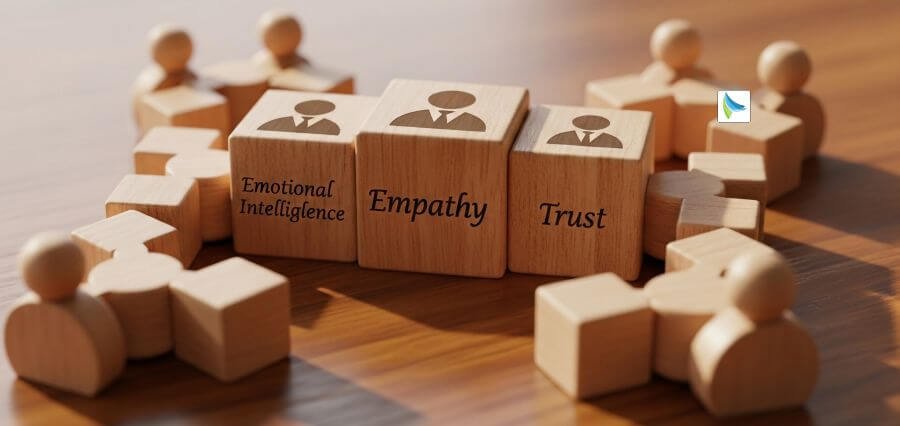
The successful leaders are those who rely upon empathy and intelligence and use them for gaining the trust of their employees, encouraging their performance, and confidently leading their organizations in the middle of complicated issues. Empathy and intelligence were once two different things, but now they have become two inseparable leadership capabilities.
Empathy as the Foundation of Trust
Empathy gives leaders the ability to understand people. That means to listen more, to recognize the problems, and to react with sincere help. When there is change or pressure, the empathy in the leading team makes it possible to feel safe. It allows the ideas, the worries, and the uncertainties to be expressed without fear of any kind of negative reaction.
Trust grows when people feel understood. Empathic leaders create constructive relationships with their employees, engagement, and loyalty which people cannot buy from the shops. Being faithful to one’s job is a direct result of empathy transforming leadership so that the leader becomes a connector rather than a commander.
Intelligence That Extends Beyond Expertise
Today’s leadership intelligence is beyond one field of knowledge and goes even beyond cognitive ability. The leadership intelligence now includes emotional intelligence, situational awareness, and the skill of understanding complex systems. Intellectual leaders discover the relationships, foresee the results, and make decisions that balance the rationale with the human side.
The extended scope of this intelligence makes it possible for the leader to maneuver through unclear situations, handle the opposing priorities and get the wokrs of the teams done through providing them with a clear direction. They also let in the balanced use of in-depth judgement with the data-driven insights, thus making the decisions not only financially sound but also sustainable.
The Power of Empathy and Intelligence Together
Empathy without intelligence would mean sentiment lacking a guiding principle. Intelligence without empathy would lead to coldness and thus the risk of encountering more resistance. When merged, they provide leadership that is humane as well as efficient.
A leader who is in harmony with both empathy and intelligence is at the same time emphatic and clear in his/her communication. He/she can go through with the decision-making process without losing the trust of others and carry on with the performance without any wellbeing sacrifice. The care for the people as well as the competence demanded by the modern organizations are both satisfied by this balance which the employees experience as being crucial in the contemporary work environment.
Navigating Change with Humanity
Even though change is unavoidable, the way it is handled determines whether it will be successful or not. Empathetic leaders take in the emotional side of the change and talk openly about it not showing certainty but rather being honest. Smart leaders meet the challenges by creating the clear plans that will lead to the future, they also budget the resources and foresee the obstacles.
By combining these two, the change in question will witness lesser resistance and on the contrary, people will be more willing to take it on. Thus, individuals accept the change more willingly if at the same time, they feel supported and informed.
Enhancing Performance Through Psychological Safety
The real challenge of performance is to keep it going in an environment where each person regards his/her contribution as safe and necessary. Empathy is here to ensure that people are open, and intelligence is a tool used to keep the feedback and the expectations constructive and goal-aligned. Leaders who are involved in building an atmosphere of psychological safety deliver also that accountability, continuous learning, and innovation follow as natural consequences.
Errors become a source of development and not blaming, thus the strength of both the ability and the self-confidence within the teams is enhanced.
Leadership in an Age of Technology
While AI and automation are changing the way we work, the need for human qualities is getting stronger and stronger. Yes, technology can be the fastest data processor and the most efficient system optimizer but empathy, ethical judgment, and human connection are some of the things that machine cannot replace. Business leaders should be the ones to connect the human experience with the digital capability.
Empathy is a way to let technology really serve human beings and not vice versa while intelligence acts as a tool to ensure that technology is utilized in a responsible and strategic manner.