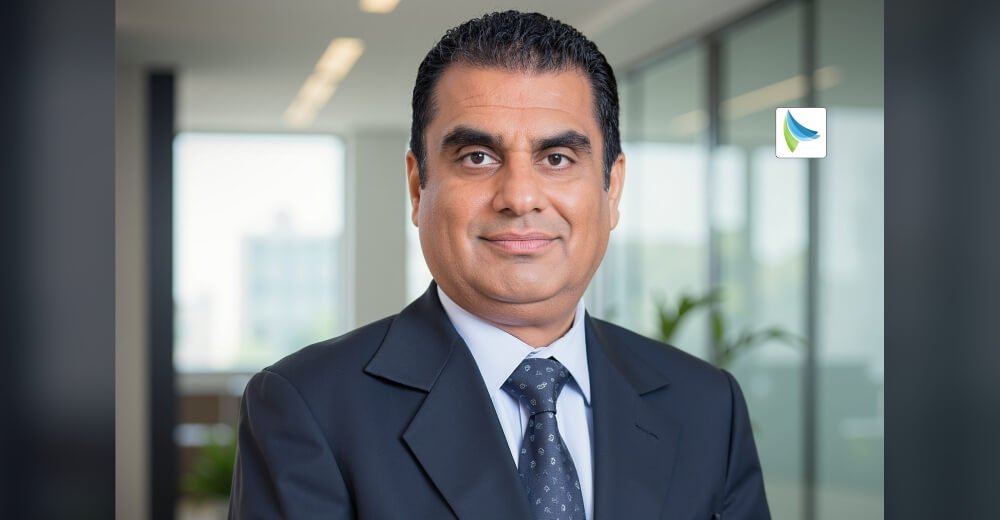




Today, we are living in an era of what Sophia Bekele has termed ‘Digital Colonialism.’ In her LinkedIn article—which went viral at launch—‘Digital Colonialism is the Geopolitical Risk You’re Still Calling Innovation,’ she explores this theme, which she further expands on in her newsletter, ‘The Ethical Technocrat’— the Founder/Group CEO of DotConnectAfrica Group, and CBSegroup, and a former Fortune 500 Tech Auditor, issues a stark warning: “The 21st-century empire isn’t built on territorial conquest. It’s built on data extraction, infrastructure dependency, and algorithmic influence. This is Digital Colonialism, and it’s the most potent—and overlooked—geopolitical risk on the horizon. We replaced ‘spheres of influence’ with ‘cloud regions.”
We swapped ‘cash crops’ for ‘data crops.’ The result is the same: a systematic transfer of power and wealth that erodes national sovereignty from the inside out. This isn’t a future threat. It’s today’s balance sheet. When a nation’s healthcare, financial, and security systems run on another power’s cloud infrastructure, that isn’t efficiency—it’s a strategic vulnerability. When a country’s public discourse is shaped by a foreign-owned algorithm, that isn’t connectivity—it’s cognitive surrender.”
In an interview with Insights Success, Sophia Bekele offers the solution. “The only defense is to build with intention. This means mandating digital sovereignty by design.” Let’s hear it in its entirety.
Sophia, your work at the intersection of policy, technology, and digital sovereignty has been recognized globally. How do you define the concept of “Digital Sovereignty,” and why is it critical in today’s cybersecurity and AI governance landscape?
Digital Sovereignty is the capacity for a nation, organization, or individual to have autonomous control over their digital assets, data, and destiny. It’s not about isolationism; it’s about interoperable independence. In the context of AI and cybersecurity, it’s the difference between being a tenant in someone else’s digital ecosystem and being the architect of your own. Without it, you outsource your security, compromise your ethical frameworks, and cede control of your economic future. This is the core challenge we address at DotConnectAfrica, leveraging the global technology and policy expertise we’ve built through CBSegroup.
You’ve often emphasized the need to balance innovation with accountability. How can leaders ensure that AI-driven transformation remains secure, ethical, and aligned with governance frameworks?
The balance comes from building governance into the design phase, not bolting it on as an afterthought. My work with Fortune 500 companies during my time as a tech auditor in the SOX/Enron era, and subsequently through CBSegroup to date, has taught me that trust is the ultimate currency. In this era of AI, leaders must now implement what I call the “AI Control Tower”—a centralized framework for oversight that integrates predictive risk analytics, ensures human veto power, and maintains real-time compliance checks. This turns governance from a bottleneck into a strategic enabler.
Your “AddisHilton Principle” underscores the idea that sovereignty requires self-mastery. Can you elaborate on how this philosophy translates into leadership within cybersecurity and digital governance?
Absolutely. The AddisHilton Principle is simple: you cannot defend a border you don’t understand, whether it’s personal, corporate, or national. The nickname given to me by close friends—inspired by a period of intense global travel that was a profound journey of self-mastery—drives home that true sovereignty begins from within. I was learning to command my environment by first commanding my own capabilities and understanding the “five Ws” of any situation: What, Why, Who, When, and Where.
In leadership, this philosophy translates to building internal capacity and confidence. You cannot secure a digital infrastructure that you do not fundamentally control or comprehend.
This principle drove me long ago to establish CBSegroup—to master core technologies through direct technology transfer before deploying them at scale. It’s why effective cybersecurity isn’t just about buying the best software; it’s about developing local talent, understanding your unique geopolitical and legal threat landscape, and building systems that your organization can own, operate, and defend independently.
Sovereignty isn’t a policy you write; it’s a capability you build from the inside out.
As a Digital Sovereignty Architect, how do you approach building systems that minimize dependence on foreign technologies while maintaining interoperability and global competitiveness?
The approach is rooted in a philosophy that has guided my work for over two decades. This principle was captured early on by my alma mater, Golden Gate University, in an alum cover story about my first startup, CBSInternational (now CBSegroup). The magazine’s headline read, “Sophia Bekele runs three companies in her campaign to bring advanced technology to Africa – on her terms,” and my stance was clear even then. I stated for the record: “If you want to invest in Ethiopia, you need to work with the local people. Anyone coming in has to commit to training local people, to transferring skills and leadership. I want to see results. I want to see local people being empowered and equal participation, or the deal is not going to be signed.”
This principle, publicly documented at the start of my entrepreneurial journey, directly informs the technical model we execute today. It is a strategic layering process: first, you adopt and adapt global standards to ensure interoperability. Then, you build localized layers of innovation and ownership on top. This was the model for our landmark, UNOPS-sponsored project to build one of the continent’s largest fiber optics networks for the African Union—we transferred the core technology but ensured local implementation and ownership.
This creates a “global” system—globally compatible but locally sovereign. Seeing that a principle I was quoted on in an alum magazine at the dawn of my career is now a central pillar of global digital sovereignty discussions proves that this isn’t just a strategy; it’s a sustainable truth.
The AI era has brought both unprecedented opportunities and risks. From your perspective, what are the most pressing challenges governments and enterprises face in AI risk governance, and how can they be mitigated?
The most pressing challenge is the velocity and opacity of AI-driven threats. Traditional, reactive governance models are obsolete. The mitigation strategy is threefold: First, mandate transparency in AI algorithms for critical sectors. Second, institutionalize ethical audits conducted by independent, AI-augmented systems. Third, foster cross-border collaboration on AI threat intelligence, much like the efforts to bridge the digital divide I’ve been involved with through International bodies like the ITU, UNECA, the AU, ICANN and forums like EurAfrican. Currently, my advisory work with platforms like the Harvard Business Review and Fortune’s AIQ focuses on creating these very agile, cooperative frameworks to stay ahead of the risks.
You’ve successfully bridged policy and infrastructure, from advising international institutions to leading digital transformation projects. What does it take to operationalize policy frameworks into executable, scalable cybersecurity strategies?
It requires the skill of a “pragmatic translator”—someone who can turn lofty policy language into engineering specifications and business requirements. My role, honed over years at Fortune 500 companies and at the helm of CBSegroup, is to understand the languages of policymakers, engineers, and business leaders to find the viable path forward. The key is a “policy-to-code” methodology: start with the policy goal, reverse-engineer the technical and operational requirements, and build a phased implementation roadmap. This is the practical expertise we brought to corporate governance post-Enron and to major digital infrastructure in Africa: making high-level principles executable and effective on the ground.
Your initiatives, including the creation of the digital identity platform, demonstrate a forward-thinking vision for digital autonomy. What lessons from that experience can be applied to strengthening global cybersecurity ecosystems?
The paramount lesson is that identity is the foundational layer of all digital trust. A secure, sovereign digital identity system is the first and most critical line of defense. The lessons are clear: prioritize user-centric design, build on open standards to avoid vendor lock-in, and ensure the system is by design, not by default. These principles are universal and form the bedrock of any resilient global cybersecurity ecosystem.
Cybersecurity and governance frameworks often struggle to keep pace with innovation. How can regulatory bodies and private organizations collaborate to create adaptable, future-proof systems?
We must move from static, compliance-based regulation to dynamic, outcome-based governance. This requires establishing joint “Regulatory Sandboxes” where innovators and regulators co-test new technologies in a controlled environment. It’s about shifting from being gatekeepers to becoming co-pilots. This collaborative model is something I’ve advocated for in my consultations, ensuring that security is baked in as we build the future, rather than patched on afterward.
You’ve spoken about the tension between “global standards” and “local realities.” How can AI governance models respect local contexts while adhering to universal cybersecurity principles?
Think of it as a constitutional framework. The universal cybersecurity principles—like data integrity, accountability, and breach notification—are the constitution; they are non-negotiable. The local AI governance models are the federal laws; they can be adapted to cultural, ethical, and economic contexts without violating the constitutional principles. This layered approach allows for both global interoperability and local relevance, a balance I’ve navigated throughout my career, bridging US-based technology with African market realities.
You have experience in advising many entities like the UN, ICANN, AU, Fortune 500 Organizations, and most recently, Fortune AIQ, HBR. How do you foster alignment between global policy ambitions and real-world implementation challenges?
You anchor every ambition with a concrete use case. Global policy fails when it remains abstract. My method, which I exemplified at the International GRC Conference in New York, is to bring all stakeholders to the table to work through a specific, high-impact problem. This forces practicality and exposes implementation hurdles immediately. The success of this approach is evident in the tangible results CBSegroup and DotConnectAfrica have achieved—from post-Enron governance overhauls to continent-scale digital infrastructures, including the Africa domain, which could not have been launched without our foundational policy work. Our record of solving complex issues, from IDN policies at ICANN for the global internet community to advising ministerial bodies under the UN, proves that even the most ambitious frameworks can be grounded in reality.
As emerging markets accelerate their digital transformation, what leadership qualities will define the next generation of cyber leaders and policymakers?
The next-generation leader must be a “bilingual” visionary. They must be fluent in both technology and geopolitics. They require architectural thinking to build systems, diplomatic skill to negotiate standards, and entrepreneurial courage to innovate under constraint. Most importantly, they need a deep-seated commitment to digital sovereignty as a means of empowerment, not exclusion.
What’s one question you wish people would ask more about AI and cybersecurity?
I wish they would ask, “What is the ‘antibiotic’ for AI-powered disinformation?” We focus on protecting data, but we are underestimating the weaponization of AI to attack perception and reality itself. A cyberattack breaches systems, but an AI-driven information operation can breach an entire society’s trust, destabilize democracies, and erase shared facts. We are building immune systems for data centers, but we have no defense for the collective human mind, and that is the most critical vulnerability of our time.
Who or what has influenced your approach to cybersecurity and AI?
My philosophy was forged early in my career by witnessing the collapses at Barings Bank and Enron. These weren’t just failures of process; they were catastrophic failures of culture and character, where internal collusion, unchecked risk-taking and the deliberate override of controls brought down giants. That experience taught me a fundamental lesson: you can have the best rules on paper, but they are worthless without a culture of ruthless accountability.
This principle is activated by my own superpowers: Forensic Analytical Reasoning and Strategic Pattern Recognition—the ability to cut through noise and deception, connect disparate data points—from behavioral cues to digital footprints—to reconstruct the true narrative from chaos. In cybersecurity and AI governance, this is essential for uncovering hidden risks and building systems that are resilient not just technically, but ethically.
At CBSegroup, we applied this by helping Silicon Valley companies build the cultural backbone to uphold control frameworks. This is directly applicable today. AI is the new arena for these same human failings, amplified by scale and speed. It demands a framework where audit trails provide undeniable transparency, and human oversight has a mandated veto over catastrophic decisions.
The influence, therefore, wasn’t a person, but a principle: without an ethical core, innovation doesn’t just fail—it becomes a weapon.
What’s the most surprising lesson you’ve learned in your work with AI and security?
The most surprising—and dangerous—underestimation is that we are building the next bubble, and it’s an AI bubble. We are repeating the pre-2008 financial crisis playbook, creating “black box” algorithms with interdependencies we don’t fully understand, much like the complex derivatives that brought the market to its knees. We see massive over-investment fueled by hype, a profound lack of transparency, and a critical regulatory gap. My work during the Enron era and the subsequent rollout of the Sarbanes-Oxley (SOX) Act taught me that rigorous, mandated controls are not bureaucratic—they are existential. Implementing control frameworks like NIST and ITGC to meet SOX requirements proved that governance, when properly architected, is the bedrock of trust. We are failing to apply these hard-won lessons to AI, treating it as a pure tech boom instead of a fundamental governance and systemic risk problem. When this bubble corrects, the consequences won’t be merely financial; the failure of a critical AI system could be catastrophic.
Looking ahead, how do you envision AI and cybersecurity converging to redefine global standards for digital trust, data protection, and governance in the next decade?
We are moving toward an era of “Autonomous Governance.” AI will power self-defending systems that can predict, detect, and respond to threats in real-time. Cybersecurity will become less about building walls and more about managing AI-driven immune systems for our digital ecosystems. This will redefine trust from a static certification to a dynamic, continuously verified state. The standards will evolve to certify the AI guardians themselves, creating a new layer of meta-governance. I spoke in depth about this convergence and its implications in my recent lecture at the GRC Conference in New York.
Finally, on a personal note, what drives your continued passion for redefining the global digital order, and how do you sustain your focus in such a complex and high-stakes domain?
I am compelled by a core conviction that equitable access is non-negotiable. We are at a pivotal moment where the digital order is being written, and I am committed to ensuring it is built on a foundation of ethics and sovereignty, not just profit and power. This isn’t just theoretical for me; it’s a practical mission.
I left the Fortune 500 when I saw the digital future was being architected for a privileged few—a reality that became even starker when confronting the significant gender divide in tech. This passion is twofold: it’s about sovereignty for emerging economies and opportunity for underrepresented groups. That’s why I launched initiatives like the “Miss. Africa Digital” Seed-Fund—to ensure women are not just participants but leaders and creators in the digital economy. And that direct need for actionable dialogue is why I recently launched ‘The Ethical Technocrat’ newsletter—to equip leaders with the framework to navigate this exact complexity.
I sustain my focus by drawing energy from the tangible impact. Every time a woman-led startup launches, a nation adopts a safer digital policy, or a leader rethinks an AI strategy, it transforms the abstract complexity into a powerful, personal motivator. This tangible progress is what makes this high-stakes investment in our collective future not just a duty, but a privilege.