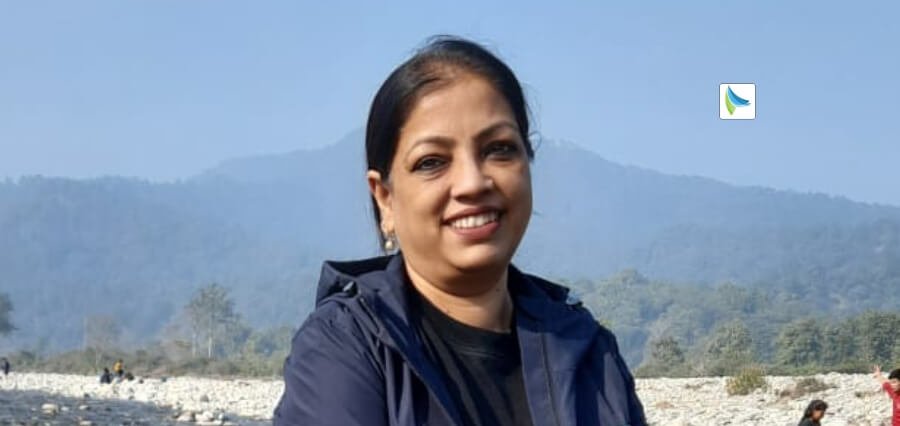





Some journeys begin not with a grand plan but with an unshakeable sense that the world as it exists is not the world as it should be. The most outstanding leaders are those who do not just observe that gap. They will devote their lives to bridging it, institution by institution, community by community, conversation by conversation. Tolulope Olalekan is exactly such a leader. She developed a design company from her bedroom, grewit into an enterprise focused in 5 years, won a contract with an American oil and gas giant, and then looked at something bigger, transforming systemic barriers that continue to render the Black-African communities invisible in the Nordic region. She is not awaiting the world to be fairer. She is constructing its architecture herself.
Roots That Held, Even When the Road Bent
Tolulope Olalekan grew up in Abeokuta, the historic southwestern Nigerian city known for its rock formations and its courageous leaders.
In her family’s home, the bedrock was different. It was values. Her father, a retired Bank Manager now Priest, and her mother, a retired Chief Nursing Officer, raised her on integrity and service. These were not abstract principles but daily practices, demonstrated in how they showed up for their professions and their community.
She moved through her formative years at Alaba Lawson Group of Schools, Queen’s School, and Comprehensive High School Ayetoro, before earning a Bachelor’s in English Arts from Olabisi Onabanjo University. The degree cultivated the communicator and storyteller she would later need to be. Her academic ambition did not stop at Nigeria’s borders. She pursued a Master’s in Business and Economics at Uppsala University in Sweden, one of Scandinavia’s most prestigious institutions, and added professional certificates from the New York Institute of Arts and Design to her growing portfolio.
Her career began conventionally, with internships in banking and human resources, followed by a position as Banking Associate at an Export and Import Bank. She later rose to Associate Secretary to the Managing Director. She had stability, a title, and a clear trajectory. She asserts, “Despite the security that corporate life offered, I knew that entrepreneurship was where I could most fully express my purpose, where I could create, innovate boldly, and build something that reflected my deepest values.”. Then she chose to step into something greater.
The Bedroom Startup That Landed a Global Contract
Entrepreneurship arrived not as a calculated pivot but as a quiet conviction that her talent for sustainable interior design deserved more than a hobby’s worth of attention. She launched Rubies ‘n’ Sapphire Interiors, bootstrapped from her bedroom, built entirely on belief and relentless determination. The early years were unsparing. She pitched relentlessly, absorbed rejection as routine, and navigated financial uncertainty with the composure that only those without a safety net truly develop.
The turning point came when an American oil and gas company relocating to Nigeria needed an interior design firm for a major project. The opportunity looked impossibly large for her small operation. Tolulope Olalekan prepared with meticulousness that left nothing to chance. She researched the company’s culture, anticipated their aesthetic needs, and built a vision perfectly aligned with what they were looking for. She won the contract. She highlights, “Winning that contract was transformative, not merely financially, but as validation that grit, consistency, and belief can build something remarkable from nothing.” The victory confirmed what she had long suspected. Genuine preparation could level an uneven playing field.
Over five years, she grew Rubies ‘n’ Sapphire Interiors into a thriving enterprise serving local and international clients. Operating with a minimal marketing budget, she turned every resource constraint into a creative problem and every client relationship into a lesson in authentic service.
Entrepreneurship at its best is not extractive. It is generative. It creates space for others to flourish, builds systems that honor human dignity, and leaves communities stronger than before.
A Mission Bigger Than Business
Success in design handed Tolulope Olalekan a platform. What she chose to do with it reveals the depth of her character. Settling into life in Sweden, she saw communities from the African diaspora across the Nordic region struggling against systemic barriers that limited their opportunity, visibility, and sense of belonging. She did not simply observe this reality. She built an institution to transform it.
Africans Arise, the NGO she founded, operates through five integrated pillars: Community Building, Cultural Exchange, Economic Empowerment, Advocacy & Social Justice, and Youth and Future Generations. Each pillar interlocks with the others, treating community challenges not as isolated problems but as expressions of a structural reality that demands a structural response.
Parallel to this, Tolulope Olalekan serves as Community and Stakeholder Mapping Lead for an EU clinical research project, analyzing the interconnected needs of diverse stakeholder groups to increase participation of underserved populations in clinical trials. This work ensures that research shaping public health policy actually includes the people it claims to serve. She says, “Whether designing spaces, building communities, or reforming research ecosystems, my mission remains constant: to transform systemic barriers to belonging and ensure that every voice is authentically heard and valued.”
Her entrepreneurial instinct draws from a lineage of remarkable women, her late grandmother and her mother, who modeled that persistence and creativity are not personality traits but strategic tools. That inheritance became her blueprint, first in design, and now in social architecture.
When a Pandemic Became a Pivot
When COVID-19 swept the world in 2020, most entrepreneurs braced for damage. Tolulope Olalekan was already in a posture of strategic preparation. Not running intensive business operations at the time, she deliberately positioned herself to pursue professional certifications and advanced examinations. This was a calculated investment in skill development that would define her next chapter.
Sweden’s measured pandemic response worked in her favor. Unlike countries locked in strict containment, Sweden allowed residents to move through public spaces under physical distancing guidelines. Its cultural predisposition toward personal space made the requirements feel less disruptive than elsewhere. She attended in-person examination sessions, maintained essential professional connections, and completed her certifications virtually. She mentions, “Rather than viewing the pandemic as a business threat, I experienced it as a valuable window for professional consolidation and skill advancement.”
Those certifications became the educational foundation for her subsequent work with Africans Arise and her EU clinical research role. What many experienced as a rupture became, for Tolulope Olalekan , a period of consolidation
Recognition Earned, Not Inherited
The awards on Tolulope’s record carry weight because they came from different arenas, in different decades, and for different kinds of contribution. In August 2011, Cheshire Home in Lagos recognized her with the Philanthropic Award for Entrepreneurs. This was early validation that her purpose extended beyond personal gain. In April 2019, the New York Institute of Arts and Design presented her with the Academic Excellence Award with Distinction in Interior Design and Event Planning. Most recently, in December 2025, Inspire Her Afrika honored her with the Leadership in Mentorship Award for exceptional guidance to the women she has supported and influenced.
Yet she does not measure her impact on trophies alone. She states, “This work reflects my deepest commitment to translating community needs into structural transformation.” Founding Africans Arise remains her most defining milestone, not because it brought recognition but because it created meaningful structural change in a region where these voices have historically been marginalized.
Her EU clinical research role adds another dimension. It represents institutional acknowledgment that community centered expertise belongs in spaces where policy is shaped, and science is conducted.
Sustaining the Fire Without Burning Out
Advocacy does not switch off at five o’clock. Tolulope Olalekan knows this intimately. The landscape of systemic inequity she operates in is often stark, and navigating it demands more than passion. It demands a deliberate architecture for resilience.
She protects her energy through intentional self-care. She refuses to dress up as indulgence. Reading expands her thinking. Writing clarifies her purpose. Music soothes her spirit. Films transport her. Travel replenishes what the work takes.
She highlights, “I remain laser-focused on my primary motivator, an unwavering belief in equity, humanity, and community-centered change. This North Star guides my decisions and reminds me why this work matters, even on the most challenging days.” She leans equally on family, trusted friends, and mentors who ground her in perspective.
Her roles reinforce rather than compete. Community understanding built through the NGO informs her research strategy, while institutional knowledge from clinical research deepens her advocacy. She views her life not as a career but as a movement, a continuous and purposeful journey where daily hurdles become data and challenges become opportunities for growth.
The Counsel She Carries Forward
For aspiring leaders, Tolulope Olalekan offers counsel that is direct and hard-won. Her first counsel is to reframe how you see failure. Treat setbacks not as defeats but as data. They are feedback about what needs adjustment, refinement, or reimagining. That shift, she argues, is not a coping mechanism. It is a competitive advantage.
Her second counsel pushes beyond personal ambition. Lead as a movement, not as an individual. The most impactful leaders position themselves as conduits, equipping others with resources, skills, and opportunities to thrive collectively. She says, “True empowerment comes from equipping people with an agency. When we provide access to resources, develop critical skills, and create spaces for genuine intercultural exchange, we actively dismantle the systemic barriers that perpetuate inequity.”
Her third principle is visionary consistency. It means showing up, especially when momentum wanes. Success is never the product of sporadic effort. It requires honoring your vision on the days when progress feels invisible, and resources feel impossibly thin. That sustained presence builds trust, inspires others, and creates the institutional change that marginalized populations need most.
Building the World, We Deserve
There is a particular kind of courage required to keep building when the systems around you were not designed with you in mind. Tolulope Olalekan has exercised that courage repeatedly, in a banking career she left for a startup, in a startup she grew into an enterprise, and in a new country whose institutions she is now actively reimagining. Each chapter demanded something different from her. Each time, she had something to give.
She asks her audience to stop internalizing structural inequity as personal failure. The barriers constraining opportunity and belonging are external systems, not reflections of individual worth. Identity, heritage, and living experiences are not obstacles. They are assets to celebrate, leverage, and amplify.
She asserts, “Your story matters. Your voice carries weight. Your presence shapes the world, and the most profound transformation begins when we stop chasing personal achievement and start building collective liberation.”
From Abeokuta to Uppsala, from a bedroom startup to the boardrooms of European research institutions, Tolulope Olalekan’s path has never been linear. She has moved with purpose. In every space she has entered, whether a design studio, a corporate bank, a Swedish community hall, or an EU research meeting, she has left it more equipped, more inclusive, and more conscious of the question: whose voices have been excluded here? This is not by chance, but the result of a lifetime devoted to inclusion, service, and change.