

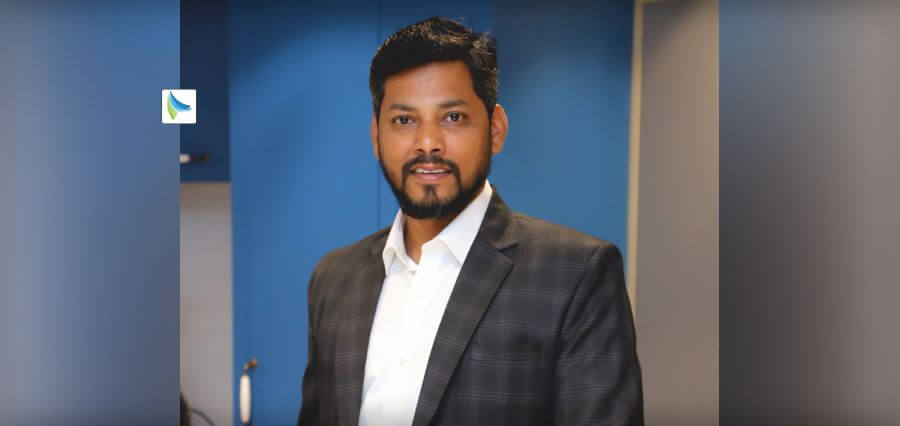
Digital ecosystems today shape business strength and modern leadership comes from individuals who blend strategic vision with resilience and innovation. Among them stands Rahul Mergu, a transformative presence in the IT world and the Senior Vice President of Information Technology at MarketsandMarkets. His journey began with a strong interest in using technology to solve real-world problems, an interest sparked during his early years in core IT operations. These early experiences sharpened his technical skills and guided his mission to build secure, scalable, and future-ready technology environments.
As his career progressed, Rahul helped organizations grow by modernizing infrastructure, advancing cloud adoption, and strengthening cybersecurity. He led major initiatives that improved global operations and reshaped technology frameworks. His leadership in implementing Zero Trust security earned him the ISMG Dynamic CISO Award, a key milestone in his professional journey.
Rahul has become an award-winning technology leader and a valued participant in the industry today. At MarketsandMarkets, one of the leading names in market research and consulting, he continues to drive digital transformation, improve resilience, and guide teams toward a more efficient and future-ready technology industry.
Let’s explore his perspectives, experiences and the leadership principles that drive his work.
Can you briefly introduce yourself and share the journey that led you to your current role in the technology sector?
My name is Rahul Mergu, and I’ve built my career at the intersection of IT Infrastructure, Cybersecurity, and Digital Transformation. Over the years, I have led large-scale technology functions across global environments, working with GCCs, enterprise organizations, and highly regulated sectors.
My journey started with a passion for how technology can solve real-world business challenges. I began in core IT operations, moved into infrastructure modernization, and eventually transitioned into senior leadership, overseeing strategic IT programs, cloud initiatives, cybersecurity frameworks, and high-availability infrastructure.
With certifications like CISM and CCISO, and deep hands-on expertise in AWS and Azure, I have evolved into a technology leader known for strengthening resilience, optimizing cost, and enabling scalable digital ecosystems.
How would you describe your leadership style, and how has it evolved over the years?
My leadership style is collaborative, transparent, and outcome-driven.
I believe in empowering teams through clarity, accountability, and innovation.
Over the years, as I worked with diverse teams and global stakeholders, my style evolved from task-oriented leadership to strategic, people-first leadership, one that focuses on:
- Guiding teams with vision, not just instructions
- Building trust and psychological safety
- Encouraging a culture of experimentation
- Aligning technology initiatives with business value
I lead with the mindset of “enable, empower, elevate.”
What has been the most transformative initiative or project you’ve led, and what impact did it create for your organization or industry?
One of the most transformative initiatives I led was the end-to-end modernization of a global IT Infrastructure ecosystem, including:
- Migration to hybrid cloud (AWS/Azure)
- Implementing Zero Trust Architecture
- Strengthening cybersecurity posture
- Achieving international compliance standards (ISO 27001:2022, GDPR, ISO 27701)
- Improving uptime to 99%
- Reducing IT operational costs by 30% through cloud optimization
This initiative not only improved resilience and security but also accelerated the organization’s digital roadmap, enabling business units to scale faster, innovate quicker, and operate with greater efficiency.
Which emerging technologies do you believe will redefine the industry in the next 5–10 years, and why?
I believe the following technologies will reshape the future:
1. Generative AI & Autonomous AI Agents
Transforming operations, cybersecurity, decision-making, and customer experience.
2. Edge Computing
Reduced latency and improved real-time data processing for IoT, manufacturing, and automation.
3. Zero Trust & Adaptive Security
Security architectures driven by identity, posture, and continuous validation.
4. Cloud-Native Infrastructure (Serverless, Containers, AI-Ops)
Highly scalable, efficient platforms enabling rapid development and DevSecOps.
5. Quantum Computing
Set to redefine cryptography, simulations, and computational problem-solving.
These technologies will create smarter, resilient, and hyper-automated enterprises.
What major challenges have you faced while implementing technological transformations, and how did you overcome them?
Some of the biggest challenges include:
1. Resistance to change
Handled through strong communication, stakeholder alignment, and phased rollout.
2. Legacy systems complexity
Overcome by careful planning, architecture assessment, and hybrid transition models.
3. Budget & resource constraints
Solved via optimization, automation, and prioritizing business-critical projects.
4. Cybersecurity gaps
Addressed by implementing Zero Trust, governance frameworks, and policy enforcement.
5. Talent readiness
Invested in upskilling programs, certifications, and hands-on capability building.
The key has always been clear strategy, risk management, and strong governance.
How do you foster innovation and collaboration within your team, especially in a rapidly changing technological landscape?
I promote a culture of innovation through:
- Open communication and idea-driven discussions
- Allowing teams to experiment without fear of failure
- Cross-functional collaboration between IT, Security, Cloud, and Business units
- Weekly innovation sessions and problem-solving workshops
- Recognizing and rewarding new ideas
- Giving ownership and autonomy to team members
My philosophy: Innovation happens when people feel empowered, trusted, and valued.
What advice would you give aspiring technology leaders who want to make a significant impact in the field?
My advice is:
- Stay curious – technology evolves fast.
- Master the fundamentals of cloud, cybersecurity, and AI – these are non-negotiable skills.
- Develop strong communication and leadership skills – they matter as much as technical depth.
- Think business-first, technology-second – solve problems, don’t just deploy tools.
- Build relationships and networks – leadership is collaborative.
- Focus on integrity, influence, and innovation – these define long-term success.
Looking ahead, what is your vision for the future of technology, and how would you like your work to be remembered?
My vision is to build secure, intelligent, cloud-first, AI-powered enterprises that are resilient, sustainable, and future-ready.
I want my work to be remembered for:
- Transforming technology into a business enabler
- Building strong, motivated teams
- Enhancing cybersecurity and operational resilience
- Driving innovation and digital growth
- Leaving behind systems that scale and evolve long after my tenure
Ultimately, I aspire to be known as a leader who empowered people, modernized technology, and created lasting organizational impact.