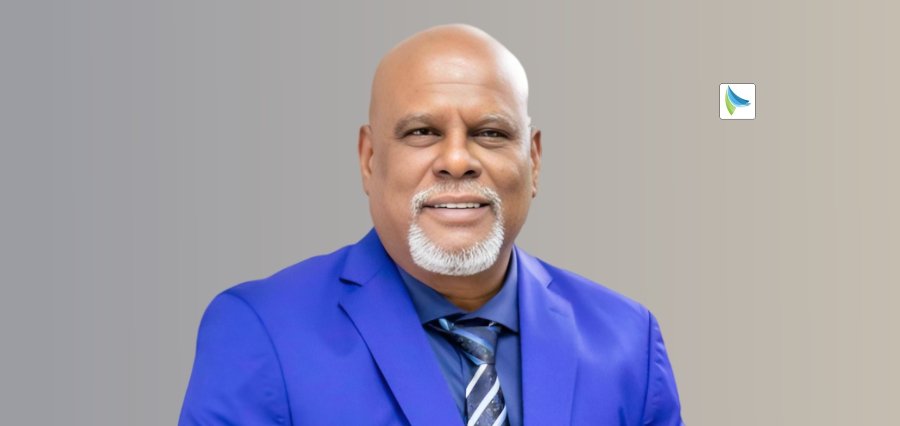


Liberia’s energy story is being rewritten by a leader who recognizes the importance of both global opportunity and national responsibility. Fabian Michael Lai, President and CEO of the National Oil Company of Liberia (NOCAL), combines worldwide experience with a strong commitment to his own country. His leadership journey exemplifies a judicious balance of vision and realism, between what Liberia could become and what it must first create.
After serving globally and locally, he is developing a leadership style rooted in accountability, excellence, and people-focused progress. He has transformed NOCAL’s culture to emphasize transparency, results, and disciplined creativity. Using the OKR framework, he aligns teams around specific goals linked to national development.
His leadership is grounded in the belief that energy development should benefit communities and protect the environment. Under him, the company symbolizes responsible stewardship, with decisions reflecting integrity, sustainability, and national growth. Fabian Michael Lai aims to empower Liberia’s future beyond just running an energy firm.
A Global Perspective Meets Local Purpose
Lai’s journey to NOCAL’s leadership combines international exposure with a deep local understanding, shaping his distinctive approach. His roles have broadened his view on leadership, accountability, and excellence, while he stays grounded in Liberia’s challenges. “My local experience reminds me of the huge task ahead, society’s complexity, and the drive to make lasting change through energy,” he reflects.
At NOCAL, this dual perspective manifests in action. He has built a performance-driven team that values discipline, innovation, and measurable results. The company now operates with systems promoting accountability and transparency, ensuring each member understands their role and deliverables. Key performance indicators track progress, and quarterly reviews assess goal achievement. “Success comes from building strong institutions, empowering people, and maintaining a results-oriented culture. That’s the standard I uphold at NOCAL,” he emphasizes.
The OKR Framework: Aligning Vision with Action
Lai uses the OKR framework when making decisions impacting NOCAL and Liberia’s economy. This leadership approach keeps him and his team focused on measurable goals aligned with national priorities, promoting economic growth and institutional excellence.
This approach tackles Liberia’s challenge: unlocking offshore oil responsibly while balancing environmental concerns. He envisions a framework prioritizing environmental stewardship in exploration and production. “True progress is not measured only by barrels produced, but by improved quality of life, jobs, and preserved resources for future generations,” he states.
Every project undergoes environmental assessments, and NOCAL requires partners to comply with responsible exploration guidelines. The company’s approach emphasizes transparency, accountability, and inclusivity, ensuring Liberians are informed, engaged, and benefit from sector growth. His goal? Develop an oil and gas sector that fuels national progress while protecting the environment, making Liberia a model for responsible energy governance in Africa.
A New Chapter: Strategic Petroleum Contracts
Recently, Liberia signed major petroleum contracts after a pause in exploration, marking a key moment for its energy sector. Lai views these agreements as more than just investment; they bolster Liberia’s energy independence and economic resilience. The contracts ensure the State maintains a stake in resources, enabling value capture and building local capacity in technical skills, project management, and energy governance.
This is about developing a sustainable, sovereign energy ecosystem supporting national priorities, not just oil production,” he clarifies. The agreements aim to reinvigorate exploration in Liberia’s offshore basins, potentially leading to the first commercial oil. Since emphasis is on exploration drilling, these agreements require commitments rather than upfront payments to accelerate discovery.
Building Trust Through Transparency
Lai states that investor confidence and public trust are gained through accountability, transparency, and ethics. NOCAL’s transformation relies on strong governance, with clear objectives and KPIs to measure progress.
Enhanced reporting includes regular staff and leadership meetings, quarterly reviews, and comprehensive reporting systems to document and evaluate operations. The company shares information with stakeholders, such as investors, the government, and the public, to build confidence. Governance structures, controls, audits, and compliance policies are strengthened to ensure decisions are ethical, accountable, and transparent.
Lai empowers team members to take ownership, fostering a culture of integrity, innovation, and continuous improvement. This positions the firm as a trusted partner for investors and citizens, ensuring decisions support sustainable development and prosperity.
Navigating Energy Transition
While NOCAL mainly focuses on hydrocarbons, Lai acknowledges the rapid evolution of the global energy landscape. Liberia has unique opportunities to harness renewable energy sources, such as solar and hydropower, to supplement its hydrocarbon sector. Its Energy Compact aims to source 70% of electricity from renewables. NOCAL plans to support this vision by investing in the Liberia Electricity Corporation and other state-owned enterprises.
Natural gas plays a crucial transitional role in this vision. He views it as a reliable, lower-carbon bridge fuel that supports industrial development and stabilizes the national grid during the transition toward cleaner energy. “Natural gas is not an end in itself, but a transition tool, one that allows Liberia to develop its energy sector responsibly, meet growing demand, and lay the groundwork for a sustainable, low-carbon future that benefits all Liberians,” he explains.
Digital Transformation and Data-Driven Operations
Lai understands that digital transformation is essential for modern, efficient, and transparent management of Liberia’s energy resources. By the end of the second quarter of 2026, NOCAL intends to build a modern, state-of-the-art petroleum data center in Monrovia.
This facility, developed with help from the company’s current seismic data client, will allow them to embed technologies into its workflows, creating a performance-driven culture that encourages innovation, accountability, and continuous improvement.
Vision 2030: A Benchmark Institution
Looking toward 2030, Lai sees NOCAL as a leader in excellence, transparency, and innovation in the regional oil and gas industry. In the country, he aims to be recognized as a trustworthy steward of Liberia’s natural resources, delivering benefits, building local capacity, and supporting sustainable growth.
Internationally, the organization aims to be a credible, innovative energy partner with high standards in governance, environmental responsibility, and technology. “We want Liberia to manage resources responsibly, attract investment, and support a sustainable energy future. By 2030, NOCAL should symbolize Liberia’s potential, reflecting our commitment to integrity and prosperity,” he states.
Liberia: The Next Frontier
Lai and his team see Liberia as the next major oil discovery in West Africa. Like Guyana, Namibia, and Brazil, Liberia’s basins are primed for exploration. Out of 33 offshore blocks, few have been drilled, but 17 wells confirm a functioning petroleum system. The groundwork is in place, hydrocarbons are present, and most areas remain unexplored.
Liberia offers investors advantages like favorable Petroleum Sharing Agreements, an efficient Executive Allocation system, over 20 years of democratic stability, and strategic deep-water ports for offshore projects.
“West Africa is reawakening. Benin’s success is proof. Namibia’s discoveries are evidence. Guyana’s transformation is a roadmap. And Liberia, with its untapped acreage, investor-friendly policies, and stable governance, is the next frontier,” he observes.
For Fabian Michael Lai, leading NOCAL means more than managing an energy company. It involves powering national transformation, creating jobs, building local capacity, and shaping a sustainable future. Liberia’s energy potential becomes a pathway to prosperity, guided by transparency, accountability, and commitment to the Liberian people.