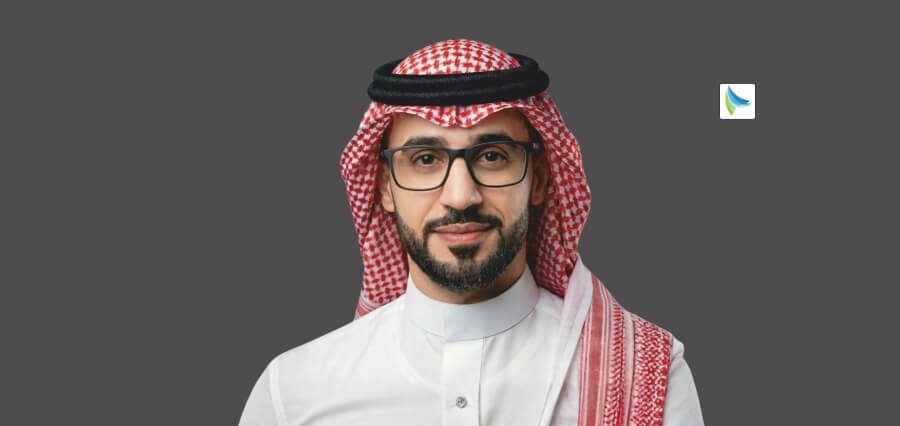





The compliance issue did not appear to be a boardroom concern and RegTech was not an unavoidable worldwide requirement 20 years back, yet Markus Schulz was quietly gaining insights into how the systems think, combining business knowledge with regulatory requirements supported by technology. He began programming as a young boy, developing an intuitive understanding of logic, structure, and the possibilities and limitations of systems that would later define his career at the intersection of technology, finance, and regulation. The initial excitement did not disappear, but rather took a different form.
Markus is professionally trained as a banker and entered the financial services sector during the dot-com boom and subsequent bust. After various front-office roles, he was asked to manage the bank’s e-commerce portfolio for the German-speaking markets. It was a time when innovation raced ahead of governance, exposing both the upside and downside, challenges Markus faced firsthand. The early years of his career shaped his belief that relying on either technology and regulation alone was insufficient, and that true progress comes from mastering both together.
He made a deliberate transition into senior compliance leadership roles. While holding the posts of Group Money Laundering Reporting Officer and Chief Compliance Officer in various global corporations, he observed how even the best-funded compliance initiatives were undermined by fragmented data, opaque models, and poorly designed systems. He became even more convinced that technology should be built on a foundation of regulatory reality.
Today, as Chief Technology Officer at K2 Integrity, he brings the discipline of a practitioner and the vision of a technologist to the development of RegTech solutions that are innovative, transparent, and future proof, rooted in data, informed by regulation, and driven by purpose.
From Childhood Coder to Compliance Leader
Markus’ relationship with technology began before most people had computers in their homes. He started coding before age 10, developing an intuition of how systems work that would later prove invaluable. Yet his formal training took a different path, he qualified as a banker, setting the stage for a career that would uniquely combine financial services expertise with technological vision.
The dot-com era provided his first major proving ground. He led an e-commerce portfolio for German-speaking markets at a global bank during a time when innovation consistently outpaced governance. Those years taught him a lesson he is carrying forward today: understanding both the opportunities and risks of technological advancement within business evolution proves far more valuable than mastering either alone.
“I saw firsthand how legacy compliance frameworks and fragmented technologies struggled to keep pace with increasingly sophisticated financial crime, growing data volumes, and rising regulatory expectations across jurisdictions,” he reflects on his transition into compliance leadership.
His progression into financial crime prevention was deliberate. He served as Group Money Laundering Reporting Officer (MLRO) and Chief Compliance Officer for global financial institutions, the roles that exposed him to the day-to-day reality of defending against criminal networks with billion-dollar resources. He watched compliance teams drown in alerts generated by systems that produced more noise than insight. He saw institutions invest millions in technologies that failed during regulatory examinations because they were insufficient, incomplete, or couldn’t explain their decision-making processes.
This experience crystallized a core conviction: RegTech solutions designed without deep regulatory understanding, as well as banking business and operations insights, miss the mark. Too many vendors build impressive technical capabilities that crumble under regulatory scrutiny because they do not address what regulators evaluate: defensibility, transparency, and operational sustainability, or match bank set-ups and technologies.
Compliance by Design
At K2 Integrity, Markus champions an approach he calls “compliance by design.” Rather than bolting on governance features after deployment, his teams embed auditability, explainability, and data controls directly into RegTech solutions from inception.
“Regulators are not opposed to innovation, but they expect clarity around how decisions are made, what data is used, and how risks are managed,” he explains. His dual perspective as both technologist and former regulator-facing executive shapes every design decision.
This philosophy addresses a fundamental tension in financial services: institutions need innovation to combat evolving threats, yet they operate in environments where regulatory missteps carry existential consequences. He resolves this tension by refusing to see it as a tradeoff. Technology designed through a regulatory lens from day one can deliver both innovation and defensibility.
K2 Integrity’s differentiation stems directly from this approach. The firm builds solutions using practitioners who have sat in the hot seat, former regulators, MLROs, investigators, and compliance leaders who know what actually happens during examinations. They understand that impressive algorithms matter little if institutions cannot explain them to supervisors.
The Data Foundation
Markus identifies three fundamental challenges that organizations face when developing RegTech capabilities: data availability, data completeness, and data lineage. Does the organization possess the necessary information? Is that data reliable and comprehensive enough for advanced analytics? Can the firm track and demonstrate that data flows through appropriate processes to achieve the desired outcomes?
“This has not changed with AI; if anything, it has become more pronounced. The industry’s rush toward artificial intelligence has only intensified these longstanding data issues,” he observes.
The organization takes a data-first approach, building modular SaaS solutions designed to integrate with complex global data environments. The firm prioritizes data quality, lineage, and interoperability, enabling institutions to deploy advanced analytics and AI responsibly while maintaining transparency.
When it comes to AI specifically, he maintains clear principles. Data management and governance remain vital, alongside transparent logic that reveals what the machine has done, which data it used, how it was trained, and how it reached its conclusions. While model training often captures attention, he emphasizes that ongoing monitoring, maintenance, and correction are equally important.
“At K2 Integrity, we emphasize AI as a decision-support tool rather than a decision-maker,” he states. Human oversight, ongoing monitoring, and model maintenance matter just as much as initial development. Regulators expect institutions to understand and control their models throughout their lifecycle, not just at deployment. AI is not dissimilar to a new junior employee: it requires close oversight initially, and less over time.
Beyond Compliance: Strategic Risk Intelligence
Markus sees RegTech’s role expanding far beyond its traditional compliance function. Over the next three to five years, he predicts it will increasingly inform strategic decisions around market entry, customer segmentation, product development, and capital allocation.
“Regulatory compliance is increasingly recognized as a business enabler rather than a cost center,” he notes. When organizations embed risk intelligence early in decision-making, they can align growth strategies with risk appetite from the outset. Institutions that leverage RegTech effectively position themselves to respond to regulatory change, manage emerging risks, and build long-term trust with both regulators and stakeholders.
This transformation requires rethinking long-held assumptions. He frequently encounters organizations that view digital transformation in compliance as a quick process. The reality proves far more complex. Financial crime compliance and risk management touch numerous areas across organizations from customer and transaction data to HR records, spanning retail, wholesale, investment, and private banking operations.
“Successful transformation requires holistic planning, realistic timelines, leadership support, and effective execution at all levels,” he emphasizes.
The Collaboration Imperative
As co-chair of the Global Coalition to Fight Financial Crime (GCFFC) Technology Group, Markus advocates for stronger public-private collaboration. He rejects the notion that private and public sectors work at odds with each other.
“We all share the common goal of combating financial crime, and the most effective approach is to work together. Ultimately, we are united by the goals of maintaining market safety and upholding financial integrity,” he argues.
The GCFFC provides a platform for exchanging ideas and developing innovative solutions that enhance both the effectiveness and efficiency of financial crime compliance frameworks. He believes this collaborative approach can achieve results impossible for either sector alone.
Yet he acknowledges a persistent obstacle: information sharing remains constrained less by technology than by regulatory frameworks. Data privacy laws often prevent the collaboration needed to fight financial crime effectively. When gatekeepers cannot share information across jurisdictions, criminals maintain their advantage.
This creates an ongoing battle between individual gatekeepers and organized global crime networks, Markus observes. RegTech must focus on improving data integration, entity resolution, and dynamic risk detection while operating within these regulatory constraints.
Global Frameworks, Local Compliance
Markus brings over two decades of experience designing compliance frameworks that work across jurisdictions. He notes that regulatory harmonization has aligned core principles, enabling organizations to implement global programs that respect local distinctions.
“Each market presents unique requirements that must be taken into account when building a global framework to meet local regulations,” he explains. From his experience, organizations can effectively establish global risk management while maintaining local compliance, but only through careful design.
This capability grows increasingly critical as geopolitical tensions complicate cross-border operations. He advises technology leaders to build scalable RegTech solutions by starting with common fundamentals: clearly identify and understand the problem you want to solve.
“Too often, I’ve observed organizations partnering with vendors in the hope that a system will fix their problems. I believe technology shouldn’t be the first response, it should serve as an enabler and accelerator of an already well-designed process,” he cautions.
Even emerging technologies like agentic AI face this constraint. The classic principle holds true: AI cannot transform poor input into flawless results. Or as he puts it, “garbage in, gospel out.”
Building for the Long Term
Markus leads with principles shaped by global experience. He emphasizes diversity as essential for effective teams, encompassing perspectives, backgrounds, gender, age, education, experiences, product knowledge, market understanding, cultural awareness, language proficiency, technological expertise, and operational experience.
“By integrating this variety of experiences, organizations can build strong and effective global teams,” he explains. While acknowledging that each firm has distinct characteristics requiring tailored approaches, Markus sees diversity as the common foundation for success.
Throughout his career, Markus has dedicated himself to advancing the industry broadly, not just individual organizations. He collaborates with groups including the Wolfsberg Group, the Basel Institute on Governance, ACAMS, and the GCFFC, among others. He intends to continue contributing within both K2 Integrity and across the broader ecosystem.
RegTech holds a particularly special place for Markus and continues to remain close to his heart. He reflects on the significant potential of technology to play a pivotal role in combating financial crime, especially as efforts intensify to dismantle institutional barriers, liberate data while safeguarding privacy, and build environments that are increasingly resilient to financial criminal activity.
His vision centers on what he calls #bettertogether, an acknowledgment that fighting financial crime requires collaboration, sophisticated technology, regulatory wisdom, and unwavering commitment. As criminal networks grow more sophisticated, the defense must evolve just as rapidly. Under Markus’s leadership, K2 Integrity develops RegTech solutions that not only respond to evolving threats, but also help institutions anticipate and manage risk proactively.