



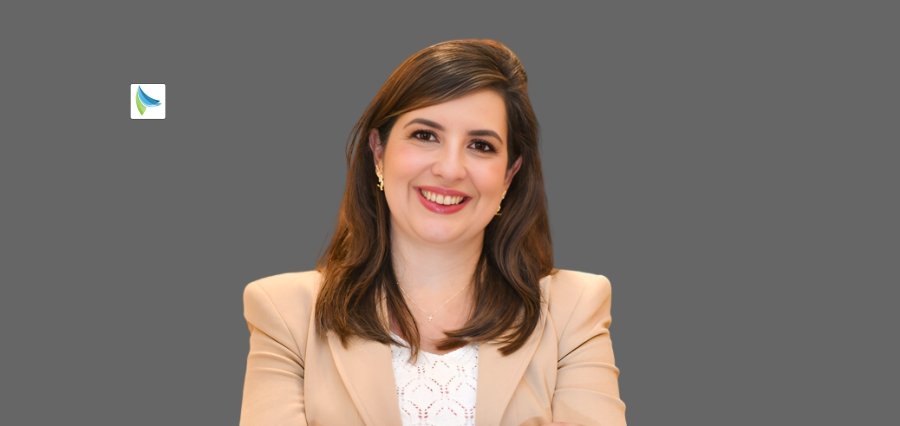
When it comes to financial crime and compliance, the majority of individuals regard regulation as a fence, a line which prevents organizations to enter a risky area. María Teresa Salazar de García sees quite a different thing. She sees architecture. This certified AML specialist and global compliance executive is a Salvadoran lawyer who has not merely imposed rules in the last twenty or more years. She has designed and created structures, culture, and systems that render integrity structurally difficult not to take into consideration.
She manages an Anti-Money Laundering initiative across a variety of regulated jurisdictions as Global AML Program Manager at Millicom International Cellular (Tigo). She does it with the precision of a lawyer, the instincts of a strategist, and the belief that doing the right thing and growing sustainably are not mutually exclusive objectives. They have the same goal. She demonstrates that integrity and sustainable growth are not competing priorities, they are inherently aligned, driven by the same objective.
Her technical depth is reinforced by a robust portfolio of international certifications. She holds the Certified Anti-Money Laundering Specialist (CAMS) designation from ACAMS – USA, the AML Certified Associate (AMLCA) certification from FIBA – USA and is certified as a Data Privacy Officer (DPO) by the Instituto Latinoamericano de Compliance (ILC) – Perú. She is also certified by the International Coaching & Speaker Federation as an International Master Speaker – México.
Expanding her expertise into emerging risk domains, she has also obtained specialized certifications in Crypto Compliance, including Certification in Blockchain & Crypto Assets and Blockchain Technology and Crypto Assets Competencies (CTBC), as well as Crypto Forensic Tracing Specialist, all issued by the Asociación de Blockchain y Bancos Internacional (ABBI) – USA.
Through this combination of experience, vision, and continuous specialization, María Teresa does not just respond to the evolving landscape of financial crime, she anticipates it, designing compliance frameworks that are as resilient as they are forward-looking.
The Making of a Compliance Leader
María Teresa’s journey begins in San Salvador, where she attended the Academia Británica Cuscatleca from the age of three, an experience that quietly laid the ethical groundwork for everything that followed. The school’s motto, “Effort Leads to Success,” was not merely an inscription on a wall. It became a principle she carried into every examination room, every regulatory hearing, and every boardroom she would later enter. As the eldest of two brothers, she developed early a natural inclination toward structure, responsibility, and principled decision-making, shaped by a family environment that placed enormous value on education and resilience.
Her academic path led her to law, and she qualified as an Attorney and Notary Public in El Salvador before pursuing a Master’s Degree in Financial and Securities Law at Universidad Pontificia Bolivariana in Colombia. That combination proved formative. It gave her not only technical depth, but a cross-border perspective on how financial systems function, how they are regulated, and how easily they can be exploited when governance structures are weak. “From the very beginning, I understood that technical knowledge alone was insufficient. The ability to navigate ambiguity, influence stakeholders, and make principled decisions under pressure proved equally critical,” she states.
From Law to Financial Crime: A Career Finds Its Purpose
María Teresa’s early career began in corporate law, first at the prestigious Arias Law Firm, where she advised multinational clients on governance, banking and finance, mergers and acquisitions, and cross-border corporate structuring. These years gave her a sophisticated understanding of how complex organizations are built and how they can unravel when accountability is absent.
The turning point arrived when she made the decisive move into compliance and financial crime. She saw firsthand how gaps in controls, culture, and oversight exposed institutions not only to regulatory risk but to reputational and ethical failure. That realization crystallized the driving idea behind her entire professional philosophy: compliance should not be a reactive, check-the-box exercise. It should be embedded in the DNA of an organization, a living, breathing part of how decisions are made at every level. “The idea has remained consistent throughout my career: transforming compliance from a control function into a strategic enabler, where ethics guide decisions, risks are proactively managed, and transparency becomes a competitive advantage,” she highlights.
Building Institutions from the Ground Up
In 2008, María Teresa joined AFP Confia, a Citibank subsidiary and the largest pension fund manager in Central America, as Ethics, Compliance, AML and Fraud Manager. For nearly eight years, she directed enterprise-wide programs covering AML, fraud, sanctions, KYC, anti-bribery, and corporate compliance, all aligned with Citibank’s global standards. She supervised multidisciplinary teams, reported regularly to the Board and AML Committee, led ethics and fraud investigations, and managed regulatory audits with a consistency that steadily built supervisory confidence.
But the moment she identifies as among the most defining of her career came during her time as AML Manager at Mobile Cash, S.A. de C.V. / Tigo Money El Salvador. There, alongside an extraordinary team, she led the process to obtain El Salvador’s first E-Money Service Provider (SPDE) license. “The regulatory framework on financial inclusion was new and evolving, so we had to build everything from the ground up: governance, controls, risk assessments, cross-functional alignment, and a clear narrative for regulators,” she mentions. What made that achievement remarkable was not just the technical complexity involved, but what it represented: an unwavering collaboration between the different teams, and the proof that rigorous AML compliance was not a barrier to financial inclusion. It was the very mechanism that made responsible inclusion possible. Achieving that license wasn’t just a milestone; it was a testament to what can be accomplished when integrity, innovation, and teamwork come together.
From Regional to Global: Multiple Countries, One Standard – Leading AML Across Every Jurisdiction
In December 2017, María Teresa stepped into the role of Regional AML Program Manager for Latin America at Millicom International Cellular. For seven years, she held executive accountability and oversight for AML and financial crime risk governance across Tigo’s and Mobile Financial Services (MFS) operations across multiple countries. She led and supervised a multicultural team of Local AML Officers, and chaired the Regional AML Committee.
The scope of the role demanded an unusual combination of capabilities: technical mastery of international AML standards, the diplomatic intelligence to manage relationships across deeply different regulatory environments, and the leadership presence to guide a geographically dispersed team through constant regulatory change. She delivered on all fronts. Her tenure produced measurable improvements in program maturity, elevated control effectiveness, and strengthened regulatory readiness across the region. One of the landmark initiatives she drove during this period was providing strategic AML advisory on El Salvador’s Bitcoin Law implementation, placing her at the frontier of one of the most consequential regulatory developments in the region’s recent history. “When you work at the intersection of emerging technology and financial crime risk, you realize that the compliance profession is not static. It must evolve faster than the risks it is designed to prevent,” she says.
In January 2025, María Teresa assumed her current role as Global AML Program Manager at Millicom, stepping into the executive role of the company’s AML and counter-terrorist financing program across all regulated jurisdictions. Operating as an independent second-line control function and reporting into global leadership. She leads global implementation and effectiveness reviews of transaction monitoring systems, sanctions screening, e-KYC onboarding, AML risk matrices, and RCSA frameworks. She oversees AML governance, management reporting, and Board-level escalation of AML material risks. The role represents the full expression of everything her career has built toward, and she carries it with the authority of someone who has earned every element of it.
The Human Architecture of Leadership
What distinguishes María Teresa from many executives in her field is her insistence on the human dimension of leadership. She identifies strategic clarity, organizational discipline, and the ability to build trust as her core strengths, but she speaks with equal candor about her weaknesses. Perfectionism has been both a driver and a constraint throughout her career, setting high standards while occasionally slowing decisions or delegation. “Over time, I have learned to reframe this. Impact is not about perfection, it is about progress, prioritization, and timing,” she states.
She also credits her role as a spouse and mother of four boys as the most transformative leadership education she has ever received. Raising a family while leading global compliance programs across multiple time zones has taught her patience, empathy, and the discipline of full presence. “Strength is not about doing everything alone. It is about allowing yourself to be supported, embracing imperfection, and being fully present in the moments that truly matter,” she highlights. Her family, she says, grounds her in a purpose that no professional achievement can replicate.
A Voice that Shapes the Field
Beyond her corporate responsibilities, María Teresa operates as one of the most visible and respected thought leaders in compliance and AML across Latin America. She has participated as speaker, professor, and moderator at more than 41 national and international events across El Salvador, Mexico, Brazil, Peru, Paraguay, Bolivia, Guatemala, Panama, Honduras, and Colombia. She serves as a lead professor and faculty member in advanced executive education and certification programs, delivering specialized training on AML frameworks, risk appetite, internal controls, investigations, and technology-enabled financial crime.
Her board and leadership roles span the hemisphere: President of the Board of Directors of the El Salvador Chapter of the Asociación de Blockchain y Bancos Internacional (ABBI), Regional Director of the AML Commission at the Instituto Latinoamericano de Compliance in Peru, El Salvador Country Chair for G100 Integrity and Compliance, LATAM Ambassador for Women in Mentoring (WIM) Global in the UAE, Member of the Legal Ethics and Compliance (LEC) Latam Committee – Brazil, Member of the Compliance Committee of AMCHAM, El Salvador, Member of Top Compliance & Risk Management Community – Mexico, Member of the International Advisory Board of TEDLaw, a TED Initiative in the United States, and Member of Crypto Compliance Builders (CCB) in Argentina. She also serves on the Women’s Executive Leadership Committee at FIBA in the United States.
The awards that have accompanied this trajectory are equally impressive: multiple-time honoree as one of the Top 100 Compliance Officers in Latin America, recipient of the Inspiring Lawyer of the Year Award at the Lex-Falcon Global Awards 2025 in New York, Lawyer of the Year 2024 in El Salvador from Derecho y Negocios, and selected among the 45 Most Influential Legal Professionals Under 45 in the Region in 2025 and among the 45 Most Influential Legal Professionals Under 45 in El Salvador in 2024. Recognition for merit, professional trajectory, and contributions to the Compliance and AML ecosystem in Latin America 2024 from Top Compliance, CANACINTRA, México and the Vienna Business Agency and Vienna School of Quality and Innovation, further cemented her standing as a professional whose influence extends well beyond her home country.
She has also served as a mentor in professional development programs for organizations such as FIBA, WEC Global, and Vital Voices, supporting the growth of women emerging leaders.
The Legacy She Is Building
When María Teresa speaks of the future, she does not speak in terms of titles or promotions. She speaks in terms of impact: the frameworks that will protect financial systems from exploitation, the professionals she is mentoring who will carry these standards into the next decade, and the culture of integrity she is helping to build across Latin America, one organization, one conversation, one decision at a time.
“Growth is not a destination. It is a daily decision, not defined by titles, but by the impact we create and the people we elevate along the way,” she says. In her case, the elevation has been extraordinary, both for the institutions she has served and for the professionals she has shaped along the way. She does not simply make organizations more compliant. She makes them more trustworthy. And in a world that increasingly measures institutional value by the integrity of its systems, that is the most consequential kind of leadership there is.