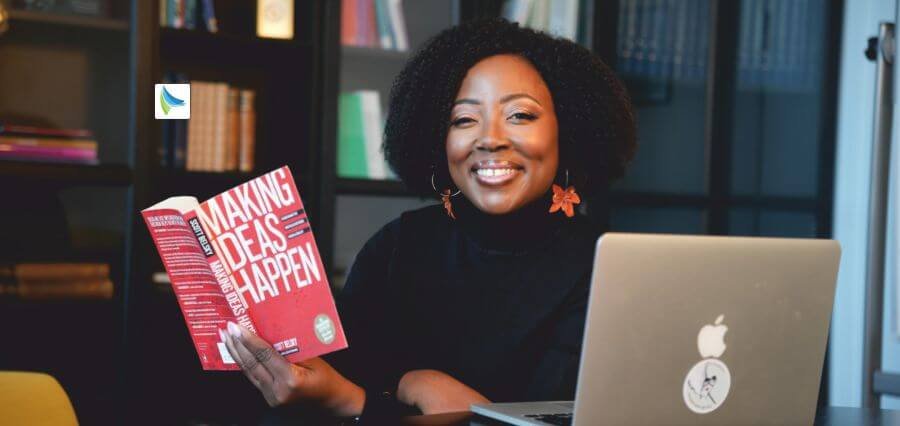




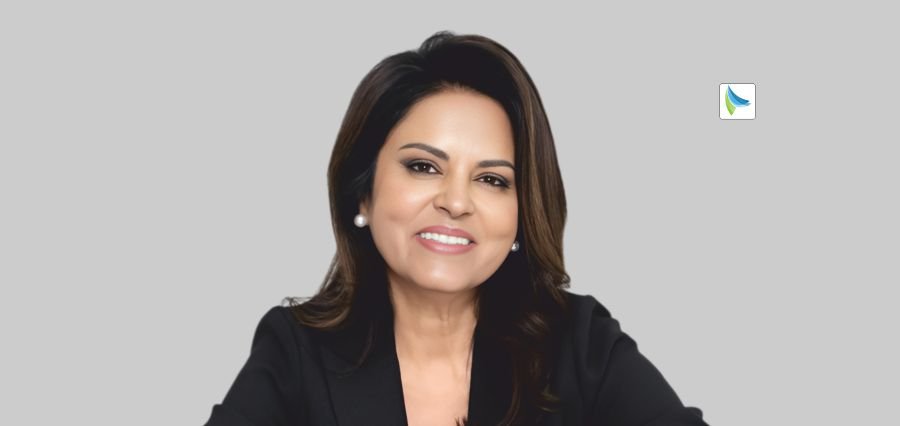
In a professional culture that has traditionally upheld the virtues of the hard edge, the decisive, the data-driven, the unapologetically transactional, Reena Malik offers an alternative suggestion altogether. She does not challenge leaders to decide between performance and compassion. She informs them that they never had to. With a career of spanning more than 25 years and a world of experience spanning a total of 35 plus countries, Reena has established her consultancy business, and hence her career, on the belief that the finest leaders are, above all, thoroughly human. It is one of those messages that the world appears to be prepared to listen to.
With organisations in all industries struggling to come to terms with the game-changer of hybrid work, AI, and a workforce that is more than a pay cheque and demands meaning, Reena has found herself at an excellent, and most importantly, rare nexus between practical and values-driven work that requires hard-earned experience at the pinnacle of the business world. She is not speculating externally. She has lived it.
From Law to Leadership: A Career Shaped by People
Reena began her professional life as a lawyer, a path she pursued with genuine enthusiasm and real commitment. But something kept pulling her attention away from the legal work itself and toward the human stories sitting behind every brief and every boardroom conversation. Over time, her career shifted toward people and leadership roles, eventually taking her across the Asia-Pacific region and into global teams at a Big Four professional services network. The work was rich with complexity and contrast, different cultures, different leadership styles, different unspoken rules about what success looked like and who got to define it.
In rooms where careers and consequential decisions were made daily, she had a front-row seat to leadership at its most exposed. She watched closely and absorbed everything. She saw leaders who created conditions where people thrived, and others who, often without realising it, created conditions where people quietly disengaged and stopped bringing their best to work. “The gap had nothing to do with intelligence or experience,” she reflects, “It came down to behaviour, self-awareness, and how much people felt they could trust the person leading them.” Those years of close observation became the intellectual backbone of everything Reena now teaches, giving her an understanding of how leadership feels to the people living underneath it that no business school curriculum could ever replicate.
A Personal Loss, A Professional Awakening
The idea of starting her own consultancy had lived in Reena’s mind for years before she finally acted on it. Like many ambitious professionals who find security and identity in the weight of a well-known institution, she discovered an endless supply of reasons to wait. The timing was never quite right. Then, she lost her brother. Grief has a way of cutting through the noise and clarifying what ambition, on its own, never quite manages to.
The reckoning that followed was honest and uncomfortable. Starting out independently frightened her. She worried whether people would take her seriously without the credibility of a large organisation standing behind her name, and she went back and forth for a long time. In the end, she chose to stop waiting and trust herself. That single decision gave birth to Soul Hearted Consulting, small, focused, deeply intentional, and built entirely around the values she had spent two decades refining. “I’m glad I didn’t rush it,” she says simply, and there is a quiet certainty in the way she says it that suggests she means every word.
Heart-centred Leadership: Not A Philosophy, A Practice
When Reena talks about “heart-centred leadership,” she is deliberate about stripping away any trace of vagueness or abstraction from the conversation. She is not describing a softening of standards or a retreat from accountability. She is describing something far more demanding, and, she firmly argues, far more effective over any meaningful stretch of time.
“In practice it’s quite ordinary, and that’s the point,” she says, leaning into the simplicity of it rather than away from it. She’s talking about the technically brilliant leader who has simply, quietly, stopped asking how their people are doing. It means leaders who are genuinely present, who listen with real curiosity rather than waiting for their turn to respond, and who are willing to show up as a full, fallible human being rather than a polished, untouchable title. It also means holding real care and real clarity together at the same time, treating empathy and directness not as opposing forces but as natural and necessary partners. Compassion, in her definition, is not the absence of hard conversations. It is the quality with which those conversations are conducted.
Across 35 Countries: What the World Taught Her
Few leadership thinkers can genuinely claim the empirical breadth that Reena brings to this conversation. She has worked across more than 35 countries, navigating the full and often demanding spectrum of cultural expectations around authority, communication, hierarchy, and trust. What she expected to encounter was deep and complicated difference. What she found, time and again, was a set of fundamentals that held firm regardless of geography or industry.
“Honestly, what surprised me most working across so many countries wasn’t the differences, it was how much people have in common,” she says. Across Tokyo, New York, Sydney, and Mumbai, the same things mattered. Kindness travelled without translation. Listening landed the same way everywhere. The practices adapted, how feedback was delivered, who spoke first in a room, what a moment of silence communicated, but the underlying human principles never wavered. That discovery has permanently shaped how she approaches inclusion, not as a corporate framework to be installed, but as a living, daily practice of genuine curiosity about whether the space being created actually allows people to feel they truly belong.
Emotional Intelligence in High-pressure Environments
Emotional intelligence sits at the absolute core of Reena’s consulting philosophy, and she has spent years carefully observing how even the most capable leaders struggle to apply it when the pressure genuinely mounts. The pattern she identifies is consistent and almost universal among leaders trained in traditional corporate environments. Many have mastered leading from the head but have slowly, quietly lost touch with leading from the heart.
The problem is rarely a lack of awareness. Most senior leaders can define emotional intelligence fluently and articulately. The real and persistent challenge is living it under sustained conditions of stress, scrutiny, and high-stakes decision-making. Leaders default to projecting false confidence when they feel uncertain. They push for results when someone in front of them is visibly struggling. They listen just enough to formulate a response. “What I’ve seen is that when leaders bring real empathy and authentic human connection to their teams, something opens up,” she says. “People feel safe to be honest. They bring their whole selves rather than a careful version of themselves. That’s not soft, that’s what high performance actually looks like when it’s sustainable.”
The Leaders Who Last
Across years of working closely with senior executives on every continent, Reena has developed a clear and remarkably consistent picture of what separates leaders who sustain their energy and effectiveness over the long run from those who gradually burn out, hollow out, or quietly lose themselves inside the role. The differences are rarely what most people expect them to be.
The leaders who last carry a genuine warmth and aliveness that proves almost impossible to manufacture over time. They take the work seriously but refuse to take themselves too seriously, they laugh at the messiness, admit mistakes without drama, and create an atmosphere that is noticeably more human as a result. Most tellingly of all, they hold onto a grounded sense of who they are beyond their professional identity. They have relationships, interests, and a life that exists entirely outside the office, and that separation, Reena argues, is not a luxury. “The leaders who sustain themselves have a life, relationships, and interests that remind them they’re a whole person first,” she says. “That’s what lets them keep going with real energy rather than just pushing through.”
Performance And Human Connection: A False Trade-off
One of the most stubborn and damaging myths embedded in organisational life is the belief that performance and human wellbeing naturally pull against one another, that producing real results requires a leader to maintain emotional distance and resist the pull of human complexity. Reena identifies this as one of the first assumptions she works to dismantle with every leadership team she engages, and the evidence she has gathered across her career points consistently in the opposite direction.
When leaders bring genuine care, real empathy, and authentic human connection into their day-to-day leadership, people give more of themselves, willingly, sustainably, and with greater creativity and commitment than any performance management system could produce. The work then becomes practical, helping leaders have kinder, clearer conversations, address difficult issues earlier rather than letting them quietly fester, and build a culture where honesty is genuinely safe. “When that happens, something shifts,” she says. “People are less guarded, more willing to collaborate, more willing to bring their best. That’s not separate from performance, that’s what good performance actually looks like.”
Leading Through Hard Moments
The truest and most demanding test of heart-centred leadership does not arrive during periods of growth and optimism. It arrives in the hard moments, restructuring, redundancies, organisational crisis, the situations where leaders feel the strongest pull toward protective distance and carefully managed corporate language. Reena’s approach to those moments is, at its core, straightforward: be direct, be human, and be kind.
“What people remember long after a difficult decision is whether they were treated with honesty, kindness, and integrity,” she says, and she places that observation at the very centre of how she coaches leaders through crisis. It means resisting the temptation to hide behind euphemism or vague reassurances that everyone in the room can already see through. It means acknowledging, with genuine feeling rather than scripted sensitivity, what a difficult moment means for the human beings sitting across the table. The leaders who handle these moments well are remembered not for the decision itself, but for the dignity and humanity they brought to delivering it.
The Future of Leadership Development
Looking ahead, Reena sees artificial intelligence fundamentally reshaping what leadership demands, and, in doing so, making the deeply human elements of the role more important and more differentiating than they have ever been before. AI will absorb the analytical and data-heavy work that currently fills so much of a leader’s working day. What it cannot do is build genuine trust, hold space for someone navigating real uncertainty, or exercise the kind of nuanced human judgment that genuinely complex situations require.
Hybrid and distributed work add a further and urgent layer to this shift. Leaders can no longer depend on physical proximity to build the culture and relationships that keep teams cohesive, motivated, and honest with one another. Connection must become a conscious, deliberate act of leadership rather than something that happens naturally in the margins of a shared office. “Leadership development will need to reflect that,” she says. “Less about tools and frameworks, more about helping leaders reconnect with what really matters, being human, being kind, and leading with integrity.”
Purpose Beyond the Boardroom
There is one dimension of Reena’s work that she returns to with particular and quiet insistence whenever the conversation allows space for it. A meaningful portion of Soul Hearted Consulting’s proceeds goes directly toward supporting underprivileged children in developing countries, funding access to education and working to tangibly improve lives in communities far removed from the boardrooms where her consulting work takes place. It is not an afterthought or a strategic branding decision. It sits, for her, at the very heart of what the business is for.
Outside of work, travel, photography, and food ground her, each one a practice in slowing down, paying close attention, and noticing what is directly in front of her. That discipline of presence, it turns out, is precisely what her work asks of every leader she coaches. And for those who still raise an eyebrow at the name above the door: “Soul means depth and integrity and Hearted means genuine care, together they describe the kind of leadership I’ve spent most of my career thinking about, working alongside, and trying to build.”
After more than twenty-five years, thirty-five countries, and one profound personal loss, she still says it like she means it. Because she does.