



There are leaders who run organisations and there are those who transform them completely. Leadership is not the title or the decisions made, it is about influence, vision and the power to convert ideas to long-lasting effects. Leaders are people that are trusted, develop curiosity and can provide environments in which people can flourish, even when they are uncertain. In a world of intersection between technology and strategy, the most transformational leaders are those who can find their way across the difficulty whilst maintaining people and purpose at the forefront.
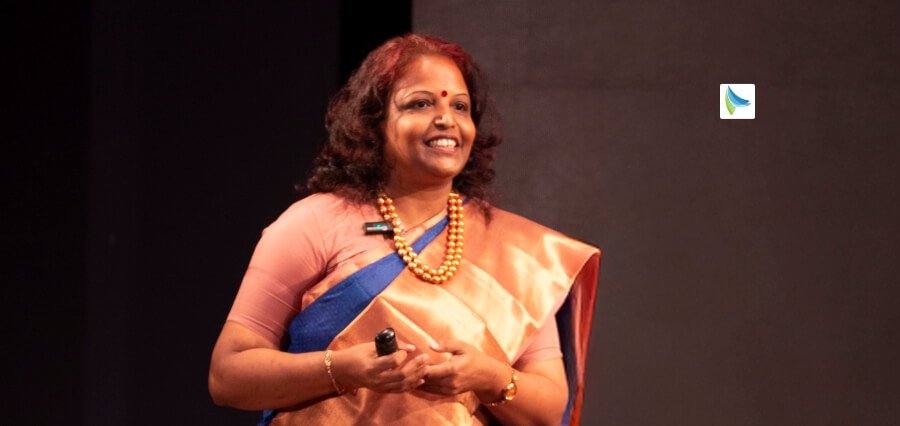
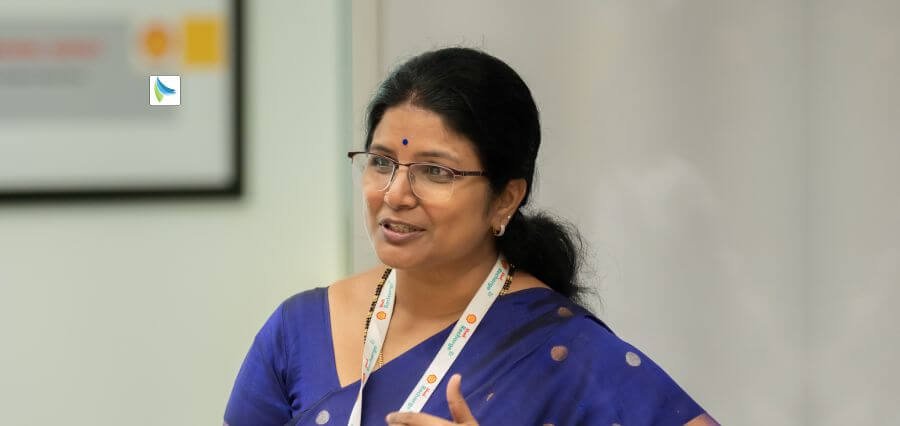
Kavitha Siddada is one of such leaders, and in her position of General Manager and Global Head of Analysis, Design and Transformation at Shell, she heads global teams and extensive technology programmes that bring quantifiable business value. However, it is not on the boardroom where her story starts. It starts in a house where the walls were filled with books, where curiosity was cherished as a domestic virtue, and failure, as long as you recovered quickly, was all right.
She was raised in a household of two doctorate-educated parents, one a Literature doctorate, the other a Science doctorate, who maintained their home more of a living laboratory of ideas than of home. Her mother was a professor who created the intellectual temperature at an early age. Their house not only believed in ideal values like discipline, responsibility, and being brave to ask questions, but these were things they used every day. She reflects that she was taught to ask questions and think independently and accept responsibility at a young age.
An Accidental Pivot That Became a Calling
The technology sector was never part of the original plan. Kavitha had envisioned a path into academia, a PhD, perhaps following her parents into research. Life, as it tends to do, had a different script in mind. Post-marriage and mid-university, she stepped into IT almost accidentally, arriving at her own convocation with a 23-day-old son in tow. What started as an unplanned pivot became a calling. She quickly discovered that technology, when applied with intent, could solve real problems, cut through complexity, and create impact at remarkable scale.
Where the Foundations Were Built
Kavitha’s early years at Walmart proved to be the crucible in which her professional identity formed. She describes those years as “incredibly formative,” surrounded by strong mentors who set uncompromisingly high bars for thinking, execution, and integrity. The organisation gave her something she still considers invaluable: operational rigour, delivery discipline, a technology-first mindset, and a deep respect for data-driven decisions. “That’s where my tech DNA was built,” she says.
As her career evolved, the roles demanded progressively more than technical depth. She had to learn how to think strategically, lead across cultures and geographies, and drive transformation inside large, complex environments. She built digital capability centres, modern engineering teams, and global technology organisations designed to move with speed without losing sight of business value. Across data, analytics, AI, cloud, supply chain systems, and governance, her operating philosophy remained consistent: simplify what is complex and build resilience into the system.
Today, at Shell, she carries that philosophy into one of her most expansive mandates yet. Leading the global Analysis, Design & Transformation practice means converting business intent into real execution, at scale, across geographies, and against a backdrop of relentless technological change. “Leadership isn’t about doing the work yourself,” she explains. “It’s about stewarding outcomes through strategic intent, driven by people, for the people.”
The Idea Behind the Career
Ask Kavitha about the idea behind her career and she offers a refreshingly grounded answer: there wasn’t one. “There was no grand master plan. I embraced the opportunities that came my way and went with the flow, giving my best.” That candour, delivered without apology, says something important about the leader she has become, someone who prizes substance over narrative, execution over optics.
The real turning point came when she stopped viewing technology as a support function and started seeing it as a strategic enabler. That belief, which now sits at the centre of everything she does, drove her work across both Walmart and Shell. Her distinct advantage, she argues, stems from her ability to bridge the world of science and the world of technology, a synthesis that produces outcomes others often struggle to replicate.
Working at enterprise scale sharpened that belief into discipline. She learned why design decisions matter, why reliability, security, and cost cannot be afterthoughts, why AI systems evolve and must be governed, why strategy is not a document you present once but something you execute decision by decision, day by day. “Simplify what’s complex. Build resilience into the system,” she says. “That’s the work.”
Leading Through a Pandemic
COVID-19 tested every leader’s assumption about how work gets done, and Kavitha was no exception. As a leader of global teams supporting business-critical applications that historically required physical presence, the options were few and the timeline was unforgiving. She approached the crisis not as a threat to be managed but as an opportunity to surface what truly mattered. She highlights, “it was the moment for survival of the fittest; a once-in-a-lifetime inflection point that transformed everyone’s thinking overnight.”
Her team moved quickly to enable remote work, strengthen cybersecurity, simplify processes, and establish clear communication rhythms. For teams that had to remain onsite, safety and continuity guided every decision. She adopted a deliberately people-first approach, flexibility, mental health check-ins, and empathetic leadership were not optional extras but essential instruments of stability. She notes, “Trust and autonomy became critical, they kept teams engaged and productive when everything else was uncertain.”
Strategically, the pandemic accelerated digital modernisation, cloud adoption, automation, and AI-driven monitoring, compressing a multi-year roadmap into months. What that period reinforced, above all else, was a conviction she holds strongly today: resilient organisations are built on adaptability, empathy, and purpose-driven leadership. “Humans are the most resilient species,” she adds with characteristic directness.
Balance as a Daily Practice
Managing a global leadership role alongside personal life is, by Kavitha’s own admission, one of the biggest learning curves of her career. She dismisses the idea of balance as a fixed state. “Balance is fluid and always shifting. It changes depending on the phase of life you’re in.” When her children were young, choices looked different. Now that they are settled, those choices have evolved again.
Her family, she says, has been her constant anchor with her husband at the centre of it. Their support made it possible to take risks, travel extensively, and lead global teams. She protects family time with deliberate rituals, shared meals, travel traditions, and daily conversations that keep the household connected across the demands of a high-pressure career. At work, balance flows from trust. She believes deeply in empowerment and delegation, building teams that, by design, render her redundant. She observes, “When teams feel trusted performance becomes more sustainable.”
Personally, she invests in learning and wellbeing. Reading, journaling, long walks, and mindfulness keep her grounded. Mentoring women and young professionals sits especially close to her heart, it keeps her connected, she says, to the reason leadership matters in the first place. “Balance isn’t a destination. It’s a daily practice. It’s about making choices that align with what truly matters.”
Strengths, Shadows, and the Power of Vulnerability
Kavitha describes her strengths with the same precision she brings to technology strategy. She possesses a natural ability to zoom out to the highest level of strategic thinking and, when necessary, zoom into granular operational detail, a rare dual capability that sets her apart. Resilience, she says, has played a defining role in her journey: she stays calm in complexity, learns quickly from setbacks, and remains anchored in purpose through disruption.
But she is equally candid about her shadows. That same capacity for detailed thinking, she acknowledges, can tip into over-involvement. “My ability to zoom into the lowest level of detail is both a strength and a weakness I am very conscious of,” she says. Over time, she learned the value of stepping back, empowering others to grow into their strengths, shaping the details through coaching rather than control.
The bigger shift, however, was learning to embrace vulnerability. She once believed it had no place in leadership. She now knows the opposite is true. “Authenticity builds trust, and openness creates connection,” she says. “That shift has made me a far more effective leader.” It is a lesson she actively passes on to the teams and mentees she works with, that the leader who admits uncertainty earns far more credibility than the one who pretends to have all the answers.
A Career Defined by Impact
Kavitha’s academic record established an early standard for excellence: a university gold medal, Dean’s List recognition, and advanced education at UC Berkeley and IIM Bangalore. Professionally, she has received multiple innovation and transformation awards alongside international recognition earlier in her career.
Yet the achievements she describes with the most conviction are organisational, not individual. She has built global capability centres, driven large-scale digital transformations, established enterprise AI, analytics, and modern engineering ecosystems, and strengthened governance and security frameworks across organisations. She has championed DE&I initiatives, built talent communities, and served as Presiding Officer for Internal Complaints Committees, work she views as inseparable from her commitment to ethical, psychologically safe workplaces.
She asserts, “more than titles or awards, I’m proud of the people and teams I’ve helped grow, and the values I’ve stayed true to along the way.” Beyond professional milestones, she takes equal pride in raising a grounded family, supporting women in leadership, and remaining committed to lifelong learning.
The Advice She Gives, and Lives By
When aspiring leaders ask Kavitha for guidance, her first instinct is to strip away the noise. Values matter more than titles. Skills and roles change; character does not. “Remember that there are always people watching and learning from you, whether you realise it or not,” she says. “How you act, professionally and personally, shapes not just your career, but the culture around you.”
She urges leaders to lead with purpose, not position. Influence, she argues, does not flow from hierarchy, it flows from clarity of intent, consistency of behaviour, and the ability to inspire trust. She challenges leaders to stay curious, to admit what they do not know, and to invest seriously in people. “Short-term wins may look impressive, but sustainable success comes from growing others. When you invest time, energy, and belief in people, the impact multiplies far beyond individual achievements.”
And she cautions against letting success create distance from empathy. “The higher you grow, the more important it is to stay connected to the realities of your teams and customers.” At its core, she says, leadership is about service, enabling others to succeed, removing obstacles, and creating environments where people do their best work.
A Mantra for the Road Ahead
Kavitha’s message to those watching her journey is both simple and genuinely hard to practise: be open to the unknown. She asks people to embrace uncertainty with courage and intent, because the unfamiliar terrain often leads somewhere better than the original map. Stay curious. Act with integrity. Invest in learning. “Measure success not only by outcomes but by the value you create and the people you uplift,” she says.
She also offers a reminder that cuts through the polished surface of professional achievement: journeys are rarely straight lines. The pauses, detours, and setbacks often shape the strongest leaders, teaching resilience, perspective, and humility. “Be patient with yourself, keep learning, and remain open to new possibilities. As you rise, stay generous with your time, knowledge, and support for others.”
In a world increasingly enamoured with speed, she makes a case for depth. In an industry that frequently confuses activity with impact, she measures success by the durability of what gets built and the growth of the people who build it. And in a profession that too often separates strategy from humanity, she holds both together, with the quiet conviction of someone who learned early that the best ideas and the best organisations are, at their core, expressions of character.