




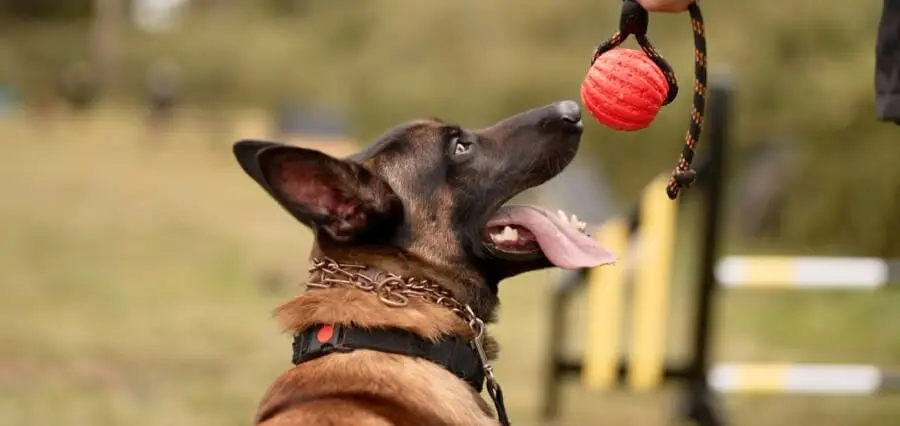
Provided by Yorkshire Canine Academy
The UK’s pet population is going through a major change, where a rapid increase in the dog population and behaviour problems have been observed. Along with the inclusion of pets in daily life, animal welfare charities have started considering the impact that the increasing trend has had on training needs and well-being of the dogs.
According to the PDSA, the population of pet dogs has reached a new peak of 11.1 million, from a previous level of 8.2 million in 2011. With this increase in numbers, there has also been an increase in behaviour problems, where data collected from more than 350,000 dog owners show a sudden increase in cases of reactivity after the pandemic, among puppies that lacked proper socialisation during the lockdown period.
As a result, dog reactivity and other complex behavioural issues have become increasingly common across the UK, evolving from isolated training concerns into a mainstream welfare challenge. However, traditional training methodologies have yet to catch up with the psychological complexities of the modern household pet. Dog reactivity characterized by lunge, bark and over vigilance are among the most prevailing problems that owners of working breeds and even family dogs are having nowadays.
Canine behaviour specialists say, it is observed that the emotional stress felt by the owner also matches the stress experienced by the dog, resulting in the avoidance of walks, public embarrassment and loneliness and isolation.
Why Is Reactivity One of The Biggest Dog Training Problems?
Dogs struggling with deep-seated behavioural issues, unlike typical pets requiring standard heelwork, do not fare well on standard, one-size-fits-all training protocols. A dog’s reactive behaviour is rarely just a structural obedience failure; it is fundamentally tied to how the animal emotionally processes its environmental triggers.
A landmark study evaluating canine training methods published in the international journal Animal Welfare (Hiby, Rooney, & Bradshaw) found that relying on rigid training approaches without considering a dog’s emotional state was associated with poorer behavioural outcomes and increased anxiety.
Reactivity cannot be tackled without taking into account individual breeds’ characteristics as well as each dog’s behavioural background and emotional reactions instead of treating all dogs identically. Training should be changed in a dynamic way using a highly motivated and performance-based approach aimed at eliminating the root of the problem instead of simply managing its manifestations.
The problem is that the industry of dog training in the UK is still not regulated. Frustrated owners have no choice but to look for help from contradicting forums’ tips, class frameworks and single-quadrant approaches which often lack the necessary intensity and proofing against real-life triggers.
“Many people think their dog is simply being stubborn,” says Jacob Morgan, co-founder of Yorkshire Canine Academy. “In reality, reactive behaviour is often driven by fear, frustration or uncertainty. Until you change how the dog feels, lasting behavioural change is difficult to achieve.”
Why Many Behavioural Programmes Fall Short?
Suppressing the behaviour through fear: Relying on purely punitive measures to stop a dog from reacting can create a dangerous internal pressure cooker. As highlighted in veterinary behavioural medicine reports published in the National Library of Medicine’s PubMed Central (PMC), suppressing a dog’s external response leaves the underlying emotional panic completely unchanged. However, although it may cause the dog to refrain from barking due to the fear of retribution in the short run, it will ultimately make things worse as it reinforces the bad association between the stimulus and its behaviour.
Relying on isolated environments: Training a reactive dog solely inside a quiet, distraction-free facility rarely translates to a chaotic public park. Section 9 of the UK’s Animal Welfare Act places a strict duty of care on owners to protect their animals from chronic distress, yet without controlled, progressive exposure to real-life variables, the new behaviours fail to generalize, leaving owners entirely helpless the moment an off-lead dog approaches them in the real world.
Confusion among owners is further compounded by the absence of an integrated support protocol. Many traditional programmes offer a weekly one-hour session and expect the owner to perfectly execute the mechanics at home without oversight. When a handler struggles with timing or mindset between sessions, the training stalls, a steep learning curve for someone already highly anxious about their dog’s behaviour.
How Yorkshire Canine Academy Structures Behavioural Rehabilitation?
Yorkshire Canine Academy has built its 5-day Bootcamp to address many of these common challenges. Operating from a highly specialized three-acre facility in Leeds featuring multiple consultation and classroom areas, an indoor training arena and an air-conditioned dog room, YCA treats handler education as the primary driver of long-term success.
Their structural approach includes:
- Pre-Training Assessments: Conducting rigorous initial consultation to analyse the dog’s background and relationship dynamics before prescribing a programme.
- Bespoke Skeleton Curriculums: Tailoring the training plan specifically to the individual goals of the owner and the instinctual baseline of the dog, allowing the programme to evolve as the dog progresses.
- The “Stooge Dog” System: Utilizing highly trained, stable decoy dogs within controlled environments to safely and systematically desensitize reactive pets to real-world scenarios.
- Hybrid Multimedia Coaching: Combining in person training with lifetime access to a complete video library of every training activity to ensure understanding is kept sharp.
- On-Going Support: Giving the owner an active channel to address any on-going problems or concerns beyond the 5-day training programme.
- Results or You Don’t Pay: Pay for your training after you’ve seen the results. YCA understands they’re probably not the first dog trainer you’ve invested in, so you only pay once you’ve seen the proof that their training works.
The ongoing digital loop is the exact detail most traditional trainers overlook. While standard lessons inform owners of what to do, YCA’s structural infrastructure led by co-founders Jacob Morgan, an internationally recognized behaviour mentor, and Ian Kirke, a former professional Leeds Rhinos rugby athlete who integrates high-performance coaching frameworks into canine management ensures the owner’s mechanics remain precise through the entire behavioural shift.
What Owners Should Ask Before Choosing a Behaviour Specialist?
Addressing the canine behaviour gap requires transparency from the provider. For anyone dealing with a highly reactive or complex dog, crucial questions to ask include:
- Does the facility utilize real-life variables, such as controlled stooge dogs, to prove behaviours?
- Is the curriculum customised to my dog’s specific breed instincts, or is it a uniform programme?
- What infrastructure is there to fix my training mechanics and will support be continued when I leave?
- Does my dog have a progression that helps him go from 1-on-1 training into higher distraction groups?
- Does the provider stand behind their results with a transparent progress guarantee?
A behaviour academy capable of answering these questions with concrete operational protocols signals a dramatically higher benchmark of animal welfare and client success than generic local training classes.
“Dogs are learning every day, whether we realise it or not,” Morgan explains. “Our goal is to teach owners how to communicate clearly and confidently so that good habits continue long after the programme has ended.”
A Relationship Sustained Daily, Not a One-Time Fix
Behavioural modification is not a temporary fix achieved over a weekend. As the team at YCA frequently reminds their clients: “If your dog is awake, you are training them, or you are detraining them.” It is a lifestyle shift that must be sustained correctly for the entirety of a dog’s life.
By anchoring their programmes in owner education, real-world proofing, and an uncompromising money-back guarantee, Yorkshire Canine Academy aims to provide owners with the structure, confidence and ongoing support needed to achieve lasting behavioural change.
For more information regarding assessments and regional availability, owners should contact Yorkshire Canine Academy via their official channels at info@yorkshirecanineacademy.co.uk or call 0113 486 1980.
To better understand the real-world operational strategies and training philosophies implemented by YCA’s team, you can watch this in-depth Interview with Jacob Morgan of Yorkshire Canine Academy where he discusses the evolution of modern dog behaviour methodologies.