


The built environment profoundly influences how people live, work, and connect with the world around them. From transport networks and commercial centres to housing, civic infrastructure, and public spaces, design decisions shape social outcomes, economic performance, and environmental resilience for generations.
As Australian cities undergo rapid growth and increasing urban complexity, conventional linear design models are proving inadequate. In response, strategic design thinking has emerged as a critical approach for delivering more meaningful and future-ready outcomes across the built environment.
Strategic design thinking brings together human-centred design, long-term planning, systems thinking, and cross-disciplinary collaboration, an approach embedded in the practice of Plus Studio. Moving beyond a narrow focus on form, regulation, or short-term outcomes, it places people, purpose, and performance at the core of decision-making. When applied effectively, strategic design thinking supports the creation of built environments that are resilient, inclusive, sustainable, and commercially viable.
Understanding Strategic Design Thinking in the Built Environment
Strategic design thinking is an iterative, evidence-based approach that aligns design solutions with broader organisational, community, and environmental objectives. In the context of the built environment, it moves beyond aesthetics and functionality to consider how spaces operate within complex systems such as transport networks, ecosystems, economies, and communities.
This approach encourages designers, planners, developers, and stakeholders to ask deeper questions at the outset of a project: What problem are we solving? Who are the users, and how will their needs evolve over time? What long-term impacts will this development have on place, behaviour, and sustainability? By addressing these questions early, projects are better positioned to deliver meaningful and enduring value.
Enhancing User Experience and Community Outcomes
One of the most significant benefits of strategic design thinking is its focus on human experience. Built environment projects that adopt a user-centred mindset are more likely to respond to the diverse needs of communities, including accessibility, safety, wellbeing, and cultural identity.
In Australian cities, where demographic diversity and urban density are increasing, design solutions must accommodate a wide range of users. Strategic design thinking employs research, stakeholder engagement, and co-design processes to ensure that developments reflect the lived experiences of the people who use them. This leads to public spaces that encourage social interaction, workplaces that support productivity and wellbeing, and residential environments that foster a sense of belonging.
Supporting Sustainable and Resilient Development
Sustainability is a defining challenge for the Australian built environment. Climate change, resource scarcity, and environmental degradation require design approaches that prioritise long-term resilience over short-term gains. Strategic design thinking supports this by embedding sustainability objectives into the core of project planning rather than treating them as add-ons.
Through systems thinking, designers can assess how buildings and infrastructure interact with natural systems, energy networks, and water cycles. This enables informed decisions around material selection, passive design strategies, and lifecycle performance. As a result, projects are better equipped to reduce carbon emissions, manage environmental risks, and adapt to future conditions.
Resilient design also extends to social and economic sustainability. Strategic design thinking considers how developments can support local economies, adapt to changing uses, and remain relevant over time, reducing the need for costly retrofits or redevelopment.
Improving Collaboration and Decision-Making
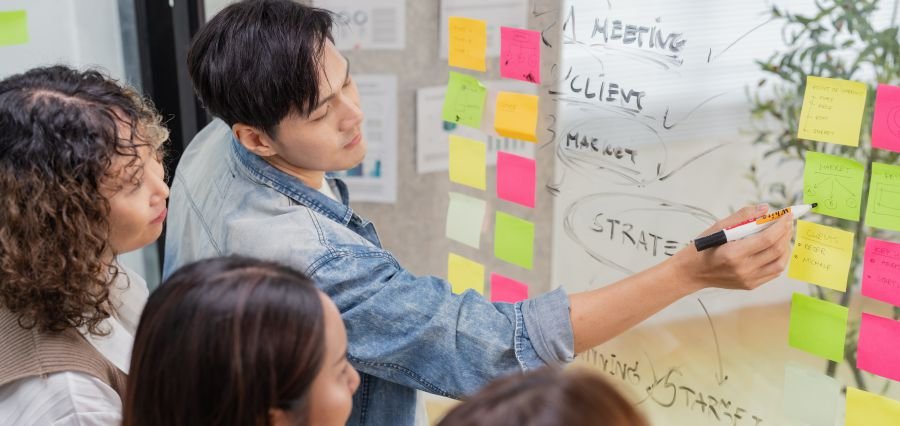
Built environment projects typically involve multiple stakeholders, including government agencies, consultants, developers, contractors, and community groups. Misalignment between these parties can lead to inefficiencies, delays, and compromised outcomes. Strategic design thinking provides a shared framework that facilitates collaboration and clarity.
By articulating a clear design vision and aligning it with strategic objectives, teams can make more informed decisions throughout the project lifecycle. This approach encourages transparency, reduces silos, and enables stakeholders to evaluate trade-offs holistically rather than in isolation. In complex Australian infrastructure and urban renewal projects, this level of alignment is essential for achieving successful outcomes.
Driving Innovation and Value Creation
Strategic design thinking fosters innovation by challenging assumptions and encouraging exploration of alternative solutions. Rather than defaulting to familiar models, project teams are empowered to test ideas, prototype concepts, and respond to emerging insights. This can lead to more efficient use of space, innovative construction methods, and improved operational performance.
From a commercial perspective, design-led strategy can also enhance long-term value. Developments that are adaptable, desirable, and well-integrated into their context are more likely to achieve strong market performance and stakeholder support. In an increasingly competitive Australian property and infrastructure market, this strategic advantage is significant.
Aligning Policy, Place, and Purpose
In Australia, built environment projects must navigate complex regulatory and policy frameworks. Strategic design thinking helps bridge the gap between policy objectives and on-the-ground outcomes. By aligning design decisions with broader planning goals such as liveability, density, and environmental stewardship, projects can achieve smoother approval processes and stronger public trust.
This alignment ensures that developments contribute positively to place-making and reflect shared values. Whether delivering transport infrastructure, mixed-use precincts, or civic spaces, strategic design thinking ensures that purpose and performance remain central throughout the project lifecycle.
Conclusion
Strategic design thinking is transforming how the built environment is conceived, delivered, and experienced in Australia. By integrating human-centred principles, systems thinking, and long-term strategy, it enables the creation of places that are not only functional and compliant but also meaningful, resilient, and future-ready.