



The sprawling, dynamic insurance landscape of the Middle East is a complex ecosystem, one where multi-billion-dollar capital structures meet stringent regulatory oversight, and conventional prudence must align with the ethical demands of insurance principles. It is a field that requires more than just financial acumen; it demands the strategic foresight of a visionary and the resilience of a crisis manager.
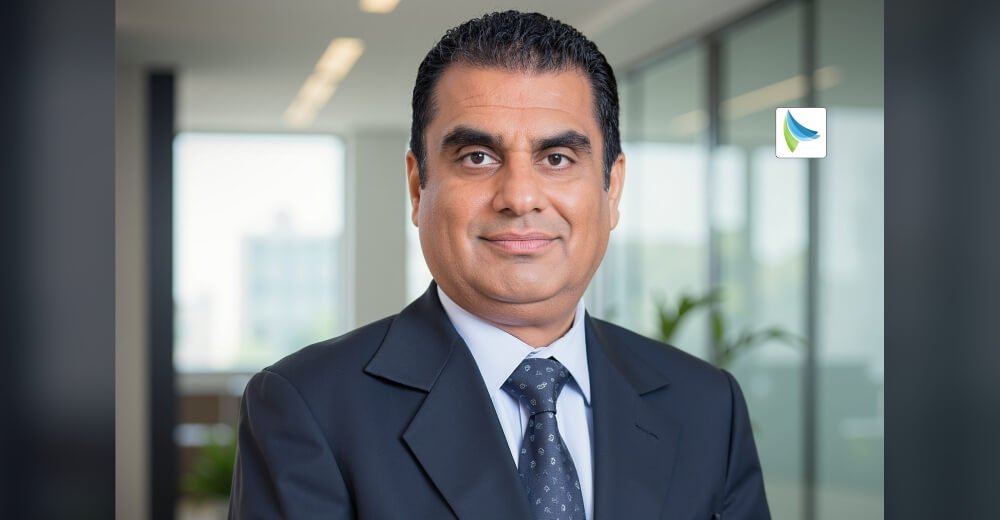
Standing at the epicenter of this complexity is Hammad Khan, the Interim CEO and Chief Financial Officer at Sukoon Insurance.
To call him merely a Chief Financial Officer is to use a ledger to describe a skyscraper. Khan is an individual who can greatly expand capacity and impact; he is an experienced leader whose influence goes beyond finance and accounting. His biography reads like an impressive matrix detailing foundational accomplishments and strategic decisions that have materially transformed finance departments and capital efficiency across the GCC, with successful M&A transactions.
He is not just an executive; he is a builder. His career bears the indelible mark of successfully heading up finance and accounting in three startup insurance companies, demonstrating an unparalleled capacity to craft complex operations from the ground up, a successful transformation journey with the UAE’s leading insurance and takaful companies, developing essential business processes, guidelines, and manuals—from Investment and Credit Policies to comprehensive Delegation of Authorities.
Khan’s expertise is defined by its breadth and depth:
- A Master of Capital and Risk: His experience spans intricate Solvency and risk-based capital computations (including involvement in the Draft UAE Insurance regulations ), ensuring institutional stability against a shifting regulatory tide. This strategic mastery is vital in his roles as a member of the Investment Committee and the Risk Management Committee.
- The Transformation Catalyst: He is the executive who has driven the transformational strategies with several key insurance organizations, including the reorganization of Finance & Accounting Departments and spearheading critical System Implementations (Sun Accounts, Oracle Financials, Core Insurance Solutions, BI), fundamentally modernizing the financial infrastructure of major regional carriers.
- The Trusted Regulator’s Voice: His periodical interaction with regulators, including providing crucial feedback on insurance regulations, positions him as a key voice in policy formation, reflecting a deep understanding of the region’s unique market and regulatory dynamics.
The highest accolades have publicly affirmed his influence: he was selected as the “UAE MOST INFLUENTIAL CFO” by the Khaleej Times Editorial Board in 2025 and previously awarded the “CFO OF THE YEAR” by Middle East CFO Magazine in 2017.
As an Executive Management Committee member and key inviter to both the Board of Directors, Board committees, and the Shariah Supervisory Board, Khan sits at the nexus of corporate strategy, ethical compliance, and financial engineering. He is the unflinching architect who fortifies balance sheets, profiles asset liability for optimal investment management, and guides institutions through the complexities of M&A Due diligence and Rating Agencies Reviews (S&P and AM Best).
A Legacy Forged in Finance: The Genesis of Strategic Vision
For a leader whose career is defined by transforming multi-million-dollar finance functions, the origins of Khan’s interest were less a sudden discovery and more a deeply rooted heritage. He openly shares that finance was simply “part of his life.” His childhood was immersed in the financial sector, a continuous observation shaped by a family dedicated to banking. This early exposure was not just casual viewing; it provided him with a foundational understanding of business, economics, and the banking industry that sparked his lifelong interest and led him to pursue the rigorous discipline of Chartered Accountancy.
Yet, this structured path only served as the foundation for a greater ambition. When he started his career three decades ago, Khan immediately challenged the status quo. He saw the finance function traditionally boxed as a mere “control function”—a role he fundamentally rejected. His core motto was to bring about a change: positioning finance not as a gatekeeper of spending, but as a key strategic player dedicated to driving business success and maximizing shareholder value.
“My thought process was never wrong, and it’s great to see now that finance is really a true partner to business.”
Leading the Transformation: Trust, Agility, and Empathy
The technical rigor of Chartered Accountancy provided him with invaluable tools—depth in financial expertise, solidified risk awareness, and, crucially, early access to senior leadership. At the age of 23, his training required him to liaise with key stakeholders, CEOs, and even the Board, giving him a commanding perspective from a young age.
When faced with the monumental transformation journey at Sukoon Insurance, Khan leveraged these experiences, identifying a clear methodology for leading people through uncertainty. He knew transformation, by its nature, breeds anxiety, so his approach centered on building an unshakeable team foundation: clear vision, absolute commitment, and unwavering transparency.
To navigate the uncertainty, Khan emphasized the need to build trust and empower people. His leadership style during this period was defined by resilience, agility, and a critical component often overlooked in high finance: empathy. By listening closely to his teams and maintaining a flexible, collaborative work environment, Khan ensured the workforce did not just endure the change but became the driving force behind the company’s success. It is this combination of technical mastery and human-centric leadership that allowed him to steer Sukoon Insurance into its new, distinct horizon.
The CFO to CEO Shift: Strategy Over Sums
The transition from CFO to Interim CEO, especially within an institution undergoing massive transformation, marks the apex of Khan’s career evolution. For him, the shift was less a drastic departure and more a natural progression, built on three decades of deliberate strategic thinking. He firmly states that the modern CFO’s world is no longer about “number crunching,” but about strategy and empowering the business—a philosophy he has long embraced.
His financial discipline—a solid foundation built on data, risk awareness, and market intelligence—served as his bedrock. The challenge in the CEO role lay not in the figures, but in the soft skills required to lead a vast organization.
“I need to focus more on how I can inspire teams and provide the right direction to the 1,000 employees.”
Khan understood the imperative to become a people-focused leader, leveraging his financial acumen to bring clarity to the team. His role demanded empathy, inspiration, and leading from the front, integrating the human element into the core of the business strategy. This duality—the analytical rigor of finance and the motivational drive of leadership—is what defines his current impactful tenure.
Data, Speed, and Resilience: Mastering Uncertainty
The insurance industry, by its very nature, operates in a perpetual state of uncertainty. In moments of high pressure and ambiguity, Khan relies on a systematic, fact-based approach. The first rule is to stay calm and gather facts, resisting the urge to deviate from core principles. His strategy is clear: rely on data, run scenario analyses, and understand the risk profile before moving.
Yet, technical insight alone is insufficient. When decisions aren’t black and white, Khan balances data with judgment and trusted experience. Crucially, he mandates transparency—working together as a team to align high-speed decisions with the company’s long-term value. His ability to act decisively and resiliently is the lever that keeps the business stable when ambiguity reigns.
Finance as the Digital Enabler
Khan views digital adoption not as an IT initiative, but as a survival mandate: “Adopt before you get adopted.” From a financial lens, digital transformation is essential because Finance is inherently a service function that must remain customer-centric.
Finance plays a critical role in enabling digital innovation because it touches every element of the value chain. If the financial component of a customer’s transaction journey is not seamless, the entire digital experience breaks. By driving digital and AI adoption, the finance function ensures that the entire process is aligned to create both customer centricity and tangible value, thereby becoming an absolute partner in the company’s innovation and growth.
The Full Chessboard: Breaking Silos with Teamwork
Khan’s unique vantage point—spanning Finance, Investments, Administration, and Actuarial—allows him to view the organization as a single, interconnected system, or, as he puts it, “the whole chessboard.” He identifies teamwork as the singular, non-negotiable factor for sustainable success, emphasizing that quick wins are meaningless without true collaboration.
Khan’s cross-functional approach hinges on mutual objectives linked across all teams. To break down functional silos, he focuses on aligning people, processes, and technology with a unified vision: creating long-term value for stakeholders and enhancing customer experience. By providing the right technological tools, he improves employees’ lives and, crucially, fosters the collaboration necessary to make better-informed decisions that benefit the entire organization.
Culture, Resilience, and the Customer Nucleus
When defining the “secret sauce” that fuels the company’s momentum, Khan points directly to Sukoon’s brand slogan: ” here for you.” This philosophy is not just external; it defines the internal culture, extending from the company to its employees and vice versa. He positions the customer as the absolute priority—the nucleus around which all other operations revolve.
This customer-centricity is the key to resilience. Khan argues that companies that relentlessly chase top-line profitability or growth often miss the mark. Instead, focusing on the customer ensures that everything else—profitability, top-line growth, and operational excellence—falls into place.
Resilience in the face of regulatory shifts and digital disruption requires more than profitability; it demands a strong corporate culture and a proactive risk management infrastructure. Khan advocates for active decision-making based on being well-informed and having the right tools to proactively look at things, rather than reacting to crises. This approach, centered on the customer, allows the organization to navigate difficult times while staying aligned with its long-term value creation goals.
The Forward-Looking Finance Leader
Looking ahead, Khan describes the finance leader of the future as someone who is forward-looking, customer-driven, and agile. They must be a genuine business partner, capable of looking beyond historical data to predict and shape outcomes.
While technical aptitude is assumed, the critical differentiating skills are soft and behavioral: passion, commitment, and adaptability.
“You can be as smart as you can, but if you do not have the passion and commitment to what you do, you can’t bring change and believe that everything is possible.”
For Khan, the true power of a leader lies in harnessing commitment and passion to drive proactive change, transforming the finance function into the strategic engine that propels the organization forward in the evolving landscape of global insurance.
The Disruptor’s Mandate: Sukoon and the AI Horizon
Khan views the digital era not as a trend, but as a stark mandate: “Be the disruptor or you will be disrupted.” Sukoon Insurance recognizes AI as a real and urgent force, driving adoption across multiple departments—not just isolated teams. This embrace of AI is strategically focused on practical benefits: mitigating fraud and abuse, enhancing complex processes, reducing timelines, and enabling better-informed decisions.
However, Khan remains clear that human expertise is irreplaceable. While systems handle routine tasks, human minds are essential for making truly enhanced and better decisions. This philosophy—using AI to empower people, rather than replace them—is key to Sukoon’s evolving strategy in the rapidly changing financial landscape. The company’s success, evidenced by its top-three ranking in the regions where it operates, an ‘A’ credit rating from S&P, and recent robust financial results (21% revenue increase, 50% bottom-line increase for 1H 2025 financial results), is a testament to this balanced, forward-looking approach.
Cultivating Confidence: The Legacy of Leadership
For Khan, leadership is an obligation to create the next generation of leaders. When identifying future potential, he looks beyond technical skills to core attributes: passion, commitment, being proactive, and teamwork. A true future leader is someone who is agile, a good listener, and focused on the team’s success over their own.
His personal ‘reset button’ for sustaining the emotional energy required of a CEO is his family—his primary source of grounding, followed closely by his “Sukoon family.” He attributes his personal stability and success to his loved ones and finds joy in traveling with them to recharge and refocus.
Ultimately, the legacy Hammad Khan hopes to leave behind is that of an individual who empowered people, believed fiercely in teamwork, and instilled a culture of strategic financial discipline—where finance forever remains a strategic enabler, not a control function. Most importantly, he aims to be remembered as a leader who successfully nurtured and fostered new leaders, creating a self-sustaining cycle of value creation for the company, its shareholders, and the wider society.