


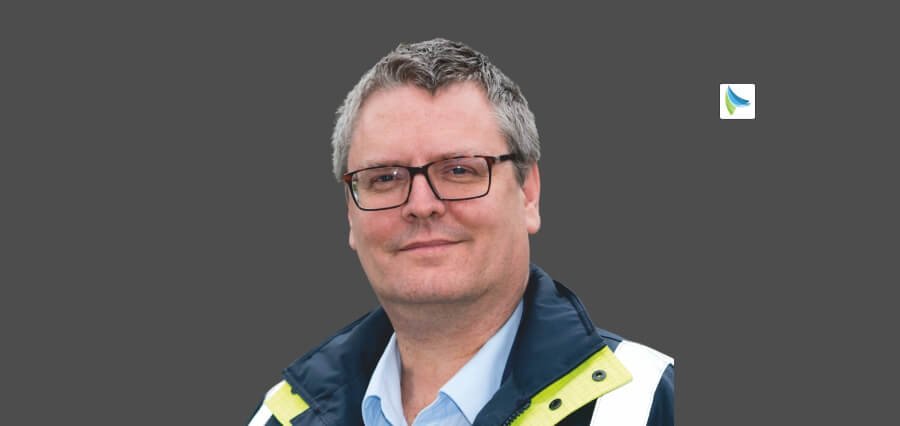
There is a photograph that does not exist but should. A young boy in Barcelona, who was in the factory of his father, and was observing the raw material change to something useful. Something that would find its way in the hands of the common people and slowly make their lives better. That picture, in memory genuine though not printed, tells practically all about Dr. Hans Michael Kellner. He had been brought up in industry transforming the world. He made the choice, at a tender age and without even a shade of uncertainty, to continue to do the same throughout his career.
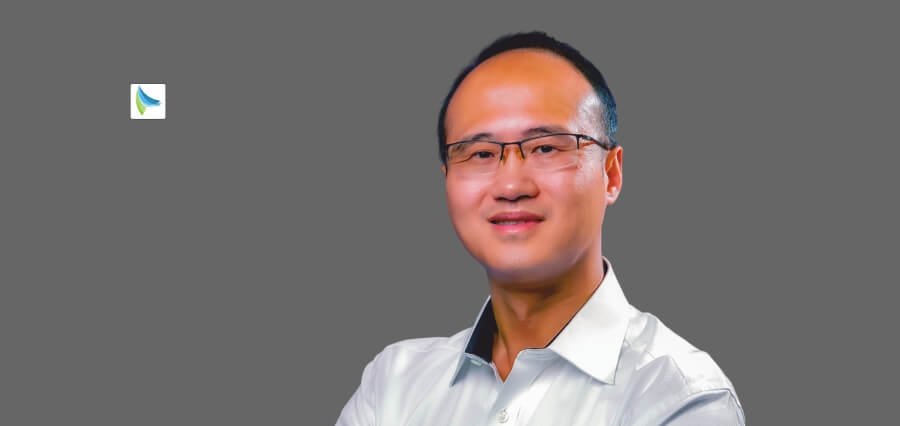
Today, as CEO of Messer Schweiz AG, Dr. Hans leads an organization at the precise intersection of industrial heritage and technological frontier. The company of the internationally operating Messer Group, Messer Schweiz, is the largest hydrogen supplier in Switzerland. The company increased its sales twice and its profits almost thrice during the 20 years of his leadership without reducing its workforce. It designed the first hydrogen filling station in the world with metal hydride technology.
It invented an industrial hydrogen compressor that consumes no electrical power, has no moving components and presses gas up to 700 bar. And it has accomplished all of this without losing what Hans considers the most asset that the company has a culture where people up actually want to attend.
Barcelona to Lenzburg: An Engineer’s Origin Story
Hans was born bilingual in Barcelona to German parents. He attended the German School there before his father’s death prompted a move to Germany. The loss arrived just before he finished school. It did not break his direction. It clarified it.
He enrolled at the University of Essen to study mechanical engineering in the combined field of energy and process engineering. Part-time work in mining brought him repeatedly into contact with process engineering plants. It eventually led to a diploma thesis on extracting pure oxygen from air through adsorption technology using activated carbons derived from hard coal. That thesis marked his first serious encounter with gases, a subject that would accompany him without interruption for the next four decades.
His doctoral thesis followed, grounded in intensive practical experience and producing his first invention. Specializations in food, medical, and specialty gases led to his first patent. A subsequent role as sales manager allowed him to combine technical expertise with commercial intelligence, laying the foundation for the CEO position he would eventually assume.
“The possibilities to change or improve something with gases seemed limitless to me. I learned to master their properties and the possibilities of extracting or separating them individually from each other,” he recalls.
Applied research, commercial discipline, and relentless curiosity became the signature of everything Hans would go on to build.
The Hydrogen Pioneer
Messer Schweiz AG has supplied Swiss industry with self-produced hydrogen for more than 70 years. But the company’s hydrogen story accelerated dramatically under Hans’s leadership, through a series of innovations that consistently placed it ahead of both the market and the regulatory landscape.
The trajectory began in the 1990s. Messer Schweiz supplied Switzerland’s first fuel cell car, the Esoro, with hydrogen. Next came a mobile hydrogen filling station, built to demonstrate the advantages of a fuel cell municipal sweeper at multiple locations. Then a stationary filling station to supply buses while a client completed its own electrolysis infrastructure.
The decisive breakthrough arrived through an unexpected encounter. EPFL in Sion had developed a hydrogen storage system based on metal hydride and presented it jointly to Lonza and Messer. During the presentation, the technology revealed an unanticipated second application: metal hydrides could function not only as storage but as an alternative hydrogen compressor.
“Metal hydrides form a chemical bond with hydrogen immediately upon contact at ambient temperatures. If this is done in a closed container, the pressure increases. Electrical energy is not required for compression, even up to 700 bar,” Hans explains.
That insight produced the world’s first hydrogen filling station with metal hydride, refuelling Switzerland’s first fuel cell forklift truck. It also produced the world’s first industrial hydrogen compressor with metal hydride for filling hydrogen transport vehicles. Two further inventions followed: a thermal compressor for industrial gases and a fuel-free power generator that converts waste heat into electricity around the clock.
At the international Greentech Festival, the private hydrogen filling station was voted one of the three best solutions in its category. Their technologies earned front-page coverage in Switzerland’s largest Sunday newspaper. The company holds the Swiss Arbeitgeber Award certification for 2026, Dun and Bradstreet’s lowest risk company recognition, and the Greentech Festival Top 3 designation. Hans serves as President of the Swiss Industrial Gases Association and Vice-President of Hydropole, the internationally active hydrogen association.
Economic Environmental Protection
Hans is not a conventional environmentalist. He approaches sustainability with an engineer’s discipline and an entrepreneur’s realism. The combination produces a philosophy he calls economic environmental protection.
“Developing sustainable, energy-efficient solutions that remain competitive is my focus. Additional costs are only bearable to a limited extent in a globalized world,” he asserts.
He asks a question most innovators skip: what if this solution were implemented worldwide? What downstream problems might it create, and how can those be anticipated today? That question prevents today’s innovations from becoming tomorrow’s burdens, in the same way oil, asbestos, and plastics created problems their inventors never foresaw.
His vision extends far beyond Switzerland. He sees emerging economies as entitled to industrial prosperity, but without the environmental cost that Western development extracted. He envisions plastics made from recovered carbon dioxide and surplus hydrogen rather than crude oil. Synthetic natural gas produced through the same processes. Emission-free mobility for populations not yet locked into fossil fuel infrastructure.
“Other regions of the world are only at the beginning of their industrialization. They should not have to repeat the same mistakes, but benefit from our progress,” he says.
The Leader Behind the Lab
Inside Messer Schweiz, Hans runs an organization shaped by values he practices visibly. Once a month, the company holds a cross-hierarchical breakfast. Employees from every level exchange idea, raise cross-departmental questions, and connect as people. The meal is funded by the company and scaled to the commercial success of the preceding month, making shared achievement tangible and immediate.
Equal pay between men and women is a non-negotiable standard. Flexible working arrangements are supported. Training programs, including private ones, receive company backing where they deliver business benefit. Every new employee receives a personal conversation with Hans before joining, confirming that values align and genuine integration is possible from day one.
“The greatest relief I experience comes from satisfied employees who enjoy working for the company and the team,” he mentions.
During the COVID-19 pandemic, this culture proved its resilience. As a systemically important company supplying medical oxygen and pharmaceutical gases, operations could not pause. Hans activated a pandemic process established years earlier during the bird flu period. The workforce split into two strictly separate rotating groups. A UV-based decontamination container for returned gas cylinders was developed within weeks. Supply remained uninterrupted throughout, including critical pharmaceutical gases to a vaccine manufacturer. Many employees felt the plant was safer than their own homes.
Curiosity as Competitive Advantage
What sustains Hans across four decades is not ambition in the conventional sense. It is curiosity, pursued with the same methodical commitment he brings to every engineering problem.
“For me, it is not enough to deepen knowledge in a narrow area. I want to understand connections and create a comprehensive overview of a wide variety of topics,” he explains.
Over time, his purely technical perspective expanded into an unexpected direction. He began studying personality structures and body language, learning to read the unspoken expectations that shape decisions far more powerfully than logic alone. That understanding sharpened his ability to lead across cultures, build diverse teams, and unlock creative potential from people with different life experiences.
He also learned to trust instinct alongside analysis. Gut feeling, refined over decades, now enables fast and clear decisions without the paralysis that comes from waiting for absolute certainty.
“Those who hesitate or wait for absolute certainty too long often miss valuable opportunities. That contradicts entrepreneurship,” he asserts.
For aspiring leaders, his counsel centers on one principle: openness. To other opinions. To unconventional approaches. To ideas arriving from entirely outside the industry. He has watched fragments of thinking from different team members combine into solutions no single mind would have produced. That experience has made Hans deeply committed to creating conditions in which people think freely and speak without fear.
A Mantra for the Long Game
Hans has built his career on a single conviction: negative events carry positive information for those willing to look. Every solution worth building must be holistic, forward-looking, and honest about the problems it might later create.
“Every negative event also has a positive side to it. Look for it consciously, because it often shows you the right way. With this attitude, there are no defeats that can break your motivation,” he reflects.
If an action cannot be realized even on the third attempt, Hans does not call it failure. He calls it information. A signal to let go, or to find a better path forward. That mindset has carried him through four decades of experiment, invention, and leadership without losing the enthusiasm that began in a university lab in Essen.
In Lenzburg, Switzerland, a company that has supplied gases for over hundert years and hydrogen for seven decades stands at the frontier of the mobility economy. The world’s first metal hydride hydrogen compressor. A fuel-free power plant running on waste heat. Sales doubled. Profits nearly tripled. Workforce constant.
Hans did not arrive at this moment by accident. He built toward it, one experiment, one invention, and one trusted employee at a time.