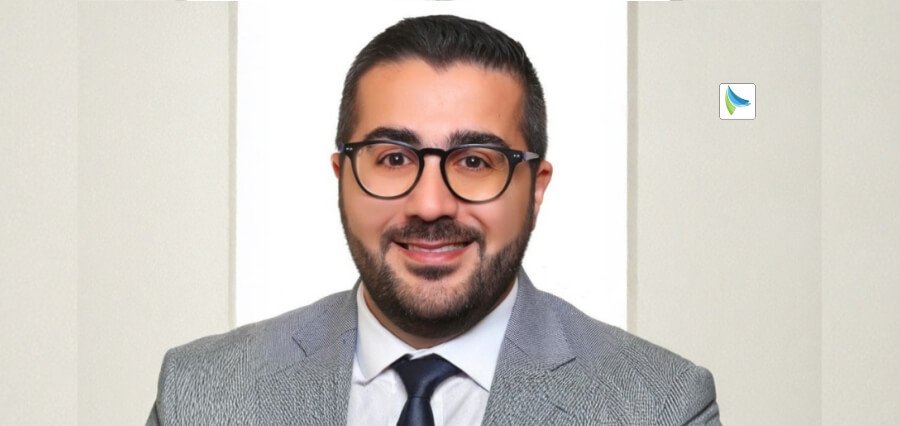




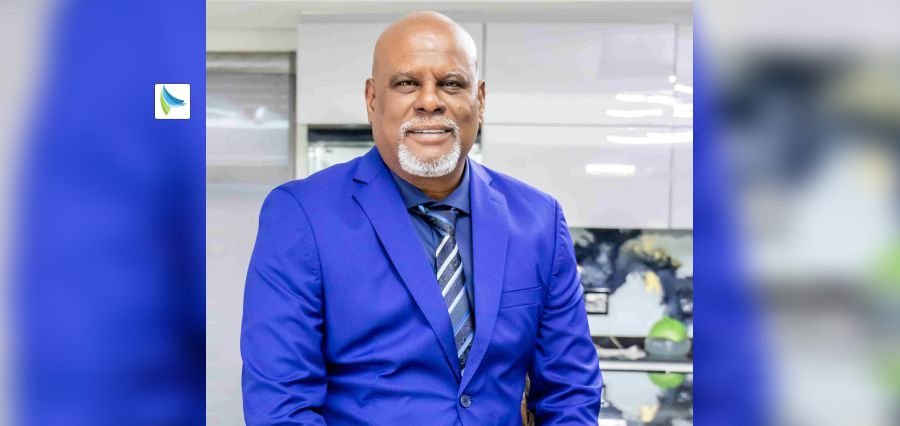
In Sub-Saharan Africa, the industrial revolution is bringing about a shift that focuses on the fundamentals of corporate culture and human development rather than just market data. This shift is being led by Boston Moonsamy, Managing Director of Azelis South Africa. His work history is less conventional and more proof of the efficacy of synthesis. He is a special and potent fusion of the rigorous analytical approach of a research scientist, the caring insight of a mentor, and the comprehensive strategic thinking of a business architect. His core belief is simple yet profound: the people who depart each evening and, ideally, return the next day are the most valuable assets any organization possesses.
Moonsamy’s story spans over three decades, marked by transitions through multinational corporations, high-stakes entrepreneurial ventures, strategic acquisitions, and ultimately, continental expansion. Yet, the true compelling force behind his success is the animating philosophy that guides every decision: the conviction that business excellence emerges not from dominating markets but from building authentic partnerships, not from extracting value but from creating it, and not from commanding followers but from lifting others. In an industry often dominated by technical specifications and profit margins, Moonsamy has charted a course that honours both the science and the soul of leadership, demonstrating that commercial success and ethical conduct are not opposing forces but complementary elements in a single, integrated vision of excellence.
The Foundation: Where Character Meets the Chemistry of Possibility
Long before navigating multi-million-dollar acquisitions or leading teams across four African nations, Moonsamy’s character was meticulously forged in the modest classrooms and spirited playing fields of Verulam Secondary School. The year was 1985, and the young scholar-athlete was already demonstrating a defining pattern: excellence is not confined to a single domain. It is a fluid concept, connecting intellectual rigour with physical discipline, academic achievement with teamwork, and individual brilliance with collective success.
His achievements were not simply accolades; they were indications of his future leadership style. He earned provincial colours in football, secured the Science Course Award and the Mathematics Award, and, crowning them all, the coveted Dux Award. This Dux recognition was reserved for those who achieved a synthesis of excellence across disciplines. The skills honed on the football field, reading the game, anticipating the play, understanding when to pass versus when to shoot, and knowing that victory belongs to the team, would prove just as vital in the boardroom as any formula learned in the lab.
The Intellectual Crucible at University
The transition to the University of Durban-Westville offered a deeper immersion into the complex, invisible world of chemistry and biochemistry. Moonsamy was not merely absorbing information; he was cultivating a methodology and mindset that would distinguish his leadership decades later. The laboratory became his first teacher in the principles of organizational and strategic management:
- Patience: It taught him that some reactions cannot be rushed; strategic growth requires time.
- Precision: Small variations in measurement or execution yield dramatically different outcomes; attention to detail is non-negotiable.
- Humility: Nature reveals its secrets only to those who approach it with respect and rigorous discipline; the market demands the same deference and work ethic.
When he completed his Honours degree in Biochemistry in 1990, he possessed more than academic credentials. He had internalized a framework for understanding complexity, a comfort with uncertainty, and a profound appreciation for the forces that transform raw materials. These lessons would become invaluable when the raw materials shifted from molecules to people, from formulations to business strategies, and from laboratory reactions to organizational transformations.
The Making of a Leader: Chevron and the System’s View
The next decade began in 1991 when the laboratory doors of Caltex/Chevron opened to welcome a young Research and Development Chemist. For most, this would have been a satisfactory first role. For Moonsamy, it was a masterclass in the pragmatic intersection of science and commerce, precision and pragmatism, and innovation and execution.
His R&D years were spent immersed in the intricate dance of molecular engineering: understanding how additives modify base oils, how viscosity indices translate to engine performance, and how friction coefficients influence fuel efficiency. Yet, the true education lay beyond the bench. Moonsamy learned to see that laboratory excellence is useless if it doesn’t solve real customer problems, can’t be manufactured reliably, and fails to create economic value.
The Strategic Pivot
This critical insight catalyzed his 1996 transition into Chevron’s Supply Chain and Planning Division. This was a move many purely technical professionals might resist, leaving the satisfying precision of the lab for the “messier” realm of procurement, production scheduling, logistics, and commercial operations. Moonsamy understood why the move was necessary: leadership requires seeing the whole system, not just your favourite part of it.
“Chevron instilled in me a deep respect for process discipline and technical rigor,” he reflects. “Working across R&D and supply planning taught me the value of precision, collaboration, and data-driven decision-making”. This period was transformative in a non-technical sense, too. He discovered that his true gift was not just technical competence, but the ability to translate complexity into clarity, bridging the gap between the technical language of scientists and the commercial imperatives of salespersons, and between global strategies and local execution. This translation capacity, the ability to “speak multiple languages” within the same organization, became his signature strength.
The Entrepreneurial Ascent: Building the Umongo DNA
By 2001, Moonsamy had accumulated a decade of robust corporate experience, mastered the technical and commercial nuances of the lubricants business, and earned widespread respect. For many, this path offered a comfortable, predictable career trajectory. But within him was a restlessness, a vision that employment could not fully realize.
Following a brief, insightful stint at African Petroleum Additives and Chemicals, Moonsamy made the defining leap in 2005: co-founding Umongo Petroleum Additives. “The inspiration came from a desire to create a business that could bridge global innovation with local market needs,” he recalls. Starting a technical distribution company in a highly relationship-driven industry, dominated by decades-old, established players, required more than just capital or knowledge. It required the courage to exchange security for possibility and to build from scratch.
The Crucible of Entrepreneurship
The early years were a relentless test. Regulatory complexities became labyrinths. Supplier relationships, which appear straightforward on paper, required years of consistent performance to solidify. Most critically, the customer trust that was automatically assumed when representing a global brand now had to be earned, transaction by transaction, under an unknown African name.
These challenges did not erode their resolve; they refined it. The Umongo team made a fundamental, competitive choice: they would not compete on price or volume, but on something far more difficult to replicate- excellence.
- Technical Excellence: Superior product knowledge and application support.
- Operational Excellence: Unwavering reliability and responsiveness.
- Relational Excellence: Deep understanding of customer needs and customized solutions.
- Ethical Excellence: Transparency and accountability in all dealings.
This commitment crystallized into the “Umongo DNA”, a cultural code built on passion, excellence, integrity, and people-first leadership. “We wanted to build a team that could lead with purpose, serve with passion, and grow together,” Moonsamy explains. This DNA manifested in key priorities: hiring for attitude, investing in talent development and relationship cultivation, and ensuring every interaction demonstrated professionalism and market understanding.
The results were undeniable. By 2014, Umongo had expanded into base oils, introduced Chevron Group II base oils to the South African market, and evolved into Umongo Petroleum. The young African company, which once fought for credibility, now commanded respect as a preferred partner for global giants, secured through the most reliable currency in business: consistent excellence and authentic relationships.
The Integration Imperative: Scaling with Intent
By 2017, Umongo Petroleum had achieved the rare feat of sustainable profitability and strategic value, attracting larger players. When Omnia Holdings, a diversified South African chemicals group, acquired a majority stake, Moonsamy faced a crucial choice: exit or evolve. He chose evolution. Remaining as CEO and shareholder, he saw Omnia’s resources as an accelerator for Umongo’s growth. This required a delicate balance: integrating without assimilation and accessing scale while maintaining agility.
The integration process was a test of resilience, vision, and aligning technical and commercial excellence with customer-centricity. The decision was clear: systems could adapt, reporting could evolve, but the commitment to customers, the investment in people, and the insistence on technical excellence were non-negotiable.
The Azelis Transformation
The year 2022 brought an even greater magnitude of change. Azelis, the Belgian headquartered global innovation service provider, acquired Omnia’s shares. This wasn’t merely a change of ownership; it was an invitation to play on a vastly larger, global stage, expanding beyond lubricants into life sciences and industrial chemicals. Moonsamy was appointed Managing Director of Azelis South Africa.
The challenge was formidable: merging two distinct organizations, Umongo Petroleum and Orkila South Africa, into one cohesive Azelis platform. “The integration was both structural and cultural,” Moonsamy notes. Umongo contributed deep technical expertise in lubricants and petrochemicals, while Orkila brought an established footprint in life sciences and industrial chemicals. The goal was to preserve the unique strength of each while building a shared future.
His leadership approach during this complex period was instructive. He did not impose a top-down plan; he listened- extensively, intentionally, genuinely. He brought teams together to co-create solutions, acknowledged the anxieties of change, and articulated a vision compelling enough to justify the journey. He respected organizational histories while refusing to be imprisoned by them.
Crucially, Moonsamy stretched his own comfort zone. The lubricant master now needed to understand pharmaceuticals, personal care, and food ingredients- sectors with entirely different regulatory frameworks. He did not default to authority; he approached these new domains with a learner’s humility, systematically building knowledge from subject matter experts. This willingness to be a perpetual student, even in the most senior role, was a powerful cultural message: expertise matters, but curiosity matters more. The resulting unified Azelis South Africa was technically excellent, commercially sophisticated, and culturally cohesive.
Continental Leadership: The Architecture of Empowered Autonomy
April 2024 marked the next inflection point: Moonsamy expanded his mandate beyond South Africa to encompass key growth markets in Kenya, Ghana, and Nigeria. This was recognition that his leadership principles could scale across one of the world’s most diverse and dynamic regions.
Sub-Saharan Africa presents a unique set of challenges: dramatically varied economic conditions, regulatory environments, infrastructure quality, and supply chain logistics. These conditions demand a leadership style that can balance standardization with localization.
Moonsamy’s strategic answer is “empowered autonomy”. This model gives country teams and business segment leaders the authority to make decisions best suited for their local markets, while maintaining alignment with shared values and strategic priorities. “What makes Azelis unique is our specialized business model,” he explains. Each market segment, from lubricants and personal care to pharma and food ingredients, is led by dedicated, technically proficient teams. This structure allows the organization to be laser-focused in each vertical while remaining agile enough to respond to rapid market shifts.
Under his leadership, Azelis Sub-Saharan Africa now operates across an impressive breadth of sectors:
- Pharma & Healthcare
- Personal Care
- Food & Nutrition
- Agricultural & Environmental Solutions
- Animal Nutrition
- Homecare & Industrial Cleaning
- CASE (Coatings, Adhesives, Sealants, and Elastomers)
- Performance Chemicals
- Advanced Materials & Additives
- Lubricants & Metal Working Fluids
The mining industry, a major consumer of petroleum products in the region, illustrates Moonsamy’s sector strategy. Azelis offers complete solutions for specialized equipment, leveraging partnerships with global principals to deliver high-performance lubricants that maximize productivity and equipment reliability. The company’s lubricants and metalworking fluids division possesses strong technical capability to formulate customized solutions- a value proposition that goes far beyond simple distribution. “High performance lubricants are key to maintaining productivity through equipment reliability and efficiency,” Moonsamy asserts. This commitment reflects the evolution from simple product supply to sophisticated technical support, application engineering, and consultative partnership.
The Philosophy: Leadership as Service and Elevation
If his career is a structure, his philosophy is the bedrock: “We don’t just do supplier and customer relationships. We build business partners”. This is not aspirational marketing; it’s an operational framework that prioritizes investments and defines success.
Reciprocal Value Creation
The partnership ethos starts with global principals. These relationships are built on transparency, technical excellence, and mutual respect. Principals partner with Azelis because the organization understands African market dynamics, navigates regulatory complexities, provides vital local market intelligence, and delivers technical support that enhances product adoption.
Moonsamy emphasizes the importance of principals providing resources like co-branded marketing, promotional materials, and essential training programs to educate distributor teams. However, this partnership flows in both directions. Azelis actively contributes market insights, identifies emerging opportunities, suggests product adaptations for local conditions, and provides feedback that informs the principals’ product development strategies. This reciprocal value creation is what truly distinguishes a genuine partnership from a hierarchical vendor relationship.
Customer Intimacy and Internal Mentorship
With customers, the partnership translates into “customer intimacy”, a commitment that extends beyond the product itself to encompass problem-solving, application engineering, and consultative relationships. Whether serving a pharmaceutical manufacturer in Nairobi, a food processor in Lagos, or a mining operation in Ghana, the approach is consistent: listen deeply, leverage global and local expertise to design appropriate solutions, and measure success by customer outcomes.
This requires significant investment: application laboratories, technical training programs, customer education initiatives, and co-development projects- costs purely transactional distributors would deem unwarranted. Moonsamy views these as essential infrastructure for partnership. “We don’t just sell products; we co-create solutions,” he emphasizes.
Internally, this philosophy shapes his approach to leadership. He rejects hierarchical models where authority is hoarded. Instead, he counsels emerging leaders: “Be generous with what you know”. “One of the most powerful things you can do as a leader is to share your experience, teach others, and create space for people to grow. I’ve always believed that leadership is not about holding onto knowledge; it’s about passing it on”.
The Future Template: Sustainability, Innovation, and Digital Soul
Moonsamy has strategically positioned sustainability not as a compliance obligation but as central to Azelis South Africa’s competitive differentiation. Through the Azelis Impact 2030 initiative, the organization commits to reducing environmental impact, promoting bio-based products, and supporting circular economy principles. This commitment is validated externally by a Sustainalytics ESG low risk rating and AA MSCI rating.
“Sustainability is central to our strategy,” Moonsamy states with conviction. Azelis South Africa actively explores bio-based lubricants, energy-efficient formulations, and products that reduce friction and energy losses in industrial applications. Their application laboratory is key to providing customized solutions that balance performance with environmental responsibility.
Beyond environmental concerns, sustainability encompasses social impact. Moonsamy serves as trustee of the George Ramalu Trust, a non-profit dedicated to corporate social responsibility, focusing efforts on education, entrepreneurship support, and community upliftment. “We rise by lifting others,” he often says, reflecting his belief that business success creates an obligation to contribute to community advancement.
The Role of Technology
In Moonsamy’s framework, innovation is not confined to product development; it includes business model innovation and cultural evolution. “Innovation thrives when leadership is accessible and when people feel their contributions matter,” he observes.
Digital transformation is approached not as an end in itself, but as an enabler to enhance customer experience, supply chain visibility, and operational efficiency. “Azelis is embedding a digital platform ecosystem into its operations, enhancing customer engagement, supply chain visibility, and product innovation,” he explains. For the South African operations, this means smarter ordering systems, predictive analytics, and seamless communication with customers and principals. In a region with diverse logistical and regulatory challenges, these digital capabilities provide a critical competitive advantage. However, Moonsamy maintains that technology only amplifies existing capabilities; it cannot substitute for human judgment, relational trust, or ethical conduct. Digital transformation only succeeds, in his view, when it enhances rather than replaces human connection.
The Person: Leadership Rooted in Life and Legacy
Leadership does not emerge from career experiences alone; it is forged in the totality of life, shaped by family, tested by adversity, and sustained by values. Moonsamy’s late parents, from humble beginnings, instilled fundamental, guiding values. “My dad always told me to reach for the stars,” he recalls, an encouragement that became internal fuel during the inevitable moments of doubt that accompany entrepreneurship.
His wife, Sandy, is his unwavering pillar of support. “Her strength, wisdom, and belief in me have carried me through the most challenging moments,” he says. She provides the essential perspective when situations feel overwhelming and the steadfast belief when confidence wavers.
Their three sons offer daily reminders that significance extends beyond boardrooms and market share. “They teach me daily that there is life beyond business, that the little moments enjoyed are sometimes greater than the biggest business deals,” Moonsamy reflects. This integration of personal and professional life, far from a distraction, strengthens his leadership by imbuing it with greater wisdom, perspective, and resilience. His commitment to balance is clear: carving time for reflection and fitness and maintaining presence whether in boardrooms or at home. “Family, health, and legacy are non-negotiables for me,” he concludes.
Recognition and Perpetual Learning
In September 2025, Moonsamy’s impact was formally acknowledged when GLOBIZ 50 awarded him the Lifetime Achievement Award in Lubricants and recognized him among the Top 50 Highflyers 2025. For him, this recognition serves less as a culmination and more as a confirmation that the chosen path, prioritizing relationships over transactions, excellence over expediency, and people development over personal advancement, produces outcomes that others value.
He serves on the Executive Committee of Azelis MEA and as a member of the Advisory Board for the ICIS Africa Base Oil Conference. These roles reflect his conviction that leadership involves an obligation to lift entire industries, not just individual organizations. “I stay curious and I stay connected,” he says when asked how he continues learning after three decades. “The moment you think you’ve arrived is the moment you start falling behind”. He deliberately engages with people at every organizational level, from technical teams in laboratories to commercial leads in the field, recognizing that wisdom resides throughout the organization. This commitment to perpetual learning models a humility that powerfully influences organizational culture, granting permission to all to challenge assumptions and pursue continuous improvement.
The Vision: An Enduring Legacy of Principles
Looking ahead, Moonsamy’s vision for Azelis Sub-Saharan Africa is clear: it’s about “scale with soul”. The goal is “Growing responsibly, inclusively, and with lasting impact”. This ambitious vision encompasses geographic expansion, portfolio diversification, digital capability enhancement, technical infrastructure investment, and, most importantly, talent development to ensure a robust leadership pipeline.
For the lubricants industry, he anticipates a continued evolution toward high-performance synthetics, sustainability-focused formulations, and digitally enabled customer experiences. He understands that customers are more informed and demand not just products, but technical support, training, and value-added services. Leading in this environment requires the delicate balance that has defined his career: global standards with local relevance, technical excellence with commercial agility, and growth ambitions with ethical grounding.
Beyond specific business objectives, Moonsamy’s ultimate vision encompasses legacy. “I want Azelis SA to be known not just for what we achieved, but for how we achieved it- with integrity, empathy, and purpose,” he states. This focus manifests in his commitment to mentorship and investment in young professionals. “Leadership isn’t about being the loudest voice in the room; it’s about helping others find theirs,” Moonsamy counsels. “If you can lead with purpose, stay grounded in your values, and commit to developing those around you, not only will you succeed, but beyond that, you will leave a legacy”.
Moonsamy’s journey from the sugar estates of Mount Edgecombe to continental leadership of Azelis Sub-Saharan Africa is a powerful demonstration that transformative leadership emerges not from domination but from service, not from extraction but from value creation, and not from self-promotion but from lifting others.
His career proves that while technical expertise is necessary, it is insufficient for sustained impact. What distinguishes truly transformative leaders is the capacity to inspire trust, navigate complexity with clarity, maintain ethical grounding, and build organizations that are rooted in principles rather than personalities. The “Umongo DNA” he cultivated, passion, excellence, integrity, and people-first leadership, continues to animate his work, shaping the very cultural norms and operational rhythms of Azelis.
As Africa’s industrial sectors continue their ascent, the leadership template Moonsamy provides becomes ever more relevant. It suggests that sustainable excellence on the continent requires leaders who respect local realities while understanding global standards, who leverage technology while honouring relationships, and who achieve commercial success while contributing to social advancement.
The greatest lesson from his early years was this: transformation requires the right elements combined in proper proportion under appropriate conditions with sufficient time- a truth applicable equally to chemical formulations and organizational leadership. Today, as he leads Azelis Sub-Saharan Africa, Moonsamy carries the conviction that business at its best creates value for all stakeholders, that leadership at its finest elevates others, and that the most enduring legacies are written not in annual reports, but in the careers launched, the standards elevated, and the possibilities expanded for those who follow. It is a quiet testimony that true leadership measures its success not by what it accumulates but by what it creates, and not by whom it controls but by whom it liberates to achieve their fullest potential.