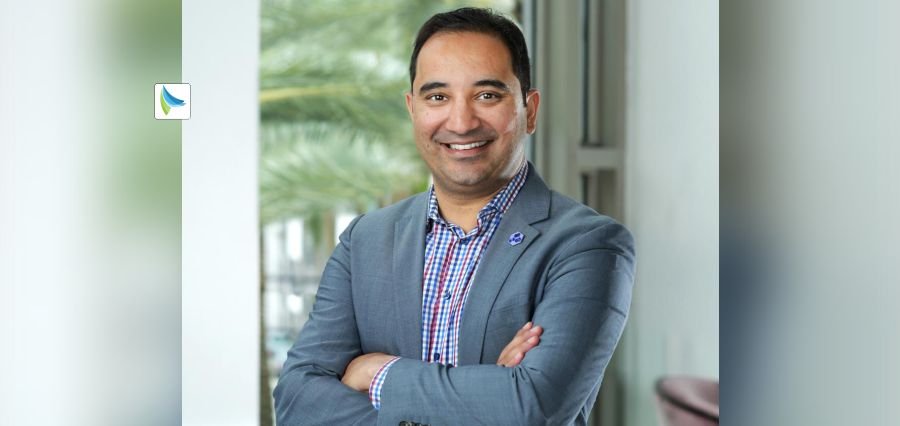



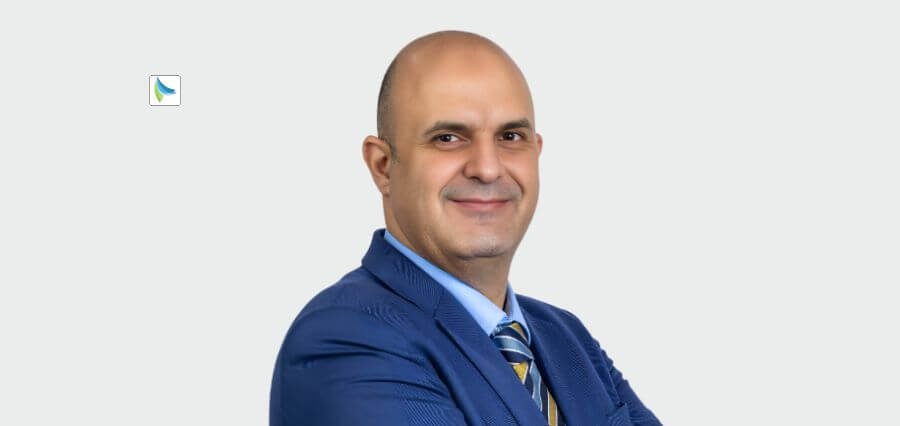
When the majority of people look at the skyline, they see buildings. Ayman Yahya sees something entirely different: decisions, alignments, and leadership moments that took place long before construction ever began.. In today’s complex development landscape, he believes success is not defined on site, but much earlier within the design phase, where vision, strategy, and execution are first aligned. This perspective has not only shaped his career, but also positioned him among a new generation of leaders redefining how major projects are delivered across the Middle East.
He is squarely in the second category, and today, as Vice President of Design Services in the Dar Al Riyadh Group, which is one of the oldest engineering consultancies in the Middle East, he is one of the most convincing solutions to all of them. His path is not only purposeful, very precise, but also filled with unwavering confidence that great infrastructure is built way before it is even paved with the first brick.
The Foundations of a Builder
Long before boardroom decisions defined his days, Ayman was a young man captivated by a simple question: how do cities grow, and how does thoughtful design shape the people who live in them? He discovered early that infrastructure was never just about pipes and pillars. It was about purpose.
That curiosity drove Yahya to pursue Industrial Engineering at the University of Jordan, where he built the technical foundation that would anchor his career. He then sharpened his leadership instincts through an MBA at the New York Institute of Technology, equipping himself with the ability to operate at the intersection of technical delivery and strategic leadership.
His early career placed him in project and design management roles, where he coordinated engineers, architects, and urban planners across major developments in the Middle East. Healthcare complexes require precision and sensitivity. Hospitality developments demanded aesthetic intelligence. Mixed-use urban projects called for both technical mastery and stakeholder diplomacy. Each project reinforced one truth: the real challenge in infrastructure is never merely technical. “From the very beginning, I understood that delivering a project is only part of the equation. The deeper challenge is building the right team and creating the right environment for them to succeed,” he says.
From Execution to Elevation
As his career evolved, so did his perspective. He recognized that organizations delivering large-scale design programs often excelled at technical output but struggled with governance, coordination, and long-term strategy. He shifted his attention from project delivery to organizational performance, a move that marked his transition from accomplished practitioner to strategic executive.
“Infrastructure and design are among the most powerful tools for shaping the future of societies,” Yahya reflects. That conviction became his compass. He invested his energy in building the frameworks, teams, and operational systems that would allow organizations to perform at a consistently higher level, year after year.
Today, He leads multidisciplinary teams responsible for major design portfolios serving government and institutional clients across the region. He drives strategic planning, shapes governance frameworks, and builds client relationships that transform single contracts into enduring partnerships. In a sector where trust is the most valuable currency, He has spent two decades accumulating it. “When clients trust you with their most ambitious programs, you are not just managing a contract. You are carrying their vision, and that responsibility never leaves you,” he states.
The Shift That Defines Modern Projects
As projects across the region continue to grow in scale and complexity, Yahya has become a strong advocate for a critical industry shift: elevating design management from a coordination function to a strategic leadership discipline.
“Today, project success is no longer determined during construction, it is determined by how effectively the design phase is managed,” he explains.
In his experience, three factors consistently define successful developments. The first is early stakeholder alignment, ensuring that all parties, from clients and operators to consultants, share a unified vision from the outset. The second is integrated multidisciplinary collaboration, where architecture, engineering, sustainability, and operational requirements are aligned early to avoid fragmentation. The third is strong design leadership, connecting technical teams with strategic objectives to ensure long-term value creation.
This approach has enabled him to position design as a key driver of efficiency, performance, and return on investment in large-scale developments.
Milestones that Matter
When Ayman reflects on his achievements, he does not speak in terms of projects completed, but in terms of systems improved, organizations strengthened, and long term value created..
His portfolio spans healthcare, hospitality, education, residential, mixed-use, and large-scale urban programs across more than two decades, a breadth that speaks to both his versatility and appetite for complexity.
One accomplishment he holds closest is an initiative that elevated client satisfaction levels to nearly 90 percent, reflecting years of systematic improvement in coordination, quality management, and stakeholder communication. “Client satisfaction at that level does not happen by accident. It is the result of consistent communication, rigorous quality processes, and a genuine commitment to delivering beyond expectations,” he highlights.
Another defining milestone was the establishment of a cross border design delivery platform in Amman, Jordan. An initiative that introduced a scalable operational model, enhanced quality governance, and significantly strengthened Dar Al Riyadh’s regional delivery capability..
He also played a pivotal role in cementing a strategic partnership with Oman’s Public Authority for Special Economic Zones and Free Zones (OPAZ), unlocking new opportunities within major economic development programs.
Additionally, he expanded the organization’s client base through engagements with prominent governmental entities and Public Investment Fund (PIF)-affiliated companies, placing the firm within Saudi Arabia’s transformative national development ecosystem.
When the World Stopped and How They Kept Moving
The COVID-19 pandemic did not spare the engineering and infrastructure sector. Projects were disrupted. Supply chains fractured. Teams built around physical coordination suddenly navigated an entirely different reality. For Yahya and his team, the crisis became a defining test of organizational resilience.
The first priority was continuity. Remote collaboration systems replaced in-person coordination, allowing teams to maintain progress despite physical restrictions. He understood that the pandemic demanded leadership grounded in transparency and steady communication. “In a crisis, people do not need perfect answers. They need consistent, honest communication from their leaders, and that is exactly what we focused on delivering,” he mentions.
The disruption also accelerated digital transformation already underway. BIM collaboration platforms, virtual coordination meetings, and digital project management tools moved from the edges of adoption to the center of operations. For those who adapted quickly, the crisis ultimately produced a more agile, more capable organization.
The Leadership Philosophy of a Systems Thinker
Ask Ayman Yahya about his leadership philosophy and he does not reach for management theory. He reaches for experience. Two decades in the field have taught him that effective leadership rests on three pillars: empowering people, building trust, and maintaining a relentless focus on long-term value.
He identifies strategic leadership combined with operational discipline as a core strength, aligning organizational objectives with practical execution frameworks that bridge the gap between vision and delivery. Stakeholder engagement sits equally at the center of his approach. In an industry defined by complex relationships between clients, government entities, consultants, and contractors, the ability to build trust and communicate transparently is not a soft skill. It is a competitive advantage.
Earlier in his career, he admits to having focused too heavily on technical details. Over time, he learned to delegate, trust his team, and redirect energy toward strategic direction. “The moment I stopped trying to control every detail and started trusting my team fully, the entire organization began performing at a different level,” he says. That shift produced a more collaborative leadership style, one where team members take genuine ownership and contribute ideas that move the organization forward.
Underpinning this philosophy is his belief that leadership must operate at both strategic and operational levels simultaneously. While vision sets direction, disciplined execution ensures results. Bridging this gap has been a defining element of his leadership approach.
The Man Behind the Title
Behind the executive title is a man who thinks deeply about sustainability, not just in infrastructure, but in life. Yahya does not subscribe to work-life balance as a perfect symmetry of hours. He practices priority management: identifying what matters most at any given moment and giving it the attention it deserves.
Family occupies a central place in that calculus. “My family has always been the constant that keeps me grounded. No matter how demanding the professional environment gets, that foundation at home gives you the clarity and energy to keep moving forward,” he states. Beyond family, he invests deliberately in continuous personal development, reading, staying engaged with industry developments, and maintaining the intellectual curiosity that first drove him into engineering. These habits are not luxuries for a busy executive. They are the foundation of sustained leadership effectiveness.
A Passion Rooted in Purpose
Yahya’s passion radiates through every answer he gives. He cares profoundly about the impact infrastructure has on the people who inhabit it. Urban development plays a critical role in defining quality of life in cities, and contributing to that transformation is what he describes as deeply motivating.
He reserves special enthusiasm for large-scale national development programs that now define the region’s ambitions. “When you work on a program that will shape an entire economic zone or transform a city quarter, you realize that what you are doing goes far beyond engineering. You are contributing to the way future generations will live and work,” he highlights. In an era when Saudi Arabia’s Vision 2030 reshapes entire cities and development zones across the Gulf signal generational transformation, professionals like he stands at a rare intersection of history and possibility.
More importantly, he is driven by the opportunity to influence how the industry evolves. By promoting stronger design governance and integrated delivery models, he aims to contribute to a more efficient, resilient, and future ready built environment.
Advice Forged in the Field
When aspiring leaders seek his guidance, he offers a framework shaped by two decades of real-world experience. Build strong technical and professional foundations first. Credibility begins with competence, and competence must be earned.
But technical mastery is only the entry ticket. Leadership lives in the human dimension, in the ability to motivate teams, resolve conflict, and align diverse perspectives toward a common goal. He urges emerging leaders to cultivate strategic thinking, to see the broader picture and anticipate challenges before they arrive. Above all, integrity must guide every decision. “Young professionals sometimes underestimate how far integrity takes you. Technical skills open doors, but your reputation for honesty and reliability is what keeps them open,” he mentions. Difficult situations, he argues, provide the most valuable learning opportunities, and the leaders who embrace them grow the fastest.
The Measure of a Legacy
In an industry often focused on immediate outputs, Ayman Yahya operates with a longer horizon. He builds organizations that outlast projects, teams that outgrow structures, and systems that continue to deliver long after completion.
His work reflects a broader philosophy: that the true measure of success is not what is built, but how it is built—and the lasting impact it leaves behind.
In a region undergoing unprecedented transformation, leaders like Yahya are not only delivering projects; they are shaping the frameworks through which future cities will be imagined, designed, and realized.
In a world that fixates immediate outputs, he keeps his eyes on a different horizon. He builds careers that become institutions, teams that outlast individuals, and projects that define skylines for decades. That is the clearest definition of a leader who truly belongs to any Hall of Fame.
“If the teams I have built continue to grow and deliver long after I have moved on, and if the communities we serve are genuinely better for the work we did, that is the only measure of success that truly matters to me,”