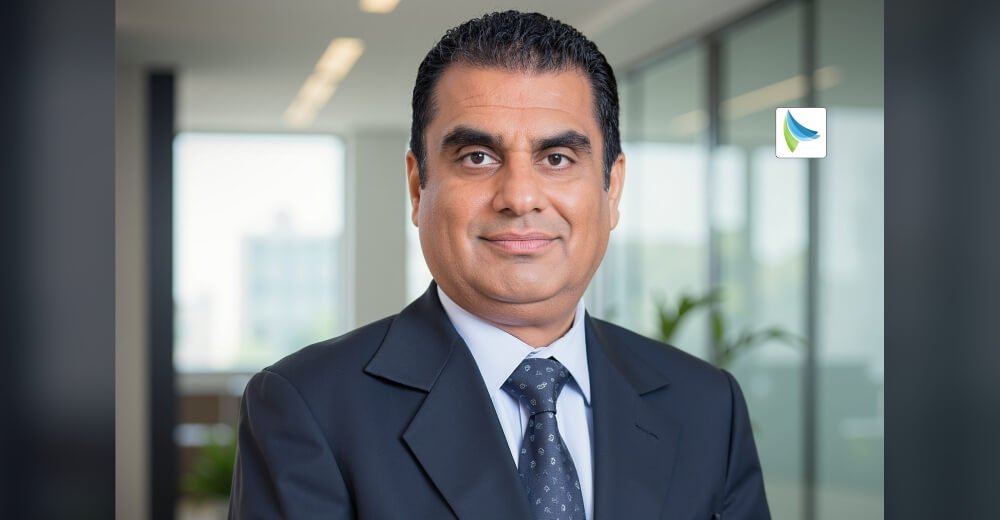



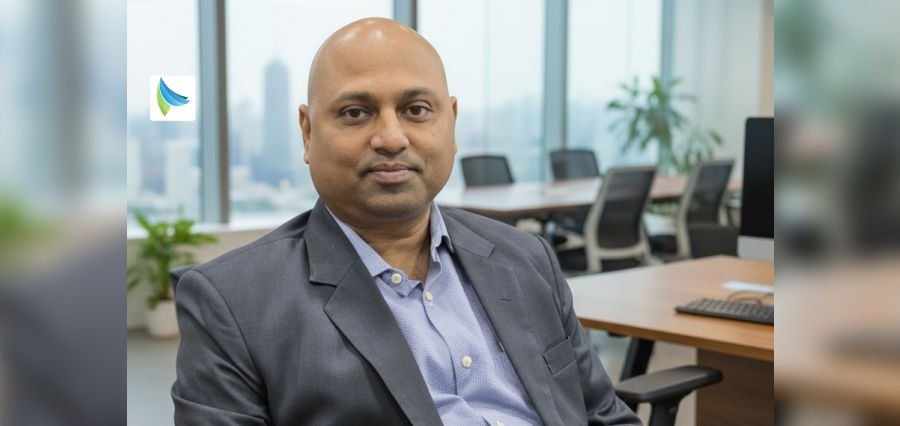
From growing up in the quiet, overlooked regions of Sitamarhi to commanding one of the country’s fast growing and vibrant institutional equity desks and steering many other financial services businesses, Awanish Chandra’s story exemplifies the power of resilience in the face of adversity. Growing up in a location where scarcity fosters ambition, he became the first person from his neighborhood to attend IIT, an accomplishment that opened doors far beyond what his surroundings could fathom.
What began as a career in mechanical engineering quickly took an unexpected turn as he entered Mumbai’s financial environment, discovering a calling he had never expected. Over the next 15 years, he developed a rare cross-sector expertise in stock research and institutional sales, earning his position via continual learning and unwavering ethical standards.
When he started at SMIFS Limited in 2021, the institutional equity desk was small, unknown, and working in an increasingly competitive business environment. Under his guidance, it grew into a vibrant, self-sustaining vertical with a rapidly expanding customer base and a reputation for conducting quality research in underserved areas.
Today, as Executive Director, he is a leader defined by persistence, clarity of purpose, and a profound commitment to the people that accompany him on this journey.
Roots and Early Aspirations
Thirty-five years ago, Sitamarhi barely registered on India’s map. Despite being the birthplace of goddess Sita in Hindu mythology, it remained largely overlooked until the Ram Janmabhoomi movement brought it into public consciousness. Sitamarhi was one of the most backward districts in north Bihar and Awanish Chandra grew up in this environment, where opportunities were scarce and ambitions necessarily modest.
“I was the first person from my area to crack IIT. Before that, majority of the people didn’t even know what IIT was. The place was so backward that these institutions weren’t part of our collective awareness and our teachers used to take IIT ambition as a pure dream,” he recalls.
His modest family’s ambition was simple yet profound for their circumstances: just secure a job after graduation. IIT represented that security, and he worked relentlessly to get there. He completed both his B. Tech and M. Tech in mechanical engineering from IIT Kharagpur, specializing in thermal engineering, before joining Tata Motors’ Engineering Research Center in 2004.
The Unexpected Turn
For almost two and a half years, Awanish Chandra worked as a mechanical engineer, seemingly on a predictable career trajectory. Then fortune intervened. He secured admission to NMIMS University in Mumbai for a full-time MBA in finance, marking his entry into the financial capital of India in 2007.
“Equity research was never something I planned to pursue. I wanted to work in an auto/manufacturing company and grow gradually in leadership role. But luck has its own plans,” he admits candidly.
After completing his MBA, he briefly joined the National Stock Exchange before a gentleman named Mr. Rajashekar Iyer offered him an opportunity that would define his career. In 2010, Chandra entered equity research through a portfolio management services firm, beginning his 15-year journey in capital markets.
Building Expertise Across Sectors
What followed was an intensive period of learning across multiple sectors and diverse kind of buy-side, sell-side and independent research arena, a rarity in an industry where analysts typically specialize in one or two domains. Chandra worked with Equitymaster, East India Securities, Centrum Broking, and Monarch Networth Capital, covering IT, Textiles, Auto & Auto Ancillaries and Mid/Small caps space with increasing expertise.
“At Centrum, I worked purely as an auto analyst for two years and received good ratings from the buy side and achieved decent Asia Money ranking in a very short period. Before that, I researched for various other sectors. This cross-sector experience proved invaluable later when I moved into leadership roles, because heading research requires you to guide team members across various sectors,” he explains.
By 2020, he had transitioned from pure research to leadership, heading Research and Sales functions for the institutional equity desk at East India Securities. This role combined his analytical skills with people management, setting the stage for his most significant career move.
The SMIFS (Earlier known as Stewart & Mackertich Wealth Management) Challenge
In July 2021, amid the COVID-19 pandemic, Awanish Chandra joined SMIFS Limited as a senior vice president in the institutional equity desk for research function. The company was virtually unknown, and the department he would soon lead generated less than two crore in annual revenue. Within a month, top management entrusted him with bigger role and he was leading the entire institutional equity desk.
The challenges were formidable. As an industry, despite good growth in market volume, Institutional broking business growth was limited as industry brokerage fees had plummeted multiple times due to technological advancement, regulatory changes and rising competition over 10-15 years. Competition from established players both domestic as well as MNC was intense. Most critically, there was a severe shortage of talent and bringing good talent was an uphill task due to resource and visibility constraints.
“This industry doesn’t nurture talent the way other established industries do. In the Auto sector, Companies such as Tata Motors and Mahindra & Mahindra have management training programs that create talent pools. But here most of the leading firms in institutional broking don’t have such programs. Talent never gets created systematically,” he observes.
Adding to the difficulty, other sectors had become more attractive, especially at the start of the career. IT companies, KPOs and banks began offering competitive compensation, while equity research salaries stagnated. For smaller firms like SMIFS Limited, acquiring and retaining trained professionals was nearly impossible; they would leave for better opportunities after gaining experience.
Yet Chandra saw opportunity where others saw only obstacles. He leveraged the relationships he had built over 11 years in the industry, recruiting talents he had worked with previously. Many joined despite SMIFS being an unknown brand, drawn by Chandra’s reputation and vision.
The Strategy: Finding White Spaces
Rather than competing head-on with industry giants, Chandra identified an underserved niche. While top broking firms focused on 300-350 large-cap companies, hundreds of good mid-cap and small-cap companies received minimal research coverage.
“The number of listed companies keeps growing along with companies having market cap above 1000 Cr grew at a fast clip as stock indices almost doubled in the last five years, plus huge number of companies got listed in the past couple of years having decent market cap, all this leading to bigger investment arena,” he explains. “While bigger firms such as Kotak and CLSA give more attention to bigger names such as Tata Motors, Hindustan Unilever, and Reliance, we focus on less discovered companies like Supreme Petrochem, Nitin Spinners and Styrenix. Our work is equally important to fund managers at big fund houses such as ICICI Prudential or HDFC Mutual Fund as almost all MFs invest in small caps as well.”
This differentiated approach delivered results quickly. Within two years, Chandra secured 40-50 institutional clients—mutual funds, insurance companies, treasuries, PMS firms, and alternative investment funds. The department’s revenue grew from less than two crore to twelve crore in just three and a half years.
More remarkably, the growth was almost entirely self-funded within the vertical. “Most broking firms lose 5-10 crore a year when starting institutional businesses and it requires long gestation period before making any money,” Chandra notes. “We never lost a single rupee in last three years. The growth was driven by self-generated fund rather than supported by external capital.”
The Human Element: Building a Stable Team
Perhaps Chandra’s most significant achievement was creating an environment where people wanted to stay. While most financial services firms experience 20-30% annual attrition, his department maintained an attrition below 5%.
“If your team keeps changing, clients neither trust you nor consider you for any business because your service becomes erratic,” he explains. “Continuity of services is crucial.”
How did he achieve this? Through what he calls “collective leadership”—a management style that emphasizes collaboration over hierarchy.
“I pitch in on actual work in almost everything,” Chandra says. “I don’t expect people to deliver 100% on their own. If someone completes 70% of the work, I contribute the remaining 30% to make it complete. It’s burden sharing, not delegation.”
This approach extends across research, sales, and dealing teams. When research analysis/reports need supporting hands, Chandra works alongside analysts. When sales teams need additional support, he personally opens doors. The flat organizational structure ensures everyone reports directly to him, avoiding the politics that hierarchical layers often create. Moreover, this approach has kept the overall costs in check.
“Managing everyone’s ego in the workplace becomes the biggest human task,” he reflects. “Sometimes I build healthy competition among teams, sometimes I foster alliance. It’s a delicate balance.”
Compensation management proved equally critical. Many team members saw their salaries increase three to five times over four years as the business grew. The company also introduced ESOPs two years ago, giving high performers equity stakes and aligning their interests with long-term success.
“At the end of the day, everyone works for money,” Chandra acknowledges. “Taking care of their commercial interests is essential.”
Equally important was taking care of emotional needs. The team has completed six office trips in three years—one every six months—for team building. “From me to the newest team member across hierarchy, everyone gets the same treatment, the same type of room. No differences,” he says. “These things build respect, trust, and team bonding.”
Expanding the Vision
With the institutional equity desk stabilized and growing, Chandra turned his attention to building a comprehensive mid-sized financial services firm. The company’s MD Mr. Ashiwini Tripathi and CEO Mr. Rahul Kayan entrusted him bigger responsibilities and promoted him as Executive Director. He revamped SMIFS’s dormant portfolio management service, which had existed for 6-7 years but generated no meaningful revenue. Awanish Chandra is working for building foundations for merchant banking division and the company has recently applied for the required license, which should be approved shortly.
“Institutional equity and merchant banking go hand in hand at a firm level, though there is a strong Chinese wall between them. Both require the same institutional clientele and investment idea presentation strength. It’s a natural extension where 60-70% of costs remain the same between departments, but you can grow your business non-linearly,” he explains.
The strategic logic is compelling. Research is expensive. Building research reputation and institutional clientele is time consuming and capital intensive. Without merchant banking revenue, at firm level monetizing all investment is very difficult.
The next frontier is international expansion. SMIFS recently formed an alliance with a US broker to distribute research to foreign institutional investors starting next month. “We haven’t covered even 50% of the domestic market yet, but getting into foreign clients is essential for the next phase of growth,” he says.
His forward-looking strategy includes three pillars: doubling domestic clients, expanding into APAC, US, and European markets, and adding as many research analysts as possible. “If I could find 10 more decent analysts today, I could recruit all and double my research strength,” he notes.
Principles Over Shortcuts
Throughout this remarkable growth trajectory, Chandra has maintained unwavering ethical standards. “In the financial world, many people take shortcuts for success—there are scandals, wrongdoing, regulatory issues. I never took any shortcut for success or earning money. That principle I still follow,” he states bluntly.
This commitment to integrity extends to his team management. Even in the face of business losses and setbacks resulting from team mistakes, Chandra hardly ever raised his voice at anyone. “I just tell them what went wrong and make sure it doesn’t happen again,” he says. “Taking all the hits without putting onus on my team members is something that works for me. I continue to believe in collective leadership”
His natural ability to control his temper despite enormous pressure has created a work environment where people feel safe to take calculated risks and learn from mistakes. This psychological safety, combined with clear expectations and genuine support, explains the exceptional employee retention rates.
Advice for the Next Generation
When asked about guidance for young professionals entering equity research world, Awanish Chandra emphasizes one critical skill above all: understanding financial statements.
“Loads of people are pretty bad at understanding balance sheets, profit-and-loss statements, and cash flows. Most equity research professionals, except chartered accountants, lack solid grounding in these fundamentals. Even engineers like me never had textbook learning of these concepts,” he says.
He advises aspiring fund managers, research analysts, and investment banking professionals to develop concrete understanding of all three financial statements and every term & its nuances in annual reports for achieving in this field. “If you have this foundation, all other things can be taken care of,” he assures.
Beyond technical skills, Chandra stresses the importance of continuous learning. “This business requires learning every day. You need to read constantly and be open-minded. The landscape keeps changing, and you must evolve with it.”
Navigating Technological Change
Regarding artificial intelligence disrupting financial services, Chandra offers a nuanced perspective. While he acknowledges AI’s growing role in retail broking, data analysis and routine knowledge process outsourcing work, he remains skeptical about its near-term impact on sophisticated equity research work.
“AI needs structured data to work effectively. In India, much data remains unstructured despite improvements over the last 7-8 years. More importantly, equity research isn’t just about analyzing annual reports and data,” he explains.
Research analysts conduct management interviews, perform channel checks, and synthesize multiple information sources to understand what companies actually do versus what management claims. “This work won’t be replaced by AI in five years,” Chandra predicts. “Perhaps in 15 years many changes are possible, but not in the near term.”
He does acknowledge that AI already helps with mundane tasks—ChatGPT assists with conference call notes and document summarization. But 80-85% of the analytical and relationship work remains irreplaceable by current technology.
The Legacy He Seeks
When asked how he wants to be remembered, Chandra’s response reveals the values that have guided his unlikely journey from Sitamarhi to Mumbai’s financial market.
“I want people to remember me as a good human being who helped them grow in their personal and professional careers,” he says simply. “If you help someone, your own growth and job satisfaction automatically follow.”
From a business perspective, he wants recognition for building something meaningful against formidable odds. “When many firms were closing and the industry wasn’t conducive to institutional broking, we created this,” he reflects. “As a leader, I want to be remembered as someone who always looked at growth but not at any cost—who never cut corners.”
This commitment to ethical growth, combined with genuine care for people and strategic clarity about market opportunities, has defined Chandra’s leadership. His team’s stability, the business’s profitability from inception, and rapid revenue growth all flow from these foundational principles.
Looking Ahead
As SMIFS prepares to launch international research distribution and awaits merchant banking approval, Chandra envisions growing the institutional businesses 3-4 times over the next four years. The hard work of building a twelve-crore revenue base without losses is complete. Now comes the scaling phase.
“We’ve created the platform. We want to double the team, add research analysts and sales people, and grow significantly from here,” he says.
In addition, SMIFS has recently recruited several senior leaders in their wealth management department and expect to grow that business as it has created some name over past five years.
For someone who never planned to enter equity research, who came from a modest family in a town so small that IIT was largely an unknown concept, and who joined a not-very known firm during a pandemic to build a department generating negligible revenue, Chandra’s achievements are remarkable. Yet he maintains characteristic humility about his journey.
“Fifteen years ago, I never imagined I would be where I am today. It just happened one by one, step by step with God wishes, the blessings of parents and support of well-wishers,” he reflects.
Perhaps that sequential, principled approach, building relationships over years, helping team members grow, focusing on underserved niches, and never compromising integrity for quick gains—is precisely what made the unlikely journey possible. In an industry known for aggressive competitiveness and high attrition, Awanish Chandra has demonstrated that a different path exists: one where success and human dignity advance together.