



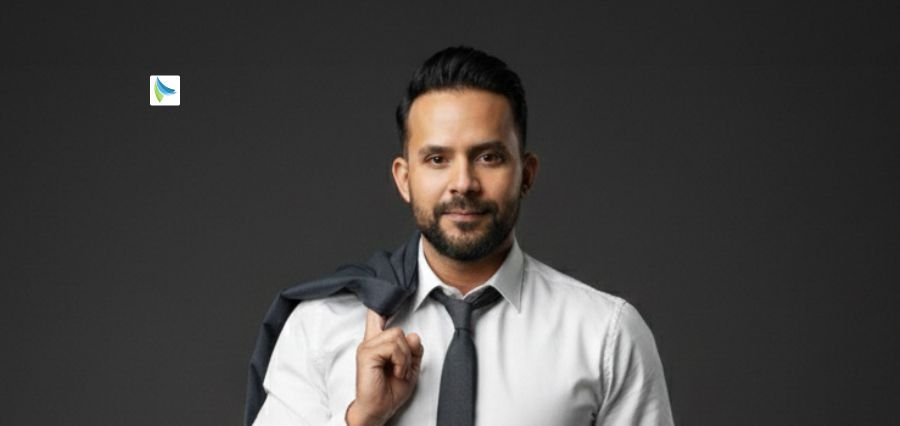
In a world where the loudest voices in business are the ones pursuing disruption, scale, and the next frontier in technology, Asif Jalil Mirza, CEO & Founder, CXAi and NCRI, exists in a different kind of space. He does not lead to noise. He leads with conviction. Having created two companies that operate on the international market, he could establish his reputation not by embracing the existing tendencies within the industry, but by being ever the swimmer against the stream. Where others viewed artificial intelligence to downsize, he viewed it to reclaim dignity.
The success was in the quality of the environments people walked into every morning, which was the measure of the success where other people measured it in margins and market share.
Forged By Loss, Shaped by Grit
The story of Asif does not begin in a corner office. It begins in the quiet, difficult corridors of early responsibility. His formative years carried a weight that most young people never encountered, the passing of his mother to breast cancer. That loss did not break him. It built him. It fast-tracked his maturity, sharpened his sense of accountability, and planted in him a resolve to never take people, or their presence, for granted.
Supporting his family while navigating the demands of early adulthood, Mirza worked odd jobs and pushed through hardship without the safety net of privilege. Formal education gave him structure and critical thinking, but he credits lived experience as his most formative classroom. Mentors, family members, and close friends became his faculty. The lessons they delivered, humility, perseverance, and emotional intelligence, did not appear on any syllabus, yet they form the bedrock of every professional decision he has made since.
This is not a backstory that Mirza wears for effect. It is a foundation that genuinely explains why, when he eventually entered the corporate world, he saw things differently from everyone around him.
The Observation That Started Everything
Mirza’s professional journey began in the contact center industry, an industry that, at first glance, appears to be about technology, telephony, and throughput. What he actually found was a human story being told badly. Frontline employees, the very individuals responsible for shaping every customer interaction, were consistently treated as operational costs rather than strategic assets. In a sector where service is literally the product, this struck Mirza as not just inefficient, but fundamentally wrong. “You can’t build sustainable performance while treating the very people delivering it as expendable,” he observed.
That realization did not simply inform his thinking. It ignited his entrepreneurial drive. He founded NCRi with a clear mandate: help organizations understand customer experience through a human lens. The company connected operational outcomes to employee engagement, cultural health, and the quality of leadership behavior. It was a framework that forced organizations to look inward before pointing fingers outward.
NCRi’s work laid out the philosophical groundwork for what would come next. As technology evolved and artificial intelligence began reshaping entire industries, Mirza saw both an opportunity and a danger. The opportunity lays in AI’s capacity to reduce cognitive load, streamline repetitive tasks, and equip frontline teams with real-time insights. The danger lay in the speed with which companies were willing to replace human judgment and human dignity with algorithmic efficiency.
Tech-Powered, Human-Delivered
CXAi Inc. was Mirza’s answer to that tension. Built on the philosophy that technology should amplify human potential rather than diminish it, CXAi positioned AI as a partner to people, not a replacement for them. The company’s solutions were designed from the ground up to be ethical, explainable, and purpose-driven, ensuring that innovation enhanced rather than eroded dignity at work. “AI should reduce cognitive load, not human value,” Mirza asserts.
This was not a marketing line. It was an operating principle. CXAi’s approach resonated globally at a time when enterprises were grappling with the tension between efficiency and empathy. Organizations seeking sustainable transformation, not just cost-cutting dressed up as modernization, found in CXAi a partner that understood the full picture. The result was a growing global footprint built not on aggressive sales tactics, but on the credibility of outcomes.
Mirza’s approach to growth itself reflects his broader philosophy. He did not set out to scale rapidly. He set out to scale responsibly. In his view, growth without cultural alignment is fragile; it eventually cracks under the pressure of its own contradictions. Trust, ethical decision-making, and long-term value creation became the cornerstones of how CXAi expanded its reach and deepened its impact.
Dignity as Strategy
At the center of everything Mirza builds lies a singular, quietly radical obsession: dignity at work. He carries a deep conviction that the workplace should function as a source of purpose rather than a source of exhaustion. Having witnessed firsthand the emotional toll of environments that prioritize metrics over humanity, he has made it his mission to design systems and cultures that operate differently. He mentions, “People don’t disengage from work. They disengage from environments where they feel invisible.”
This insight shapes how CXAi builds its products, how NCRi frames its consulting work, and how Mirza himself leads his teams. He is not interested in solutions that look good on a dashboard but dehumanize the experience of the people behind them. His advocacy for ethical AI is not a philosophical exercise. It is a direct response to the real harm that poorly designed technology can inflict on real people.
Beyond his companies, Mirza extends this commitment through thought leadership, mentorship, and active engagement with communities including Women Leaders in Data and AI. He uses his platform not to broadcast his own achievements, but to advocate for inclusive innovation and to open doors for leaders who might otherwise find them closed.
When Crisis Becomes Confirmation
If any single event stress-tested Mirza’s philosophy at scale, it was the COVID-19 pandemic. As organizations worldwide scrambled to adapt, many discovered too late that their cultures were not built to absorb the shock of sudden disruption. For Mirza, however, the pandemic functioned less as a crisis and more as a confirmation. He says, “Crisis doesn’t create culture. It reveals it.”
His companies had invested in people-first principles long before the pandemic made such investments an obvious necessity. When the disruption arrived, that foundation held. CXAi accelerated its innovation during this period, deploying AI to support distributed teams without sacrificing the human connection that made those teams effective. Rather than retrenching, Mirza used the moment to demonstrate that resilient organizations are built before disruption occurs, not in response to it.
Leadership Without the Armor
Mirza’s leadership style defies the archetype of the invulnerable executive. He leads with empathy, listens before acting, and consistently prioritizes long-term value over short-term optics. He is transparent about his own growth edges, including the early tendency to carry too much himself before learning that sustainable leadership demands shared ownership. “If success costs your health or your family, it’s not success,” he says plainly.
That clarity extends into his personal life. As the father of two young children and the partner of a professionally accomplished spouse, Mirza structures his life with deliberate intention. He protects family routines, shows up at school events, and draws firm boundaries around the moments that matter. His wife’s professional career deepened his respect for partnership and equality, values he models at home with the same conviction he brings to the boardroom.
He does not sell the myth of perfect work-life balance. What he practices instead is alignment, ensuring that professional ambition and personal values point in the same direction. His teams feel that alignment. It shows up in how they are trusted, how they are developed, and how they are led.
Recognition Built on Collective Excellence
Mirza’s accolades span global platforms. He has earned recognition through the Stevie Awards, SME innovation and inclusion honors, and prominent leadership acknowledgments within the CX and AI sectors. Each of these distinctions, he is quick to note, reflects collective achievement rather than individual glory. Teams aligned by purpose, not commanded by hierarchy, produced the work that earned those honors. He mentions, “Leaders are custodians of trust. That responsibility should shape every decision.”
To emerging leaders, he offers counsel grounded in experience rather than theory. Lead with humanity. Listen before acting. Anchor ambition in values. Titles may open doors, but trust, built slowly and protected fiercely, sustains influence across every room those doors reveal. Failure, in his framework, is not a verdict. It is a data point. Embrace it, extract the lesson, and move forward with greater clarity.
The Future Belongs to the Human Leaders
As Insights Success designates Asif as the Global Icon 2026, the recognition carries a meaning that extends beyond one individual’s achievements. It signals something larger about the kind of leadership the world needs and increasingly demands.
In a business landscape saturated with noise, speed, and the relentless pressure to optimize everything, Mirza offers a counterpoint that is simultaneously ancient and urgently modern: build with purpose, lead with empathy, and innovate with integrity. Technology, in his vision, is not the destination. It is the vehicle. The destination has always been human flourishing.
His journey from a young man carrying loss and responsibility in equal measure to a globally recognized leader building companies that respect the people within them tells us something essential. Progress does not require abandoning values. It requires strengthening them. That is the legacy Asif is actively building, one person-first decision at a time.
The future, as he sees it, is not just intelligent. It is human.