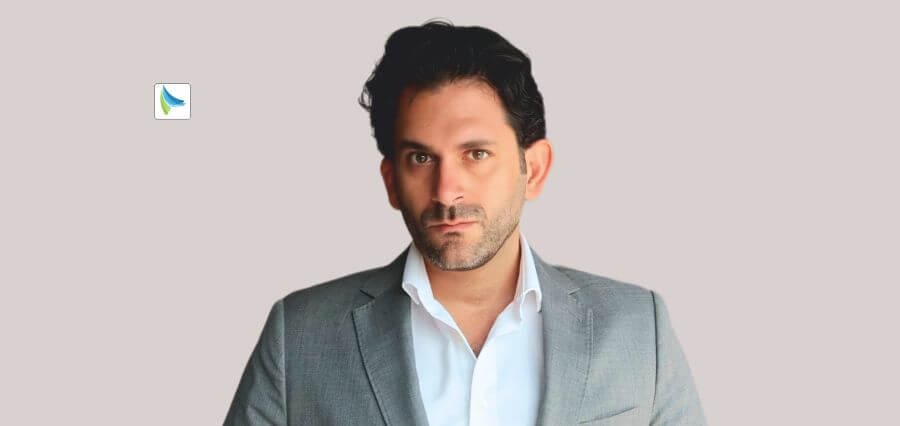





In an era where digital trust has become the currency of global stability, few leaders embody the intellectual depth, technical mastery, and societal foresight of Professor (Dr.) Tan Kian Hua. Renowned as one of the most influential voices in cybersecurity, AI governance, and quantum-era resilience, Dr. Tan stands at the rare intersection of academic scholarship, enterprise leadership, national strategy, and public education. His career is defined not by a single domain of excellence, but by his unique ability to synthesize research, technology, and human understanding into frameworks that shape how societies navigate the accelerating complexities of the digital age.
A recognized Global Excellence Award winner, Dr. Tan leads with a philosophy anchored in systems thinking and ethical intentionality. His leadership spans beyond defending infrastructure—he architecturally redesigns trust itself. Whether guiding enterprise AI risk programs, advising on national cybersecurity priorities, or preparing organizations for quantum disruption, his influence extends far beyond traditional security boundaries. He brings a professor’s analytical rigor to every boardroom, a practitioner’s realism to every innovation initiative, and an educator’s empathy to every public engagement.
What distinguishes Dr. Tan is not only his technical authority but also his commitment to expanding societal digital literacy. His acclaimed YouTube channel demystifies scams, AI threats, and cyber risks for millions, while his original comic series, “Chicky Snake,” transforms cybersecurity education into accessible storytelling—proving that clarity, humor, and narrative can succeed where policy documents and advisories often fail. In the classroom, he is known for cultivating leaders who think deeply, act responsibly, and design systems that respect both technological potential and human dignity.
Today, as the world enters an inflection point defined by quantum acceleration, hyper-automation, and AI ethics, Dr. Tan’s voice resonates with uncommon clarity. His work affirms a conviction that guides his leadership across all arenas: technology must advance, but humanity must never be left behind.
The Technologist’s Evolution: From Flaws to Philosophy
Professor (Dr) Tan Kian Hua’s journey was never a linear ascent through technical milestones, but a continuous deepening of perspective forged by confronting the fragility of digital infrastructure. Early in his career, a foundational realization cemented his systems-theoretic mindset: technology does not merely automate processes—it governs human lives. This forced him to view vulnerabilities not as isolated flaws, but as ecological disruptions threatening interdependent systems. This elevated cybersecurity from a purely defensive function to a civic responsibility and, increasingly, a philosophical pursuit.
His academic path, culminating in a professorship, instilled the discipline of intellectual honesty, demanding that he defend assumptions and examine technology for what it implies, not just what it does. Parallel public education efforts, like the “Chicky Snake” series, taught him profound empathy: that people fear invisibility—systems they cannot understand. This convergence of strategy, scholarship, and societal communication defined his executive work, compelling him to bridge engineering with ethics and policy with practice. His ultimate influence is not measured by authority, but by his ability to elevate discourse, moving organizations from compliance thinking to responsible innovation thinking.
Governance by Construction: Operationalizing Ethical AI
As the key translator at the Center of Excellence Office, Dr. Tan’s primary role is converting conceptual ethics into operational discipline. His approach begins with a philosophical anchor: defining what it means for an AI system to behave responsibly within the enterprise mission. He views AI governance not as a regulatory checklist but as a function of organizational identity.
MLOps pipeline. His core focus is on mitigating structural ambiguity, ensuring that AI systems become accountable by construction. For governance to be genuine, teams must internalize a different worldview, where the question shifts from “Is the model accurate?” to “Is the model appropriate, equitable, and safe?” This requires structural dialogues and cross-functional ethical simulations, cultivating trust that legitimizes technology and earns the organization its social license to innovate responsibly.
The Epistemic Gap: Trust as an Engineering Challenge
Dr. Tan views the current crisis of digital trust as a widening epistemic gap—a disconnect between user expectations and the unintelligible reality of digital systems. He asserts that digital trust cannot be treated as a marketing outcome or a communication strategy; it must be an engineering challenge and a design property. Many organizations fail because they publish compliance reports but build opaque systems, creating a structural contradiction.
To bridge this, organizations must embrace behavioral integrity architecture: designing systems whose actions remain consistent with their stated intentions, even under stress and when interacting with complex AI components. Trust, derived from predictability and comprehensibility, cannot be derived from static compliance alone. It requires continuous verification—ongoing monitoring, drift detection, and systemic accountability loops, especially since AI systems often behave as black boxes. Dr. Tan’s frameworks implement explainability thresholds to constrain ungoverned autonomy, ensuring systems are intelligible in principle.
The Integrated Architecture: Scholarship Meets Strategy
Dr. Tan’s dual role—academic researcher and industry practitioner—provides a powerful lens for strategic leadership. Academia trained him to interrogate assumptions and defend hypotheses, providing the intellectual discipline to evaluate technologies like quantum resilience and AI interpretability. Industry exposed him to the brute realities of implementation, teaching him the discipline of prioritization and the necessity of humility when faced with human factors and legacy systems.
Blending these two worlds yields a dual perspective that shapes his mentorship. He encourages young teams to understand the underlying theory and to operationalize their thinking, recognizing that a security control only has meaning when it can function under real-world pressure. His forward-looking cyber strategies are architected on three pillars: Future-state modeling (grounded in academic foresight), Operational realism (grounded in industry constraints), and Human-centered leadership (grounded in public education). This intellectual craft enables him to design frameworks that anticipate future risks, ensuring organizations move beyond reacting to present threats.
Influence as Stewardship: The Ethos of Responsible Amplification
For Dr. Tan, influence—validated by the Global Excellence Award and his status as a Top Voice in Cybersecurity—is fundamentally a form of stewardship carrying an ethical gravity. He views recognition not as a personal achievement, but as a reminder that his words have systemic consequences. Recognizing that public understanding lags technological acceleration, he practices responsible amplification: translating complex risks into accessible narratives without injecting distortion or unnecessary drama.
His methodology resists alarmism and oversimplification, ensuring communication is grounded in precision and intellectual humility. Dr. Tan holds himself accountable to a standard where every analysis must reflect not only accuracy but proportionality—helping people understand risk without paralyzing them with fear. His ultimate goal is to bridge the gap between academic insight and enterprise realities, guiding public discourse toward nuance rather than extremism, thereby sustaining the fragile architecture of digital trust.
The Power of Narrative: Storytelling and Agency
Dr. Tan’s commitment to public education through his comic series “Chicky Snake” and his YouTube channel stems from the recognition that traditional technical communication was failing. He realized that people understand stories far more intuitively than they understand systems; narratives circumvent resistance and enter through emotion, not instruction. The creation of “Chicky Snake” characters was inspired by a need for cognitive gateways—humorous, simple entry points that lower the psychological barrier to discussing digital deception and human vulnerabilities.
His YouTube channel emerged from a need to provide a trustworthy, structured source of digital education that could speak with both authority and humanity. Dr. Tan observed that storytelling builds moral intuition, helping individuals internalize security lessons as instincts—the ability to pause before clicking or question an unexpected message. This educational work restores agency to individuals who otherwise feel overwhelmed by jargon and complexity. By humanizing cybersecurity, Dr. Tan is cultivating the essential human judgment necessary to navigate an increasingly algorithmic world, achieving an impact that no technical control or compliance mandate can accomplish alone.
The Compliance Floor: Scaffolding Responsible Innovation
Dr. Tan approaches the tension between compliance and innovation by adhering to the principle that compliance establishes the floor, not the ceiling. Regulatory frameworks like ISO 42001 provide a minimum viable guardrail, but mistaking adherence for excellence leads to strategically vulnerable architectures. His work reframes compliance as a catalyst for innovation, not a barrier.
In practice, this means designing governance that expands beyond mechanical control implementation. Rather than executing ISO controls blindly, his teams contextualize them: ensuring accountability mechanisms track not just models, but the entire socio-technical system they influence. He views regulation itself as dynamic, engaging with national bodies not as a rigid exercise, but as a collaborative shaping of future norms through deep technical foresight. Where regulations lag, Dr. Tan advocates for principled deviation: safely innovating beyond existing requirements while rigorously preserving the underlying intent—protecting data and upholding ethical responsibility. This integration reframes compliance not as the enemy of innovation, but as the scaffolding that allows responsible experimentation.
Orchestrating Crisis: Cognitive Resilience and Composure
Dr. Tan asserts that crisis readiness is cultivated through mindset and architectural preparation, recognizing that modern cyber incidents demand decision cycles measured in minutes. Preparing for this requires building cognitive resilience—training teams to operate without perfect information and to articulate reasoning clearly under ambiguity.
Crisis readiness architecturally requires pre-orchestrated trust pathways to ensure frictionless information flow across security, legal, communications, and executive teams. This involves dismantling silos, implementing unified telemetry, and establishing clear delegation clarity—knowing precisely who makes which decisions beforehand to prevent paralysis.
During high-stakes incidents, leadership behaviors are critical. Dr. Tan emphasizes composure (intellectual steadiness grounded in realism), transparency (sharing information honestly to enable faster recovery), and decisiveness. He insists that the biggest danger is often indecision, urging leaders to make directional calls that are grounded in risk literacy. Following every incident, he mandates rigorous post-incident introspection, ensuring that readiness does not stagnate but adapts through continuous learning.
The Mindset Shift: Leading Complexity and Foresight
The coming decade, defined by quantum acceleration, hyper-automation, and AI ethics, demands a complete transformation of cybersecurity leadership. Dr. Tan asserts that traditional control-based leadership is obsolete, as autonomous AI systems introduce nonlinearity and complexity. Leaders must transition to complexity-based leadership, building architectures that can self-stabilize, self-adapt, and self-heal under continuous flux.
This requires foresight engineering—anticipating threats like quantum disruption before they materialize by engaging in scholarly inquiry and scenario planning. Leaders must shift from technology-centric thinking to socio-technical thinking, protecting human dignity, equity, and autonomy as AI systems mediate critical decisions.
The future also demands distributed leadership; leaders must become orchestrators of expertise rather than commanders, fostering collective intelligence across multidisciplinary teams. This structural shift is supported by ethical intentionality—the moral compass that ensures innovation, even when regulation lags, is pursued responsibly. Ultimately, success requires psychological resilience—the ability to hold paradoxes and maintain a steady mind when systems behave unpredictably, ensuring that character is cultivated alongside capability.
The Final Conviction: Preservation of the Human Condition
Dr. Tan’s entire career is anchored by one deep, guiding conviction: technology must evolve, but the human condition must never be diminished in the process. He views his work—spanning cybersecurity, AI governance, and public education—as a discipline of preservation, defending the invisible social contracts that allow people to live and interact with confidence in the digital world.
He sees his role as a vigilant steward, demanding that technological advancement be accompanied by wisdom, restraint, and a deep respect for societal structures. The lesson learned is that technological ambition can easily outpace ethical reflection, requiring leaders to hold the long-term societal impact above short-term gain. He views cybersecurity not merely as protection, but as defending trust, safety, and system integrity.
His philosophy is relational, not positional. Dr. Tan finds that when teams understand the moral dimensions of their work, they innovate with intention rather than recklessness. His ultimate measure of responsible leadership is not how much power technology grants, but how responsibly that power is wielded. This commitment ensures that the systems he builds enhance, rather than erode, the dignity and agency of the people they serve.
Read Also : Dr. Kevin J. Jones- Architecting the Augmented Work Revolution in the Age of Accelerated Transformation