




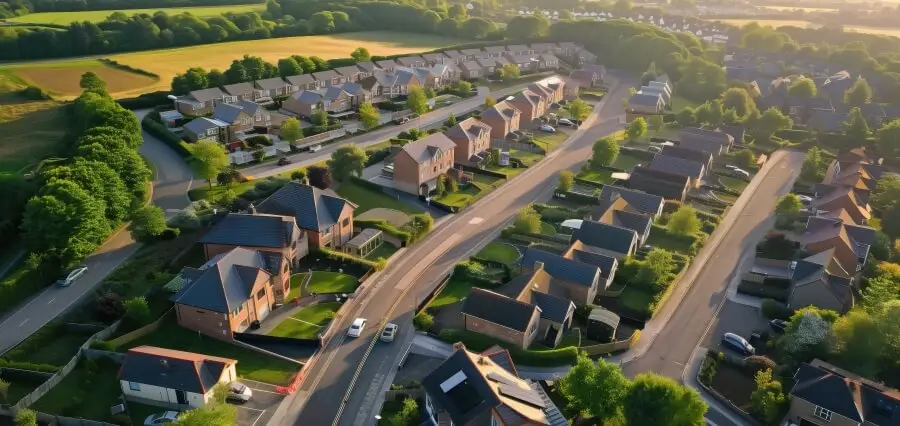
Singapore’s landed property market has always occupied a distinctive position within the residential landscape. With a limited supply of landed homes and strict eligibility requirements for ownership, this segment represents one of the most exclusive forms of private housing in the country.
Within this already limited market, a smaller segment has been gaining greater attention: brand-new and Built-Under-Construction (BUC) landed homes.
As buyer expectations evolve, developers are responding with homes that combine contemporary architecture, efficient layouts, lifestyle features and modern technology. For buyers exploring a brand new landed property for sale in Singapore, the decision today involves much more than simply choosing a location and land size. Design, functionality, construction quality and long-term adaptability are increasingly important considerations.
From Traditional Resale Homes to Modern Landed Living
For many years, purchasing a landed property often meant buying an existing house and subsequently deciding whether to renovate, add and alter, or completely rebuild it.
That approach remains common, particularly for buyers who want to create a highly customised home. However, rebuilding a landed property can involve substantial planning, professional fees, construction costs and time.
Brand-new landed developments provide another option.
Instead of managing the entire redevelopment process themselves, buyers can purchase a newly completed or BUC property where the architectural design, structural works and major specifications have already been planned by the developer.
This has helped create a growing niche of boutique developers specialising in small collections of terraces, semi-detached houses and detached homes across Singapore.
Buyers Are Looking Beyond Land Size
Land size remains fundamental when evaluating landed property, but modern buyers are increasingly considering how efficiently the entire house has been designed.
Built-up area, internal circulation, natural light, ventilation and the relationship between indoor and outdoor spaces can significantly affect the experience of living in a home.
Contemporary landed homes may incorporate features such as private home lifts, swimming pools, double-volume living areas, entertainment spaces, roof terraces and flexible family areas.
For multi-generational households, layouts are also evolving.
A bedroom on the ground floor can provide greater convenience for elderly family members, while multiple ensuite bedrooms offer greater privacy for different generations. Home lifts can make three- or four-level properties considerably more practical over the long term.
As a result, buyers are increasingly comparing not simply the size of the land, but how effectively the architect and developer have utilised the available space.
The Rise of Built-Under-Construction Landed Homes
One of the most significant changes in the landed market has been greater acceptance of purchasing homes before construction is completed.
This development accelerated during the COVID period.
When physical property viewings became restricted, agents, developers and buyers had to find alternative ways of evaluating properties. Floor plans, architectural drawings, specifications, digital presentations and virtual discussions became increasingly important.
Buyers became more accustomed to understanding a property through its design rather than relying entirely on viewing a completed home.
That behaviour has continued beyond the pandemic.
Today, a buyer considering a BUC landed property may study floor plans, elevations, material specifications, site orientation and architectural concepts well before the property reaches completion.
For developers, this creates opportunities to introduce projects earlier in the construction cycle. For buyers, it can provide access to selected projects before the finished homes enter the broader market.
Location Remains Fundamental
Despite changes in design and buyer preferences, location continues to be one of the defining considerations in Singapore landed property.
Established landed neighbourhoods in areas such as the East Coast, Siglap, Frankel, Opera Estate, Katong, Serangoon Gardens, Thomson and Bukit Timah continue to attract interest because of their established residential character and surrounding amenities.
Accessibility has also become increasingly important.
Proximity to MRT stations, expressways, schools, shopping areas and lifestyle destinations can significantly influence how convenient a landed home is for a family.
In the East, for example, improvements to transport connectivity, including the Thomson-East Coast Line, have enhanced accessibility for several established landed neighbourhoods.
School proximity remains another consideration for many families. As a result, buyers often examine not only the property itself but also its distance from established primary schools and other educational institutions.
Architecture Is Becoming a Bigger Differentiator
As land and construction costs have increased, architectural quality has become an increasingly important way for developers to differentiate new landed homes.
Rather than simply maximising floor area, well-designed projects attempt to balance usable space with natural light, privacy, ventilation and visual character.
This has resulted in a wide variety of architectural approaches.
Some buyers prefer clean contemporary façades with extensive glazing, while others favour warmer materials and more understated designs. Internally, open-plan living and dining spaces remain popular, but buyers are also placing greater emphasis on practical storage, wet and dry kitchens, helper’s rooms and flexible spaces that can evolve with the family.
Sustainability is also beginning to influence landed-home design.
Solar-ready roofs, electric-vehicle charging provisions, energy-efficient systems and designs that maximise natural ventilation can help future-proof a property as household requirements change.
Convenience Has Become Part of Luxury
The definition of luxury in landed housing is also evolving.
Previously, luxury might have been associated primarily with land size, expensive finishes or prestigious addresses. Today, convenience and functionality play equally important roles.
A private lift can make vertical living easier. A swimming pool creates a recreational space within the home. Well-planned parking becomes increasingly valuable for households with several vehicles.
Technology is also becoming more integrated into new homes, from smart-home systems and security solutions to energy management and EV charging infrastructure.
The objective is increasingly to create homes that are not only visually impressive but also practical for everyday family living.
What Buyers Should Consider
Buyers evaluating a brand-new landed home should still conduct careful due diligence.
Beyond the headline land and built-up areas, it is important to understand the floor plan, site orientation, room dimensions, ceiling heights, parking configuration and specifications.
For BUC projects, buyers should also understand the expected completion timeline and exactly what will be delivered.
The developer’s track record, architect, construction quality and previous projects may provide additional context when evaluating a property that has not yet been completed.
Comparing the property against recent transactions and competing new developments within the same neighbourhood can also help buyers better understand its positioning.
The Next Phase of Singapore’s Landed Market
Singapore’s landed housing stock remains fundamentally constrained by land availability. At the same time, the expectations of landed homeowners continue to evolve.
Modern families increasingly want homes capable of supporting multi-generational living, changing lifestyles, technology and greater convenience without sacrificing privacy and space.
Brand-new and BUC landed developments are responding to these expectations with increasingly sophisticated architecture and specifications.
The result is a landed market that is gradually becoming more design-driven and specialised.
While traditional resale properties will continue to represent a substantial part of the market, brand-new landed homes provide buyers with another route into landed living — one that reduces the need to undertake a major rebuilding project independently.
Ultimately, every landed property remains unique because of its plot, orientation, location and design. Understanding these differences is therefore essential when comparing opportunities.
As Singapore’s landed market continues to evolve, the strongest new developments are likely to be those that successfully combine thoughtful architecture, efficient use of land, practical family living and long-term adaptability.