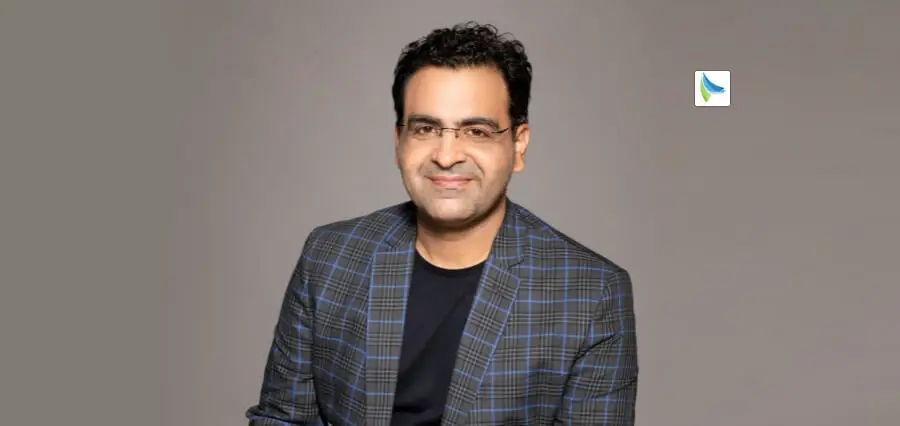





Industries evolve through deliberate efforts because people take risks to challenge established industry norms. Arti S. Raut built her journey on that conviction. Her work as a disruptor who creates customer-focused solutions started when she fought against existing systems during her work. Her professional journey combines systematic testing with future technology predictions and his firm belief in achieving measurable results.
She has dedicated her efforts to transforming organizational cultures by teaching institutions to improve their learning capabilities and response processes and develop new ideas. Through her work, she establishes new methods for people to create progress while she directs organizational transformation.
The Disruption Architect
Arti’s leadership philosophy rests on a deceptively simple yet transformative premise, which focuses on customers’ real problems and not on legacy products or internal processes. Instead of asking how an industry has traditionally functioned, she challenges teams to understand what customers truly want to achieve and why existing systems make those goals complex, costly, or slow.
These reframing shifts value creation from delivering goods and services to delivering measurable outcomes and seamless experiences. With her guidance, organizations eliminate low-value intermediaries, simplify access, and replace periodic market research with continuous customer feedback loops. “Success is no longer measured solely by output or operational efficiency, but by tangible customer impact,” she says.
Yet her toughest challenge has not been technology, funding, or market readiness. It has been institutional resistance, which has deep-rooted beliefs that customers will not change behavior, that innovation threatens revenue, and that deviation from proven models introduces unacceptable risk. She addresses this not through lengthy approvals, but through disciplined experimentation. By launching small pilots and testing solutions in real-world environments, she allows results to speak. As customers adopt faster than expected and demonstrate clear value, skepticism steadily gives way to acceptance. Her influence lies not just in invention, but in redefining how organizations measure value itself.
Building Innovation Infrastructure
For Arti S. Raut, innovation is not a project; it is more of a system. She embeds it into daily operations rather than confining it to isolated teams. Every department contributes ideas, while small groups focus on rapidly testing new concepts. This structure enables businesses to strengthen core operations while exploring future opportunities without disrupting daily performance.
Technology is central to this architecture. She leverages AI to interpret customer needs, predict trends, and accelerate decisions. Automation handles repetitive tasks, freeing employees to focus on creative problem-solving. Advanced analytics transforms everyday data into actionable insights, driving continuous improvement across products, services, and operations.
However, she is clear about one thing that technology alone creates no competitive edge. The true advantage lies in learning faster, adapting sooner, and improving constantly. Organizations that build this capability do not merely react to changes, but they shape it.
Cultivating a Trailblazer Culture
Arti S. Raut understands that breakthrough change demands unconventional thinking. She prioritizes building a culture where disruption is expected, not feared. Innovation, in her organizations, belongs to everyone. Employees are encouraged to question long-standing practices, challenge assumptions, and view change as an opportunity rather than a threat.
Risk-taking flourishes because she redefines failure. Mistakes are treated as data points signals for learning rather than sources of blame. Teams conduct small experiments that test ideas quickly and share outcomes openly. This reduces fear and builds confidence, enabling calculated risk without punitive consequences.
Strategic dissent is not just tolerated; it is designed into the process. Meetings are structured to invite alternative viewpoints, and junior voices carry as much weight as senior ones. By separating respect for individuals from critique of ideas, she creates psychological safety, ensuring that disagreement strengthens decisions rather than weakens unity.
Navigating Vision and Volatility
Arti S. Raut does not see vision and risk management as opposing forces. Her long-term vision focuses on where industries are heading, the value organizations must create, and their role in shaping the future remains constant. It serves as a north star, especially during market turbulence.
Execution, however, is flexible. She breaks strategy into smaller milestones, allowing organizations to move steadily while adjusting to economic shifts. Scenario planning, rolling forecasts, and real-time metrics enable rapid response without sacrificing direction.
Crucially, she separates vision from tactics. Timelines may adjust, investments may slow, and priorities may reorder, but the destination remains unchanged. This disciplined flexibility prevents panic-driven decisions and sustains organizational confidence even amid volatility.
Defining Tomorrow’s Legacy
Over the next five years, Arti S. Raut envisions industries transforming from fragmented, reactive systems into integrated, intelligent ecosystems. Success will depend less on scale and more on speed, adaptability, and customer impact. AI-enabled systems will enhance efficiency, personalization, and forecasting accuracy across value chains, making data-driven decision-making standard practice.
Her personal ambition is to establish one irreversible norm, which is that progress must be continuous, not occasional. Learning, experimentation, and reinvention should be permanent expectations, not responses to crisis. “Leaders must be measured not only by quarterly results but by how effectively they prepare their teams for the future,” she believes
If she succeeds, her legacy will not be a single breakthrough or market share milestone. It will be a mindset that outlives her leadership, one in which industries no longer debate whether they should change, but only how responsibly and how quickly they can evolve. Through disciplined optimism, customer obsession, and unwavering commitment to continuous progress, Arti S. Raut is not just building successful enterprises, she is architecting the future of entire industries.