



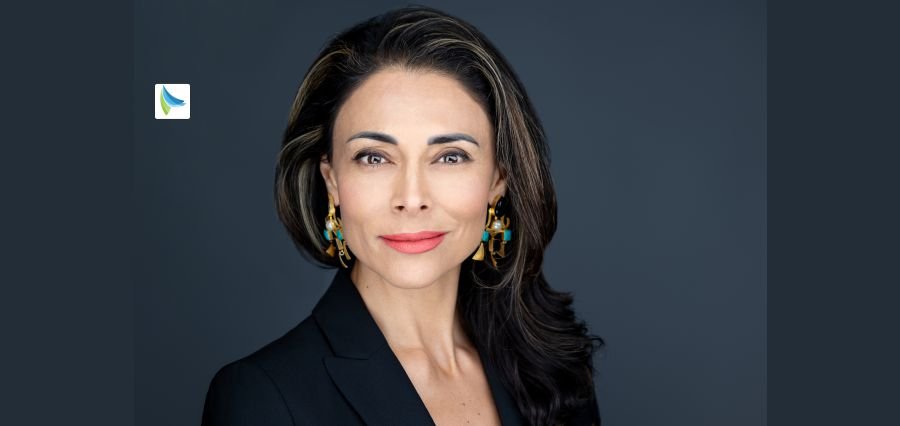
In a world where artificial intelligence evolves at breakneck speed, the question isn’t just what AI can do—but what it should do and making sure AI happens with us and not to us, something Sol Rashidi says frequently. As organizations race to adopt artificial intelligence and automation, many voices have consistently and powerfully championed the balance between innovation and humanity. One of those impactful voices is Sol Rashidi, an AI strategist, anthropologist, and workforce architect, who is a former Amazon and Fortune 100 C-Suite executive with 10 patents, a best-selling author, and the World’s 1st Enterprise Chief AI Officer (appointed in 2016).
A Trailblazer in Enterprise AI
Sol’s journey is marked by firsts and foresight, but well before her record-breaking achievements as the first Chief Data Officer and first Chief Artificial Intelligence Officer, Sol was already trailblazing the Data and AI landscape. Having been in the data space since the late 90s and with her experience in helping IBM launch Watson to the mainstream in 2011, Sol attained ten patents, is the author of the written best-seller ‘Your AI Survival Guide’ listed among the world’s top 50 AI books. Her writings resonate with many, leading to three TEDx speaking with over 2 million views, and awards like FORBES “AI Maverick & Visionary of the 21st Century” and ‘Top 5 Leaders Taking AI to Market’.
Her four C-suite positions within Fortune 100 companies and leading Amazon’s North American startups technology organization are some of the highlights of her career. With more than 200 enterprise-level AI deployments under her belt, Sol represents the complementary dualism of practitioner and strategist—something validated by recognitions like “50 Most Powerful Women in Tech,” “Top 100 AI Thought Leaders,” and “Top 100 Data & Analytics Leaders”.
Not someone to rest on her laurels, Sol always underscores the fact that AI potential is not about replacing humans, but about being of service to them, amplifying them, and creating force multipliers within us all. Sol’s mindset is that genuine advancement combines human mindsight with technology as an enabler.
Values That Shape a Vision
Three core values underpin Sol’s leadership philosophy:
Human Amplification Over Replacement: She is firm that AI needs to amplify, not replace, human potential. Anything she creates is all in the service of human and workforce advancement and amplification. Sol has always been extremely explicit that AI and Automation, when enforced unintentionally, can erode, not uplift business operations. Therefore, her purpose and her invention of the Human TM Amplification Index is all in service of enterprise performance and workforce strengthening.
Clarity Above Complexity: Sol’s strength is in making the complex uncomplicated. Her talent is to take heavy technologies and extract clear strategies that inform decisions and convert those decisions into execution. Clarity, to her, is more than just a communication capability; it’s a leadership mandate. Because she spends most of her time working in high-pressure, high-velocity settings, she feels clarity leads to sounder decisions, accelerated innovation, and more congruent collaboration between cross-functional teams.
Bold Integrity: From the counseling boards to challenging hype, Sol is guided by truths that are uncomfortable, always serving the truth, even if it’s unpopular. Her integrity is centered in a devotion to fact over trend, which is why she has an impressive track record with delivering projects, programs, and transformational initiatives.
Closing the Gap Between Aspiration and Implementation
Sol learned from more than 200 AI projects that there is a constant blind spot that hovers between boardroom vision and effective delivery. Companies too frequently confuse “doing AI” with “using AI”, purchasing software or building models as the extent of their AI initiatives, sidestepping important items such as workforce preparation, business process reengineering or operational readiness.
Convinced that this void needed to be addressed, Sol shifted to becoming an implementor, crafting frameworks, teams, and roadmaps in equal proportion of vision and pragmatism. Her aim is simple: making it possible for enterprises to embrace AI in a manner that is scalable, sustainable, and creates force multipliers for the business and its workforce.
She says that actual achievement with AI implementation does not start with algorithms; it starts with the workforce because the algorithms are ready, but the people, business processes, and organizational chart are not.
Reimagining Leadership for the AI Age
Sol calls for a new model of leadership—one which welcomes chaos with clarity and technological know-how with empathy. Leaders today, she contends, need to:
- Be technologically savvy and data-literate.
- Establish psychological safety in the midst of change.
- Prioritize comprehension over convenience.
- Enable critical thinking in the age of automation.
“Leadership is not command-and-control anymore. It’s about orchestrating ecosystems and building cultures that can respond well and rapidly,” says Sol.
Sol highlights the fact that business leaders can no longer afford to outsource understanding with the age of AI. Executives should not code but be able to understand the impact of technology on operating models, labor dynamics, and customer engagement.
A Purpose Built on Empowerment
Sol’s overall vision is to create a future where Humans and AI live in harmony. She supports AI literacy among businesses and communities to maintain human ingenuity, creativity, and problem-solving ability, as these will be the skills needed in the future.
To continue this mission, she invented the Human TM Amplification Index, the world’s first-ever scorecard that allows organizations to determine if they are making their workforce stronger with AI and Automation. It redefines measuring progress not only by profit, but by how well technology is enhancing human capital, an organization’s largest investment.
Her impact spans:
- Steering C-suites: From AI-curious CEOs to AI capable strategists.
- Building IP-Driven Frameworks: Such as simulation labs and strategic blueprints.
- Delivering Scalable Deployment Models: Those that balance trust, performance, and cultural cohesion.
Strategic Gaps and the Path to Maturity
Sol’s story exposes two persistent challenges:
- Strategic Superficiality: Too many executives are mistaken in equating AI tools with transformation. Sol calls for a shift from tool buying to capability development.
- Workforce Misalignment: Technology can’t fix human issues until workflow design and upskilling are tackled first.
To overcome these challenges, Sol has constructed:
- ExecutiveAI Maturity Assessment™: A methodology employed to measure a firm’s preparedness today in the areas of data infrastructure, talent, and systems.
- ExecutiveAI Discernment Compass™: Designed to help organizations determine whether an issue requires human leadership, AI support, or a synthesis of the two.
- ExecutiveAI Criticality and Complexity Matrix™: A decision tool that combines risk and complexity to determine your perfect AI use case that you can deploy.
Her methods are not theoretical–they are operationally based and have been implemented in Fortune 500 organizations with great success.
Future-Proofing the Workforce
As AI adoption accelerates, Sol warns of three impending dangers: TM
- Intellectual Atrophy: Outsourcing thought rather than tasks. Long-term impacts are brain rust and stifled innovation.
- Synthetic Colleagues: When AI is part of the team, leaders, HR, and measurement will have to change.
- Lack of Governance: AI governance boards will be inevitable.
Sol opines that the future is all about co-working. “It’s not man vs. machine, but man enabled by machine,” she expresses.
Sol feels that we must realign today. AI is not an era of faster processes or automated workflows—it’s an era of reimagining roles, responsibilities, and contribution itself. “When AI agents are on teams and start showing up on org charts, the corporate playbook has to be rewritten,” she says.
Habits That Shape Sol’s Leadership
Disciplined routines underpin Sol’s clarity of thought:
- 5 a.m. ritual: Quiet time, meditation, reading, reflection.
- Writing and teaching: Establishes clarity and continuous learning.
- Listening to contrarians: Challenges her blind spots.
- Family time and play: Keeps her grounded, present, and fun.
- Physical training: Reinforces mental strength.
She acknowledges the rhythm of leadership: “Sometimes I’m aligned, sometimes I’m off-track. The key is to keep resetting.”
This self-awareness informs her leadership. She openly acknowledges error, and she does not feign perfection. Her openness appeals to a generation of leaders who long for authenticity over performance.
Advice to the Next Generation
Sol shares the following words of advice:
- Don’t outsource insight. Learn how technology affects your business.
- Invest in judgment and common sense. Ask questions before chasing trends.
- Lead from curiosity, not FOMO. Actual technologists are lifelong learners.
To Sol, they are not just suggestions—these are survival tactics in a more algorithm-and machinery-driven world.
A Legacy of Human-Centered Innovation
Sol hopes to be remembered not just as a pioneer in the AI field, but also as the protector of humanity. Her legacy is a plea to responsible construction, to lead from the heart, and never forget that people are behind the data.
She wishes to rescue humanity not from technology, but from misusing it. More personally, Sol dreams of being remembered as the guardian of human capital and the workforce, while leveraging the wonderful gifts of AI and Automation.
As the world is revolutionized by AI, Sol puts the human spirit at the center of the machine.