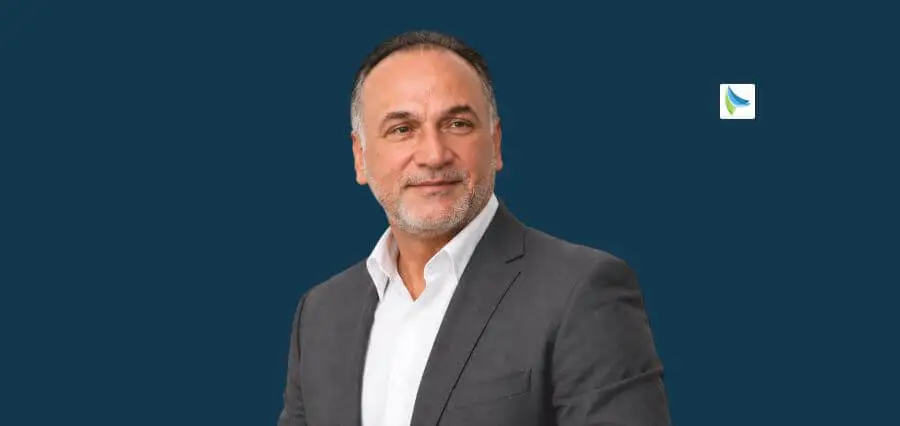




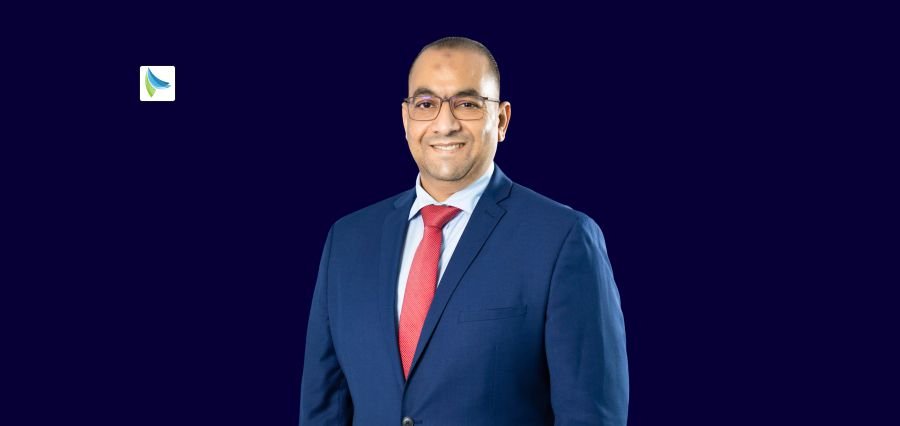
The world is the way you see it. Your perspective changes everything. So, you hold the power to change your world with your view. It is the power of perception. Mohamed Saad’s career in procurement began with a fundamental shift in perspective: he refused to view the function as merely a back-office administrative department. Instead, he has dedicated his professional life to establishing procurement as a strategic “powerhouse” and a Center of Excellence (CoE). This transformation is rooted in the belief that achieving digital maturity is the essential bridge between a reactive, cost-saving mentality and a proactive, value-generating strategy.
The core idea behind this journey is the ‘Excel Exodus’. During his tenure at E20 Investment, Mohamed formulated comprehensive procurement strategies that reduced operating costs by 18%, proving that transparency in category spending is the first step toward high-impact value creation. This philosophy was further scaled at Yas Holding, where he led the transformation of supply chain operations across 50+ subsidiaries. There, Mohamed defined a global vision to resolve systemic bottlenecks and established best practices in demand forecasting that resulted in a 12% cost savings through strategic negotiation.
He shares, “At Relaam Real Estate, we took this vision to its digital peak through a comprehensive transition from manual, fragmented email requests to a cohesive, digitally-driven ecosystem utilizing Yardi Voyager and Elevate.” This was not just about software; it was about establishing a “zero-tolerance” data cleansing policy to ensure our digital ecosystem was built on a foundation of absolute accuracy. By automating the Procure-to-Pay (P2P) cycle, Mohamed ensured his company moved toward a state of predictive procurement, allowing the team to act as “value architects” who anticipate market shifts rather than merely reacting to them.
The’ Excel Exodus’ Distinction
Mohamed is a distinguished supply chain executive with over 30 years of experience driving organizational profitability through digital transformation. Currently the Director of Procurement & Contracts at Relaam Real Estate (formerly ADCP), he is a pioneer of the ‘Excel Exodus,’ a strategic movement migrating legacy procurement into high-performance, digitally mature ecosystems.
Mohamed’s leadership spans critical sectors, including real estate, agribusiness, and oil and gas. As Director of Global Supply Chain at Yas Holding, he managed operations for over 50 subsidiaries, resolving systemic bottlenecks and establishing centers of excellence. During his tenures at E20 Investment and Elite Agro, his strategic category management and vendor requalification initiatives delivered operating expense reductions of up to 18%.
A staunch advocate for data integrity, Mohamed’s ‘zero-tolerance’ data cleansing policy at Relaam facilitated a 20.88% negotiated cost reduction in 2025, securing over AED 27.7 million in savings. By leveraging Yardi Voyager and Elevate, he transitioned the procurement function from reactive reporting to a proactive, value-generating powerhouse.
Mohamed holds an MBA in Supply Chain Management from the Swiss School of Business & Management and a Postgraduate Diploma in Procurement & Contracts Management. His credentials include CPPM and CISCP certifications, and he was recently named a Top 50 ProcureTech & Supply Chain Leader.
Recipient of the ‘Digital Transformation in Procurement’ award at the 2026 Middle East ProcureTech Summit, Mohamed is a UAE Golden Visa holder dedicated to the future of Agentic AI and ESG-compliant sourcing. Originally from Alexandria, Egypt, he is a father of three who balances multi-billion AED portfolios with the core values of family and integrity.
A’ Zero-Tolerance’ Data Cleansing Advocacy
Also, Mohamed accepts that today, balancing the demands of managing multi-billion AED portfolios with a fulfilling personal life requires more than just time management; it requires a disciplined commitment to systemic efficiency. “Throughout my three decades of experience, particularly during my tenure at Yas Holding, where I oversaw supply chain operations for over 50 subsidiaries, and during my strategic leadership at Relaam, I have refined a strategy centered on the principle of ‘automating the routine to master the strategic.”
The primary challenge in high-level procurement is the risk of ‘firefighting’—being consumed by manual, fragmented tasks that lead to professional burnout. To counter this, Mohamed has spearheaded the implementation of automated workflows and real-time Power BI dashboards. By digitizing the Procure-to-Pay (P2P) cycle and enforcing a ‘zero-tolerance’ data cleansing policy, he has established a level of digital transparency that allows the department to run with precision. “This systemic reliability is what provides me with the peace of mind to truly disconnect at the end of the day and focus on my family, including my daughter Maya and my twins (Mazen & Malak), who are a central part of my life.”
Professionally, Mohamed manages stress by intentionally transitioning from a ‘process executor’ to a ‘value architect’. Instead of being bogged down by administrative bottlenecks, he utilizes technology like Yardi Voyager and Elevate to handle routine approvals and vendor management. “This shift ensures that my mental energy is reserved for high-impact decisions, such as negotiating 20-25% cost reductions or developing 2026 AI integration roadmaps,” he reveals.
Furthermore, Mohamed’s experience at E20 Investment and Elite Agro taught him that transparency in category spending is the key to proactive value creation. By building a Procurement Center of Excellence, he has empowered his teams to meet operational and financial targets with minimal supervision. This culture of empowerment means that the business remains resilient even when he is away, allowing Mohamed to maintain a healthy work-life integration while continuing to deliver measurable results for the organization.
Pursuit of Digital Transformation
Also, Mohamed’s driving passion is the relentless pursuit of digital transformation and the evolution of procurement into a high-functioning Center of Excellence. He is motivated by the challenge of taking fragmented, manual legacy systems and re-engineering them into ‘intelligent automation’ models that deliver measurable value. “Throughout my career, from Elite Agro to Yas Holding, I have been energized by the process of ‘data enrichment’—the belief that clean, standardized data is the essential foundation for all strategic success.”
Mohamed adds that he is deeply passionate about the transition toward Agentic AI and Predictive Analytics. There is a profound professional satisfaction in moving an organization away from the ‘Excel Exodus’ and toward a future “where we anticipate market shifts rather than merely reacting to them,” says Mohamed whose goal is to transition the procurement team from being ‘process executors’ to becoming ‘value architects’ who leverage AI-driven systems to identify future spending patterns and mitigate supply chain risks.
Furthermore, Mohamed’s passion is rooted in continuous innovation and professional growth. Whether it is achieving a 20.88% negotiated cost reduction or implementing a ‘zero-tolerance’ data cleansing policy, he is driven by the desire to set new industry benchmarks. “I believe that procurement should be a ‘powerhouse’ that not only secures savings—such as the AED 27.79 million achieved at Relaam—but also fosters long-term vendor partnerships and organizational resilience.” This commitment to excellence is what defines Mohamed’s journey and fuels his vision for the future of global supply chains.
Establishing Procurement Centers of Excellence
Again, Mohamed’s appetite for business is defined by a relentless drive to scale operations and deliver quantifiable, large-scale growth across diverse sectors. He does not view business through the lens of mere maintenance; rather, he seeks out opportunities to build high-capacity’ Procurement Centers of Excellence’ that act as engines for organizational profitability.
During his tenure as Supply Chain Director at E20 Investment, Mohamed’s appetite for efficiency led to the formulation of comprehensive procurement strategies that reduced operating costs by 18%. He thrived on the challenge of improving transparency in category spending and identifying untapped cost-saving opportunities across the portfolio. This hunger for optimization was further scaled at Yas Holding, where he directed the transformation of supply chain operations for over 50 subsidiaries. Managing such a massive and complex ecosystem required a vision for global best practices and a capacity to resolve systemic bottlenecks at a group level.
At Elite Agro, Mohamed’s business appetite focused on value creation through sophisticated sourcing. He directed the end-to-end lifecycle of estimation, costing, and contract administration, ensuring that every project was optimized for financial performance. “This experience reinforced my belief that a leader must be a ‘Value Architect’—someone who doesn’t just manage a budget but actively engineers better margins through strategic vendor alliances and market intelligence.”
Today, this appetite is manifesting as a drive for AI-enhanced digital maturity. Whether it is achieving a 20.88% cost reduction at Relaam or aiming for a 25% target in 2026, Mohamed’s goal is always to surpass established performance benchmarks. He is constantly looking toward the next frontier—transitioning from traditional negotiation-based savings to predictive analytics and autonomous “AI agents” that can execute sourcing events with unprecedented speed and precision.
Emerging Triumphant Through the Testing Times
However, there came a time when Mohamed’s leadership was truly tested. He recalls that the COVID-19 pandemic was a watershed moment for the global supply chain, “and for my role as Contracts & Procurement Manager at Elite Agro, it served as a critical test of resilience and strategic foresight.” While the pandemic disrupted traditional logistics, it also provided a unique opportunity to accelerate the transformation of procurement into a high-functioning Center of Excellence (CoE).
To survive and eventually thrive, Mohamed adopted a strategy of market resilience through consolidation and digital transparency. At Elite Agro, he designed and implemented strategies that drove value creation even amidst global instability. One of the key ways he managed to convert the pandemic in their favor was by focusing on Category Management and Consolidation. By consolidating fragmented services into larger agreements with local vendors and using most of the local inventory, they were able to buffer against economic volatility and improve administrative efficiency when physical movement was restricted.
Furthermore, the pandemic acted as a catalyst for Mohamed’s ‘Excel Exodus’ philosophy. He leveraged the crisis to eliminate ‘informal email-based requests’ and moved toward a fully digitized Procure-to-Pay (P2P) cycle. “By implementing automated workflows and standardized templates during this period, we ensured that the supply chain remained transparent and compliant, even while working remotely.” These strategies not only helped Mohamed and his team navigate the immediate crisis but also established a permanent, best-in-class procurement system that boosted organizational profitability long after the initial pandemic waves subsided.
A Transformative Advice
So, as a champion leader himself, to those poised for leadership in this rapidly changing environment, Mohamed offers a transformative perspective: transition from a role of ‘process executor’ to that of a ‘value architect.’ Relying solely on existing protocols or upholding outdated practices inevitably leads to stagnation. Effective leadership today requires the audacity to deconstruct inefficient legacy systems—the so-called ‘Excel Exodus’—and implement integrated, digitally mature frameworks that drive innovation.
First and foremost, prioritize data integrity. In fields like procurement, finance, or operations, the credibility of your leadership hinges on the robustness of the data informing your decisions. Implementing a ‘zero-tolerance’ policy for flawed data migration transcends mere technicality; it is a leadership imperative that underscores your commitment to transparency and accuracy.
Secondly, foster a culture of continuous innovation and upskilling. “As we advance towards an ecosystem powered by Agentic AI and Predictive Analytics, leaders must serve as the nexus between human capital and autonomous systems.” Invest in your team’s capability to interpret AI-generated insights rather than simply overseeing workflows, ensuring they are equipped to leverage technology for strategic advantage.
Lastly, maintain a results-oriented focus. “Anchor your strategic vision in measurable outcomes, exemplified by our initiative that generated AED 27.7 million in savings through disciplined negotiations and streamlined digital P2P processes.” Consistently demonstrate your department’s ROI to executive leadership, positioning your function as a critical driver of the organization’s financial health. True leadership resides in the unyielding pursuit of excellence and the foresight to identify predictive opportunities amidst challenges.
Sharing His Success Mantra
And to the audience, Mohamed’s mantra for growth, development, and success is: ‘Clean Data. Predictive Vision. Relentless Execution.’
True growth is found in the ‘Excel Exodus’—the courage to abandon manual legacies for digital maturity. Success in 2026 belongs to those who transform from process executors into Value Architects. “By leveraging Predictive Analytics and Agentic AI, we don’t just react to the market; we command it,” insists Mohamed. “Commit to absolute data integrity, empower your talent, and turn every challenge into a strategic powerhouse.”
“As we navigate the complexities of 2026, the focus must shift toward ESG Centralization.” Environmental and social governance are no longer optional “add-ons”; they are critical components of a resilient supply chain. Mohamed’s current mission is to integrate Supplier Evaluation Scorecards that prioritize sustainability alongside cost-efficiency. “Procurement is the primary engine for ethical corporate growth, and by building transparent, risk-aware networks, we ensure a sustainable future for the global economy,” he concludes.